
Dental implants — replacing missing teeth
Temporary Front-Tooth Implant Crowns: Why the Provisional Stage Matters
The temporary tooth used during front-tooth implant treatment can influence confidence, speech and the development of the surrounding gum contour.
Explore your tooth replacement options
If you are considering replacing a tooth or several teeth, a £30 consultation gives you a chance to explain what matters most, ask questions and explore the options with our team.
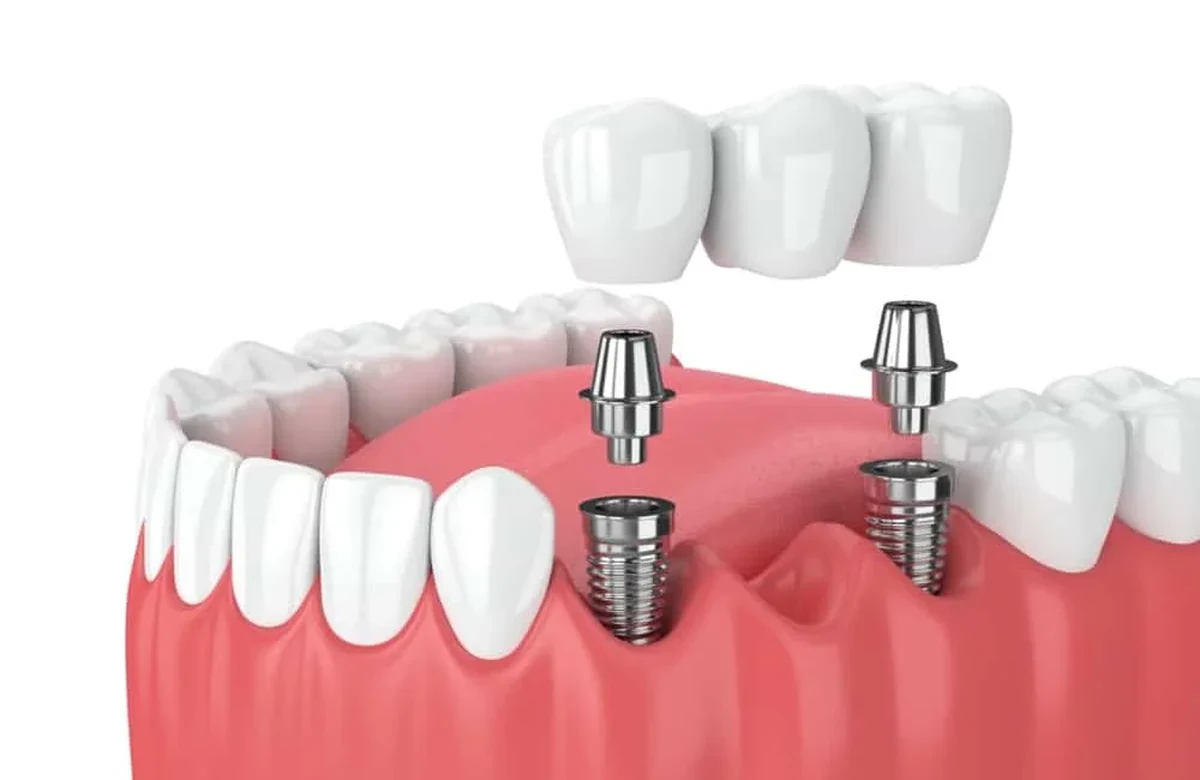
A temporary front tooth can maintain appearance and speech while an implant site heals. In selected cases it also helps shape the gum contour. It has its own design and limits, rather than simply being a lower-cost final crown. Before treatment, understand how it will be supported and which biting or care restrictions apply.
Not all temporary teeth attach to the implant
Depending on the anatomy and timing, a provisional replacement might be a small removable denture, a resin-bonded bridge or a crown connected to the implant. The choice depends on stability, surgical timing, existing bone and how much load the site can tolerate. An implant placed into a fresh socket does not automatically mean the patient is suitable for immediate functional loading. In some situations keeping pressure away from the healing implant is more important than using the fixture to hold the temporary tooth. The clinician should explain exactly what is supporting the provisional restoration.
The emergence profile is part of smile design
A suitable temporary crown can help shape and support the gum as it heals. Too much bulk may put pressure on the tissue; too little may leave an appearance or cleaning difficulty. Your dentist may adjust the shape gradually, particularly for an upper front tooth beside a natural tooth. This can help guide the gum contour, including the small triangle of gum between teeth, but it cannot replace missing bone.
Appearance during healing
A temporary can look satisfactory on surgery day while the bone and gums are still healing. The margin may change, and the final crown can use a different shape, material or connection. The team should explain whether the temporary mainly provides appearance, supports tissue shape or allows selected function, and what may be revised. Its initial appearance cannot guarantee an identical final result.
Bite contacts must protect the healing plan
A provisional restoration connected to an implant may be designed to avoid particular chewing and sliding contacts if immediate loading is not appropriate. Even a front tooth that appears naturally positioned can contact the opposing arch during speech or excursions. The clinician checks these relationships rather than assuming the patient can simply remember never to touch the tooth. Written dietary and appliance-care advice should be specific to the type of provisional provided. If the temporary becomes unstable, the patient needs a clear route for assessment rather than trying to glue it back at home.
The laboratory and the restoring dentist need the same target
Digital scans, photographs and information from the provisional shape can help communicate the intended crown to the technician. The final ceramic must still account for the colour of the surrounding enamel, the shade of any underlying component and the actual gum contour at the time of restoration. Patients may be invited to assess tooth length and surface character before definitive manufacture. A transparent consultation should clarify whether multiple temporary adjustments are included and how changes to the tissue may alter the quoted timetable.
Questions for your first implant appointment
Establish whether the temporary is removable or fixed, the expected appearance after extraction and the limits during healing. The plan should connect its shape with the final crown and explain how gum changes would be handled. Include the appliance, laboratory work and reviews in the estimate. This lets the temporary stage support appearance while the final restoration is developed.
References and further reading
Book an assessment
The practices are in Hatfield and Cheshunt in Hertfordshire, and Friern Barnet in North London. For travel from Bedfordshire, Buckinghamshire or Essex, confirm the actual practice and any sites involved in later stages.
Pandya (GDC 114822).Content updated: 26 October 2026.
Your next step, when you’re ready
We would be pleased to welcome you for a £30 consultation at your preferred Iconic Smiles practice. Bring your questions, and we can talk through the options that may suit you.
Any additional investigations and their fees will be explained before you decide.