
Invisalign and teeth straightening
Can Invisalign straighten teeth that have moved since braces?
If your teeth have shifted over time, learn what a fresh Invisalign assessment can establish about new treatment options.
Talk to us about straightening your teeth
You might have a particular change in mind, or simply want to know what is possible. At a £30 consultation, we can talk through your goals and explain how the next steps are planned.
ICONIC SMILES · DIAMOND APEX
Invisalign care. Diamond Apex experience.
Choose Iconic Smiles, a Diamond Apex Invisalign provider serving Hertfordshire and North London, for individually planned clear aligner treatment.
What does Diamond Apex Invisalign Provider mean?
Diamond Apex is an Invisalign provider tier recognising high annual treatment volume. It reflects extensive experience with the Invisalign system. Your treatment is planned around your teeth, bite and goals, with clinical reviews and retention discussed from the outset.
Invisalign may straighten teeth that have shifted since braces, if the bite, gums and required movements are suitable. A fresh assessment can compare limited alignment, other braces and retention alone, rather than assume you need to repeat the original treatment.
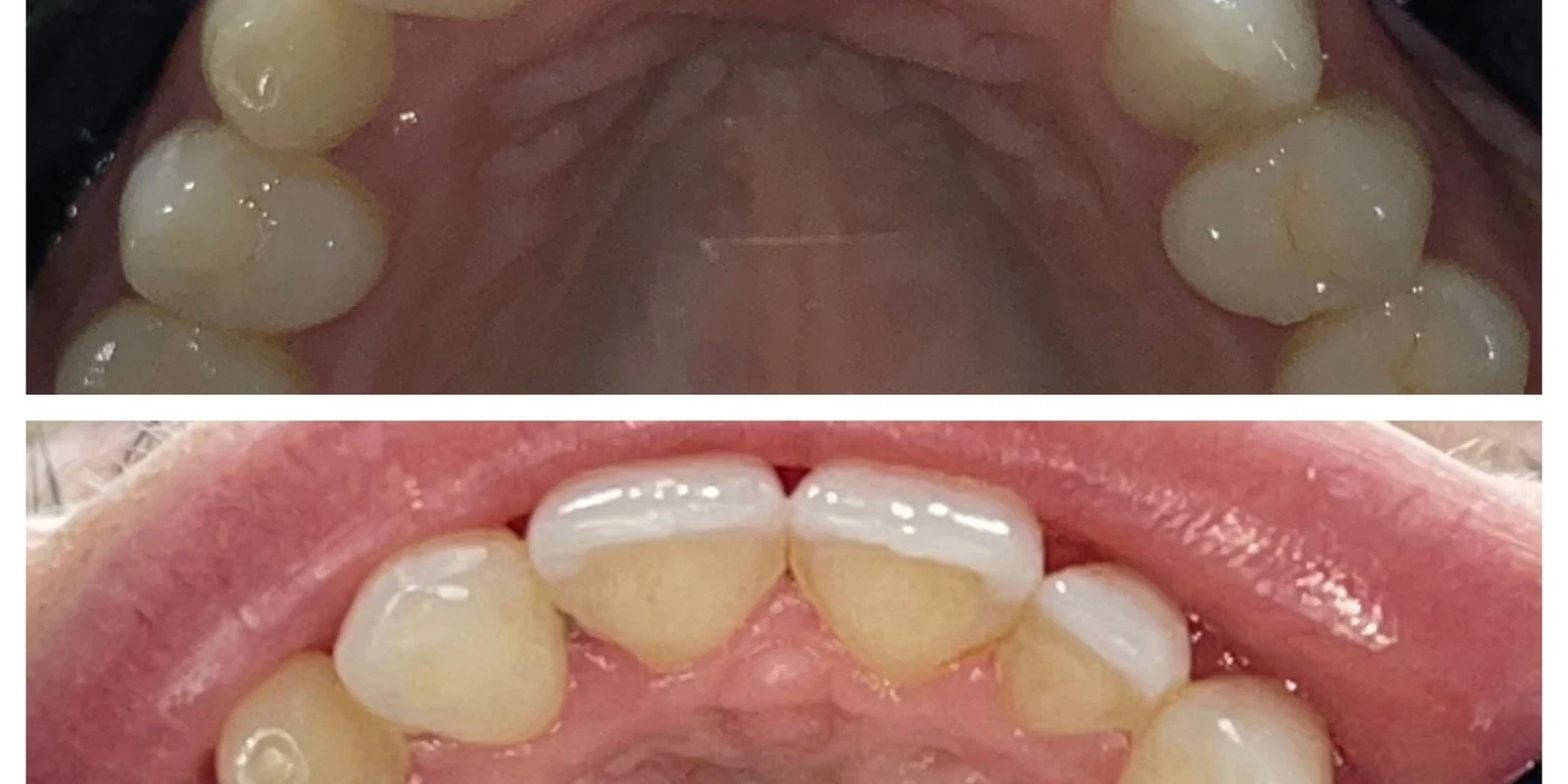
Teeth may drift years after braces, particularly if a retainer is stopped, damaged or used inconsistently. A small overlap that was absent from the finishing photographs may suit monitoring as well as correction. Checking the current bite, support and previous retainers helps establish whether active treatment offers a worthwhile improvement.
Find out what moved and why
A new scan can be compared with earlier records where available to identify which teeth have rotated or drifted. A bonded wire may have detached at one pad, while a removable retainer may have distorted or simply no longer been used. Older dental restorations and wear can also make a smile appear different. The clinician should check for gum disease or unexpected mobility, because uncontrolled gum disease changes the safety of tooth movement. Treatment should address these conditions before any cosmetic realignment.
When short treatment may be enough
Limited orthodontic movement can suit selected minor relapses, especially when the back-tooth contacts remain acceptable. An aligner series may target crowding or small spaces without repeating the entire previous plan. But severe rotations or bite changes may require different mechanics or a specialist opinion. The treatment estimate should state which teeth are meant to move and what is deliberately left unchanged. A quick digital preview is a proposal, not a guarantee that biology will reproduce the displayed movements.
Cosmetic alternatives and their limits
A small irregular edge may sometimes be improved by careful composite shaping without moving the whole tooth. This is not equivalent to correcting a significant rotation or deep bite. Conversely, adding bonding to disguise a very crowded tooth can create a bulky and difficult-to-clean contour. The clinician should compare conservative restoration, retention alone and active orthodontics against the amount of tooth structure involved. Dental implants and older crowns also influence which teeth can move and what final adjustments might be necessary.
Retention is the deciding commitment
Before retreatment, work out a retention routine you can sustain afterwards. A bonded wire avoids inserting a removable appliance, but still needs cleaning and regular checks. Clear removable retainers need prescribed wear and replacement if distorted. A combination may suit selected cases. Establish who checks them and arranges replacements, especially if travel or irregular routines could interrupt use.
Questions for an informed appointment
Bring old photographs, previous aligners or retainers and any information about why treatment ended. Ask what the new plan offers beyond simply fabricating a better-fitting retainer for the current position. Confirm whether the treatment includes refinements and final retention, and ask which bite changes would make a limited plan inappropriate. The useful outcome is a stable, maintainable improvement—not an automatic repeat of a treatment completed years ago.
How to evaluate a minor recurrence
A small lower-front overlap after years without retainers may reasonably be monitored if the mouth is healthy and the bite works well. A drifting upper tooth that is becoming difficult to clean, with a detached bonded wire nearby, needs the appliance and tissues examined first. Neither situation guarantees that a few aligners will recreate the original result. Compare new retention in the present position with limited movement, then agree how the chosen arrangement will be maintained.
A record of old retainer use and tooth positions can show whether the apparent relapse developed gradually or followed a distinct appliance failure. This matters because retention-only management is inappropriate if an active wire is inadvertently pushing a tooth.
Your next step, when you’re ready
We would be pleased to welcome you for a £30 consultation at your preferred Iconic Smiles practice. Bring your questions, and we can talk through the options that may suit you.
Any additional investigations and their fees will be explained before you decide.