
Invisalign and teeth straightening
Invisalign for protruding front teeth: what can treatment change?
Considering Invisalign for prominent front teeth? Learn how tooth position, space, bite and facial proportions shape the treatment plan and its limits.
Talk to us about straightening your teeth
You might have a particular change in mind, or simply want to know what is possible. At a £30 consultation, we can talk through your goals and explain how the next steps are planned.
£30 for a planned-treatment consultation. Scans, additional investigations and emergency assessments may have separate fees; please confirm when booking.
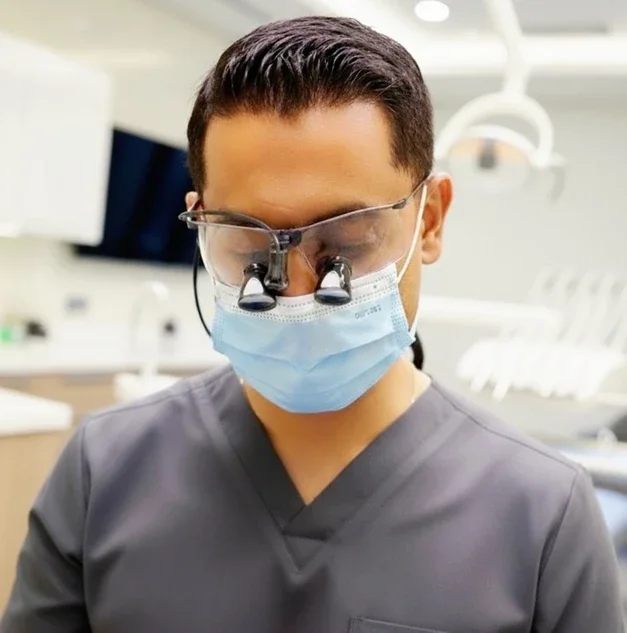
ICONIC SMILES · DIAMOND APEX
Invisalign care. Diamond Apex experience.
Choose Iconic Smiles, a Diamond Apex Invisalign provider serving Hertfordshire and North London, for individually planned clear aligner treatment.
What does Diamond Apex Invisalign Provider mean?
Diamond Apex is an Invisalign provider tier recognising high annual treatment volume. It reflects extensive experience with the Invisalign system. Your treatment is planned around your teeth, bite and goals, with clinical reviews and retention discussed from the outset.
Perhaps your front teeth look straight when you smile, but they seem to sit further forward than you would like. Or you can close your lips comfortably, yet the upper teeth appear prominent in photographs taken from the side. Sometimes the teeth overlap neatly while the distance between the top and bottom front teeth feels larger than it should.
It is natural to wonder whether Invisalign can bring those teeth back without fixed braces. Sometimes it can. The important detail is that “front teeth sticking out” describes an appearance, not a diagnosis. There may be several different reasons for it, and those reasons determine what orthodontic treatment can realistically change.
A careful assessment looks beyond the front six teeth. It considers the space available in the dental arches, the position of the tooth roots, how the upper and lower jaws relate, and how the teeth meet when you bite. In some cases clear aligners are a very reasonable option. In others, a different orthodontic approach—or a more modest treatment goal—may be safer and more predictable.
First, what exactly is protruding?
Dentists use a few terms that sound similar but describe different things.
Proclined front teeth lean forward. The crowns may appear prominent because of their angle even if the jaw itself is not unusually positioned. In selected cases, changing the inclination of these teeth can make a meaningful aesthetic difference.
Increased overjet means there is a greater horizontal distance between the upper and lower front teeth when you bite together. It can be associated with the upper incisors leaning forward, the lower teeth being further back, differences in jaw position or a combination of factors.
Overbite is different: it describes the vertical overlap of the front teeth. You can have a deep overbite without a large overjet, or a prominent overjet with relatively little vertical overlap.
Jaw-position differences matter because teeth cannot always compensate safely for a substantial skeletal relationship. Braces or aligners move teeth within biological limits; they do not reliably reposition fully grown jaws as if they were being remodelled from scratch.
How does Invisalign actually move a front tooth backwards?
The clear trays apply carefully planned forces through the surfaces of the teeth. Tooth-coloured attachments may help the aligners grip and control movement, while other components or elastics can be used in selected cases. Each stage aims to produce part of the overall change.
But “move the tooth backwards” can mean two things. The crown might tip backwards, changing the visible angle. Or the whole tooth, including its root, might need to move further back within the jawbone. These are different biomechanical tasks.
If the crown tips back while the root remains poorly controlled, the finished angle and bite may not be what was intended. That is why a projected animation should be treated as a plan, not a recording of what will inevitably happen.
A recent systematic review of clear aligners in cases involving tooth extraction found limitations in the amount of incisor retraction and control over roots compared with planned movements. [1] That does not rule out Invisalign for prominent front teeth. It tells us that cases requiring extensive movement deserve careful planning and honest discussion of alternative appliances.
The real question is: where will the space come from?
Teeth cannot simply move backwards through other teeth. If the front teeth are to occupy a different position, there must be enough space within the arch and a safe path for that movement. The space may already exist, or the clinician may need to create it.
One option is using existing gaps. If you have spacing between your front teeth, the plan may involve closing or redistributing those gaps while controlling the position and angle of the incisors. The final bite determines whether the available space is sufficient.
Another option is moving back teeth slightly backwards, often called distalisation. This may be possible in selected cases, particularly where there is suitable space and anchorage. It is not an unlimited method; the wisdom teeth, roots, bone and opposing bite can restrict what is achievable. A systematic review found that some upper molar distalisation with clear aligners can be achieved, while noting uncertainty and a need for appropriate anchorage planning. [2]
Sometimes clinicians propose interproximal reduction, or IPR: carefully removing a very small, planned amount of enamel between selected teeth to create space. It is not appropriate for everyone. You should know which teeth are involved, why it is necessary, how much enamel would be removed and whether an alternative exists. The fact that IPR is often minor does not mean it should be undertaken without discussion and consent.
In more demanding cases, extraction of a suitable tooth or teeth might be considered to create sufficient space. That is a significant and irreversible decision. It is also a context in which controlled movement of roots and the back teeth becomes particularly important. No patient should be steered towards or away from an extraction simply because they have asked specifically for Invisalign.
The space question is often the point at which two apparently similar smiles turn out to need very different treatment plans.
Can Invisalign help without removing teeth?
Yes, where enough appropriate space can be found and the planned movement is within reasonable limits. Some patients need relatively modest adjustment of incisor inclination combined with small changes elsewhere in the arch. Others need a larger reduction in overjet, extensive tooth movement or correction of the relationship between upper and lower teeth.
A clinician should be able to distinguish a non-extraction plan that meets your goals from one that merely makes the front teeth look slightly less prominent while leaving important bite issues unresolved. Both may be legitimate choices, but they are not equivalent.
A useful question is: “If we keep every tooth, what is the likely improvement—and what would remain unchanged?” You may find that the realistic result is exactly what you want. Or you may decide that a more comprehensive orthodontic discussion is worthwhile.
Why an aligner simulation can look more convincing than real life
Digital treatment plans are excellent tools for communication. They help explain the direction of movement, the sequence and the proposed finishing position. What they cannot provide is certainty that each tooth will follow the virtual model with perfect precision.
A computer can show a front tooth moving back in an elegant straight line. Clinically, the tooth has a root surrounded by living supporting tissues, and the appliance has to generate the appropriate forces. The aligner may not express all the planned movement. Tracking may differ, attachments may require adjustment and additional aligners or other mechanics may be needed.
For prominent incisors, pay particular attention to root position and inclination, not just the edge of the front teeth. A modern expert consensus on clear-aligner biomechanics highlights the challenges of anterior retraction and recommends appropriate torque control and, in selected cases, auxiliary techniques. [4]
Ask what the clinician expects to be straightforward, which movements are less predictable and what the plan would be if the teeth do not track as hoped. A willingness to explain uncertainty is a strength, not a weakness.
Will my lips or facial profile look different?
Possibly, but not in a way anyone should promise from a photograph alone. The front teeth help support the lips, so changing their position can alter the relationship between teeth and soft tissues. The amount and direction of any visible change vary substantially between people.
Someone whose upper lip is supported by markedly forward-angled incisors may notice a difference after suitable retraction. Another patient may have a similar overjet but a different jaw relationship or lip anatomy and see much less change. A systematic review of incisor positioning notes that soft-tissue responses depend on several facial and dental factors. [5]
This is why a thoughtful consultation includes your profile, not only the smile shown from the front. If you like the fullness of your upper lip, say so. If your main concern is the teeth appearing too prominent from the side, say that too. The treatment plan should take your preferences into account without pretending to redesign every facial feature.
What if my front teeth are straight but still seem too far forward?
Straightness and position are separate things. You can have beautifully aligned incisors that sit at an angle you dislike, just as you can have crooked teeth with a reasonable overjet. Cosmetic bonding or veneers may alter how the edges look, but adding material to already prominent front teeth can sometimes make the appearance more pronounced rather than solve the underlying position.
Ask the clinician to explain whether the proposed treatment changes alignment, inclination, overjet or all three. That single clarification can prevent a great deal of disappointment.
Three hypothetical situations, three different discussions
A small change in angle. Your front teeth are a little forward-tilted, your bite is otherwise reasonably stable and there is suitable space to adjust their inclination. Clear aligners may be one appropriate treatment to consider. The key is whether the required movement can be controlled without placing the roots outside their supporting bone.
A sizeable overjet with crowded teeth. The front teeth appear prominent, but the arch is already crowded. Space must be created before substantial retraction can occur. That may involve more complex mechanics, and the choice between aligners and fixed braces deserves careful comparison. The British Orthodontic Society also cautions against assuming one brace type is suitable for every orthodontic problem. [3]
A jaw relationship that contributes to the appearance. The upper and lower jaws meet in a way that makes the upper front teeth appear particularly far forward. Simple aligner movement may improve some dental features without correcting the underlying skeletal relationship. Specialist orthodontic assessment may be appropriate to establish realistic choices.
These are illustrative scenarios, not diagnoses. They show why the answer cannot be determined by sending a photograph and asking for a fixed number of aligners.
What does wearing Invisalign involve if your front teeth need significant movement?
Treatment only works as intended when the appliance is used as directed. Invisalign's UK patient information says that aligners are typically worn for around 20–22 hours a day, with exact instructions provided by the clinician. [6]
What makes treatment safe as well as attractive?
Before moving teeth, the clinician needs to consider the health of your gums and the bone supporting the roots. Particular care may be required if you have existing gum recession, reduced periodontal support or a history of gum disease. Moving teeth is a biological process, not simply pushing objects around in a digital model.
Orthodontic treatment also carries potential risks, including changes to the roots, gum recession, decay if cleaning is inadequate and movement after treatment if retainers are not used. You should receive an explanation proportionate to your individual circumstances, not a frightening catalogue of unlikely outcomes or an assurance that treatment has no risks.
A comprehensive plan also checks the lower teeth and the final bite. Bringing upper incisors backwards without enough clearance can create an uncomfortable relationship with lower teeth. Sometimes it is necessary to coordinate movement in both arches even when your only visible concern is the upper front teeth.
Five questions to ask before choosing Invisalign
- Is my concern tooth inclination, overjet, jaw position or a combination? Ask to be shown the difference.
- Exactly where will the space come from? Existing gaps, planned IPR, movement of back teeth and extractions are not equivalent choices.
- How will you control the roots of my front teeth? This matters when substantial retraction is planned.
- What change can I realistically expect from the side? A front-facing digital smile does not answer every aesthetic question.
- What happens if the predicted movement is not achieved? Ask about reviews, refinements, alternatives and what is included in the fee.
Frequently asked questions
Can Invisalign push my upper front teeth back? It can achieve some forms of incisor retraction in suitable cases. How much is practical depends on space, root control, gum health, bite and treatment complexity.
Will I need teeth extracted? Not necessarily. But a responsible plan should explain the available space and whether the desired movement is possible without extractions.
Can I fix protruding teeth by treating only the top row? Sometimes limited upper-arch treatment is possible, but the lower teeth and overall bite must still be assessed. Treating one arch without considering the other can create problems.
Will my lips become thinner? Lip appearance can change with tooth movement, but the result is highly individual and cannot be promised from an aligner simulation.
Is Invisalign quicker than braces for this? Not as a general rule. The degree and type of movement, appliance choice and adherence to treatment determine the timeline.
Find out what is possible for your smile
If you would like your front teeth to sit further back, it is worth exploring the question before assuming you need veneers or a particular kind of brace. A £30 consultation at Iconic Smiles can help begin that discussion, with an examination and an explanation of what further orthodontic records or assessment may be needed. The aim is a realistic plan for your teeth and bite—not a standardised promise based on a simulation.
Clinical sources
- Systematic review and meta-analysis of clear aligners in extraction-based treatment: https://pubmed.ncbi.nlm.nih.gov/41195763/
- Systematic review of molar movements with clear aligners: https://pubmed.ncbi.nlm.nih.gov/40936630/
- British Orthodontic Society, adult orthodontic treatment choices and limitations: https://bos.org.uk/patients/treatments/faqs/
- Expert consensus on biomechanics and planning with clear aligners: https://www.nature.com/articles/s41368-025-00350-2
- Systematic review on optimal upper incisor positioning and facial soft tissues: https://pmc.ncbi.nlm.nih.gov/articles/PMC8770963/
- Invisalign UK, patient guidance and recommended daily wear: https://www.invisalign.co.uk/frequently-asked-questions
Your next step, when you’re ready
We would be pleased to welcome you for a £30 consultation at your preferred Iconic Smiles practice. Bring your questions, and we can talk through the options that may suit you.
£30 for a planned-treatment consultation. Scans, additional investigations and emergency assessments may have separate fees; please confirm when booking.