
Invisalign and teeth straightening
Straightening Teeth Before a Molar Implant: Why It Matters
Understand how teeth can move after a molar is lost and why alignment and available space may need assessing before an implant.
Talk to us about straightening your teeth
You might have a particular change in mind, or simply want to know what is possible. At a £30 consultation, we can talk through your goals and explain how the next steps are planned.
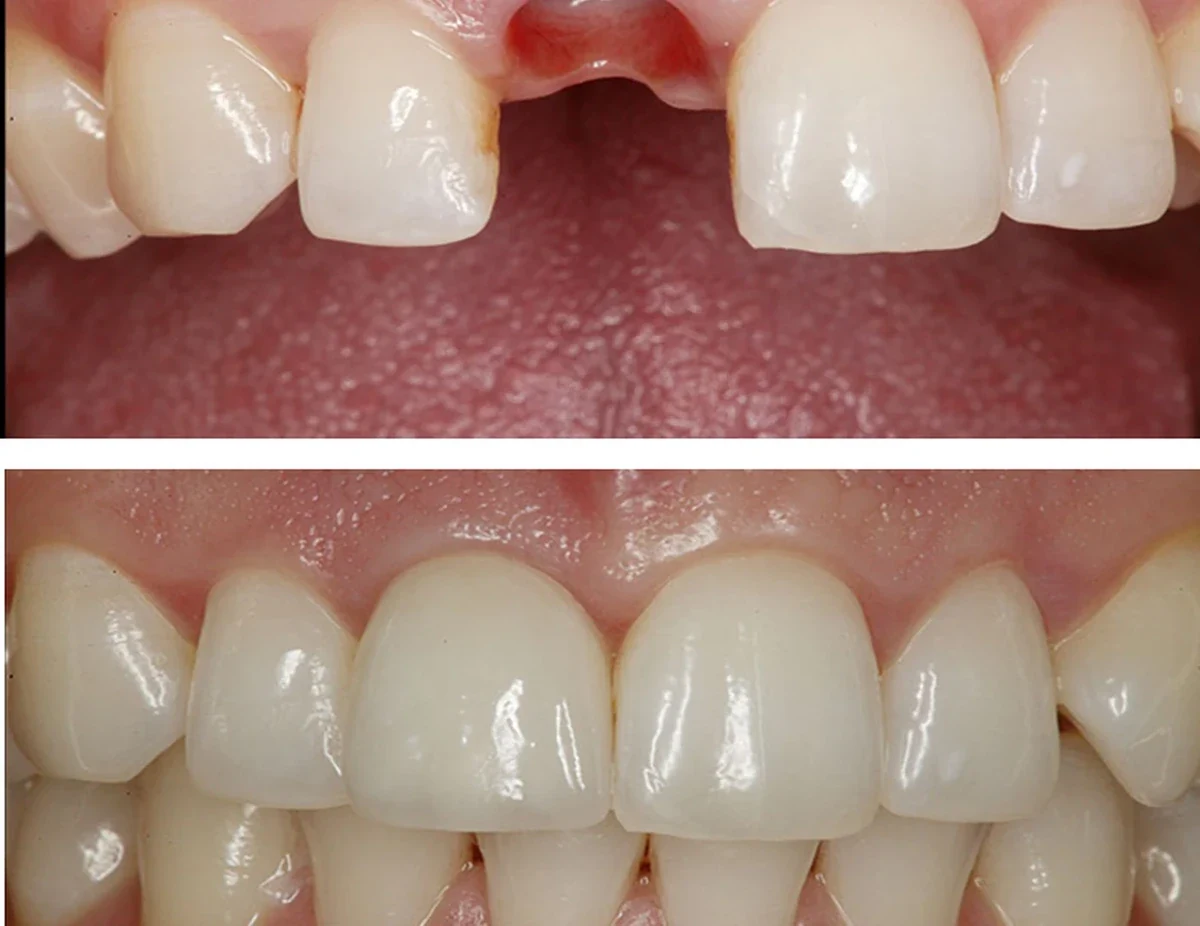
Straightening before a molar implant may help if neighbouring teeth have tilted or the opposing tooth has moved into the gap. These changes can reduce the room for a proportionate crown or suitable root spacing. Where the site is already appropriate, orthodontics may offer little benefit. The assessment should establish which movement would improve the replacement and bite before surgery is planned.
Why a tilted molar is not just a narrow gap
A tilted molar can leave awkward crown dimensions, contacts or a chewing surface that does not meet the opposing tooth well. It may also create a cleaning trap beside the tooth ahead. Uprighting aims to improve that relationship, with the plan guided by root shape, gum and bone support, movement direction and the anchorage available to control it.
What treatment may actually involve
Limited fixed appliances or aligners may achieve selected movements, depending on the forces required. Large molar roots can make controlled uprighting more demanding. The plan may need rotation, tipping back or intrusion, meaning movement further into the socket, as well as a change in crown angle. The clinician should identify which teeth move and how progress will be checked. A shared orthodontic and restorative plan helps coordinate the final space.
Opposing teeth may have moved as well
If a lower molar is missing, the upper tooth can gradually move down into the unopposed space in some patients. That reduces the vertical room for a replacement crown. Straightening the neighbouring teeth alone may therefore not solve the problem. The team could consider orthodontic adjustment of the opposing tooth or appropriate restorative alternatives, depending on its condition. The desired crown must have sufficient space for material thickness, a sensible occlusal relationship and cleaning access, without unnecessarily harming a healthy opposing tooth.
Should the space be closed instead of replaced?
In selected cases, moving existing teeth to close a missing-molar gap can be an alternative to creating space for an implant. This may require substantial movement and should not be offered as an easy substitute for tooth replacement. Factors include the number of missing teeth, age, bone support, bite, wisdom-tooth position and the direction of movement. Sometimes leaving a shortened but functional dental arch is reasonable. The best discussion compares these approaches before deciding that implant surgery is automatically necessary simply because a tooth is absent.
The implant itself will not move like a natural tooth
Natural teeth are suspended by periodontal ligaments and respond to orthodontic forces through biological remodelling. An osseointegrated implant is fixed in bone and does not participate in ordinary orthodontic tooth movement. That is why placing an implant prematurely can lock the restoration into a position that later limits treatment. If orthodontics could improve the site or the wider bite, its potential should be assessed first. Once the teeth and roots are correctly positioned, restorative planning can determine the implant, bridge or other replacement design.
Questions before agreeing to combined treatment
Before combined treatment, establish whether movement is needed for root clearance, crown width, contact position or an opposing tooth that has over-erupted. Agree the sequence, retention and final replacement in one plan. If these dimensions already suit restoration, additional orthodontics may not be worthwhile; where they do not, movement may create a more functional and maintainable site.
Evidence and further reading
Making the sequence worthwhile
An orthodontic stage should address a defined limit in the gap, roots or bite. If the site is already suitable, compare its additional commitment with the benefit expected for the final implant crown.
Iconic Smiles practices are in Hatfield and Cheshunt in Hertfordshire, and Friern Barnet in North London. If travelling from Bedfordshire, Buckinghamshire or Essex, confirm the actual practice for each appointment.
Further clinical details: Straightening a Tilted Molar Before Replacing a Missing Tooth
Straightening a tilted molar can sometimes create a better space for a missing-tooth replacement. After years beside a gap, a molar may lean into it, leaving less room at the chewing surface than between the roots. Without assessing that tilt, a new crown or implant may be awkwardly positioned, difficult to clean or prone to trapping food. An orthodontic stage is useful when its benefits justify the additional treatment.
How a molar tips into an empty space
Teeth respond to long-term forces and the loss of a neighbouring contact. A lower second molar may lean forwards after loss of the first molar, reducing the usable space for a replacement. The opposing tooth can also move towards the vacant space. The clinician assesses tooth position in all three dimensions rather than treating the tilted crown as a simple visual defect. Bite contacts and periodontal support are important to the feasibility of movement.
What uprighting actually changes
Orthodontics aims to bring the molar into a more suitable position, potentially recovering space for an implant crown and improving tooth contacts. It may use fixed braces, aligners with extra features or another source of support for the movement. Establish whether the plan moves the roots, the crown or both. These are different movements with different demands and treatment times.
Why this can protect the proposed implant
An implant does not respond to orthodontic forces once it is integrated. If the molar is left tilted, the replacement crown may need to be narrowed or contoured artificially to fit. Correcting the molar first can permit better access for cleaning and a more natural contact profile. The restorative dentist must confirm that sufficient bone and appropriate root separation will actually be available after movement; uprighting alone does not guarantee the implant site is suitable.
Looking at the opposing tooth
The tooth opposite the gap may also have moved into it. Correcting the height of the bite can require separate treatment, such as moving that tooth back into the jaw, selected reshaping or restorations after assessment. The missing lower molar therefore needs to be considered with its upper partner. Digital bite records or models mounted to reproduce the bite may help show the available height and contacts.
Could a bridge be simpler?
Sometimes existing large restorations in the neighbouring teeth make a bridge worth comparing. A resin-bonded bridge is not usually the default solution for a heavily loaded posterior span. In other cases, the tipped molar itself has limited prognosis and requires a broader assessment. The aim is not automatically to move a tooth before every implant, but to decide whether the benefits justify an extra orthodontic phase.
What an integrated appointment should establish
Ask for the desired tooth position, expected space gained, planned root alignment, implant or bridge choices and proposed retention after uprighting. Compare total time, number of visits and long-term cleaning. You may be surprised that orthodontics improves the prospects of a single missing-tooth replacement, but that coordination often makes more clinical sense than designing a compromised crown around an avoidable tilt.
The measured goal may be root uprighting
For example, a lower molar leaning into a missing first-molar space may leave very little room at crown level while its roots remain farther back. Simply tipping the crown to improve its appearance could leave an unsuitable root relationship or create new bite contacts. The orthodontist and restorative dentist need to agree the target angle, gap width and method of movement. Extra support or features may be necessary; an ordinary aligner sequence may not reliably achieve it. The opposing upper tooth also needs checking for movement into the space. After uprighting, the site is reassessed to confirm whether a suitably shaped, cleanable replacement can be made.
Your next step, when you’re ready
We would be pleased to welcome you for a £30 consultation at your preferred Iconic Smiles practice. Bring your questions, and we can talk through the options that may suit you.
Any additional investigations and their fees will be explained before you decide.