
Dental implants — replacing missing teeth
Can dental implants fail? Understanding risks before treatment
Considering dental implants? Learn which risks and long-term care responsibilities to discuss before deciding whether treatment suits you.
Explore your tooth replacement options
If you are considering replacing a tooth or several teeth, a £30 consultation gives you a chance to explain what matters most, ask questions and explore the options with our team.
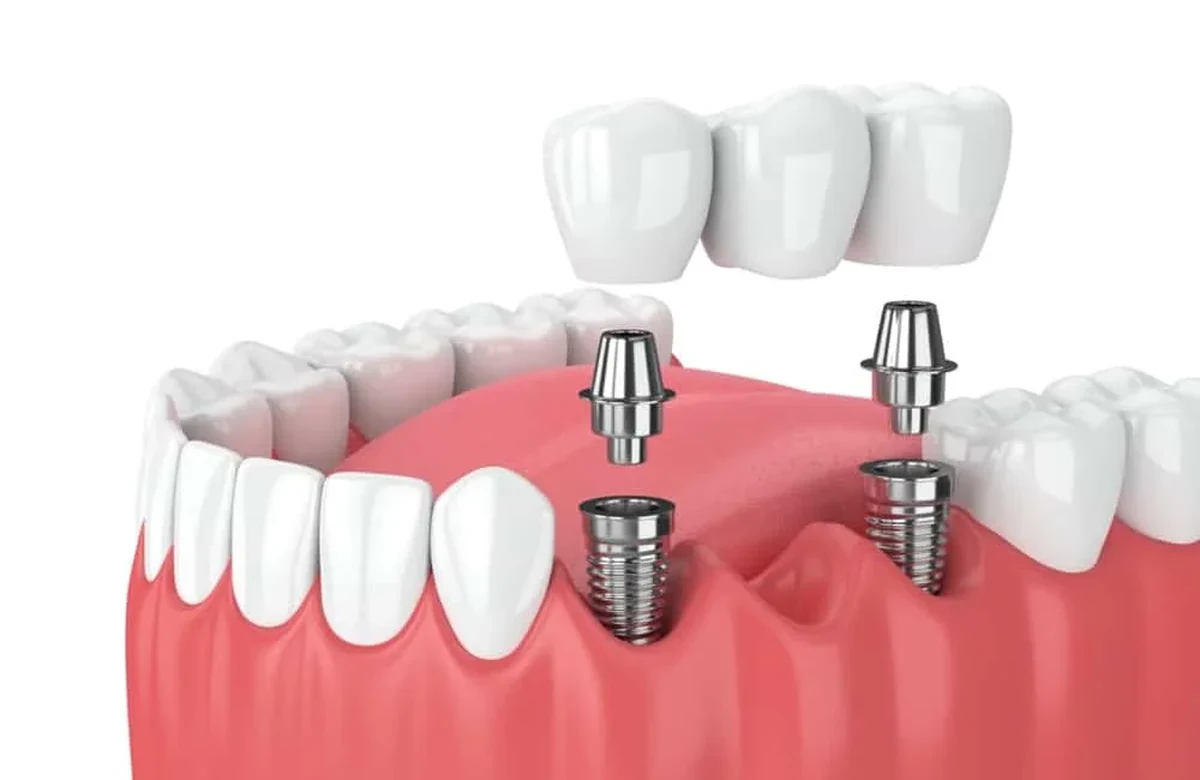
Yes, dental implants can fail, and understanding that risk is part of deciding whether treatment is right for you. Some do not establish a stable bond with bone; later problems can involve inflammation or the replacement tooth and its components. Before surgery, discuss your individual risks, healing, maintenance and how any complications would be assessed.
Implant failure is usually not the same as organ-transplant rejection. Mechanical problems, lack of integration and peri-implant disease require different assessment and treatment.
“Rejection” is an understandable but imprecise word
Patients often use rejection to describe an implant that feels loose, becomes uncomfortable or is removed after surgery. Dental implants are not living organ transplants, and ordinary implant failure is not generally an immune rejection process of the kind associated with transplanted organs. An implant might fail to integrate with bone, lose support after previously functioning, or develop a mechanical complication involving its crown or screw. Less commonly, a patient may have a relevant material sensitivity. The important task is to determine what actually happened rather than attaching a frightening diagnosis to an unfamiliar sensation.
Timing provides clues
An implant that does not become stable may not have integrated sufficiently with bone, a process called osseointegration. Early risks include infection, surgical or healing conditions, bone quality and loading demands, though one finding cannot prove the cause. Later, bleeding, deeper pockets and changes in bone support may indicate peri-implant disease. A clicking crown can instead come from a loose restoration. These need different care, so examination and appropriate X-rays are more useful than repeatedly pressing the implant to test it.
Warnings worth reporting
Bleeding on gentle cleaning, persistent swelling, pus, a bad taste, increasing discomfort and visible change around the gum deserve assessment. An implant that truly moves within bone should not be loaded further until examined. However, the absence of pain does not rule out disease: peri-implant inflammation can progress with relatively subtle symptoms. Equally, a transient odd feeling does not establish failure. A clinician may evaluate inflammation, pocket depths, prosthetic accessibility, screw stability and bone levels seen on X-rays while considering your original baseline records.
Why prevention starts before placement
Prevention begins before placement and continues when the implant is used and throughout follow-up, as recommended in the European Federation of Periodontology's S3 guideline. It includes assessing gum-disease risk, designing a restoration you can clean, professional supportive care and prompt attention to inflammation. Smoking, previous periodontitis, diabetes control and a full-arch design can all affect the discussion. These measures help identify and manage risks without guaranteeing that every complication can be avoided.
What an honest second opinion looks like
When comparing implant care, understand how the team would investigate and manage a concern. Relevant records include surgery dates and details, the implant manufacturer, earlier X-rays, medical and medication history and any change in symptoms. Assessment distinguishes a moving crown or screw from a fixture losing bone support. Options may range from adjusting or replacing the restoration to treating inflammation or removing an implant where necessary. Any proposal for replacement should explain the earlier findings and how the new plan addresses them; another brand cannot promise zero risk.
How clinicians separate crown movement from fixture movement
A click during chewing without gum inflammation can come from a component needing adjustment. Bleeding, deeper pockets and bone loss can occur even when the crown feels stable. These examples show why the source of a symptom needs assessment. Twisting or pulling components at home can damage them; recording when a symptom began and whether food or temperature affects it gives the clinician more useful information.
Allergy concerns need proportionate evaluation
Titanium is widely used for implants, with ceramic materials available for selected indications. Suspected hypersensitivity needs considered clinical evaluation. A metallic taste, gum colour change or nonspecific fatigue alone cannot establish it, and tests have limitations. A credible history may warrant relevant specialist expertise. Other diagnoses, crown factors and gum conditions should be considered before removal is proposed, because removing an implant unnecessarily can cause harm.
Sources and professional guidance
Applying the information:
Your next step, when you’re ready
We would be pleased to welcome you for a £30 consultation at your preferred Iconic Smiles practice. Bring your questions, and we can talk through the options that may suit you.
Any additional investigations and their fees will be explained before you decide.