
Dental implants — replacing missing teeth
Dental Implants: The Complete UK Guide to Treatment, Costs, Risks and Recovery
A dental implant replaces a root; the crown, bridge or denture above it replaces the visible tooth or teeth.
Explore your tooth replacement options
If you are considering replacing a tooth or several teeth, a £30 consultation gives you a chance to explain what matters most, ask questions and explore the options with our team.
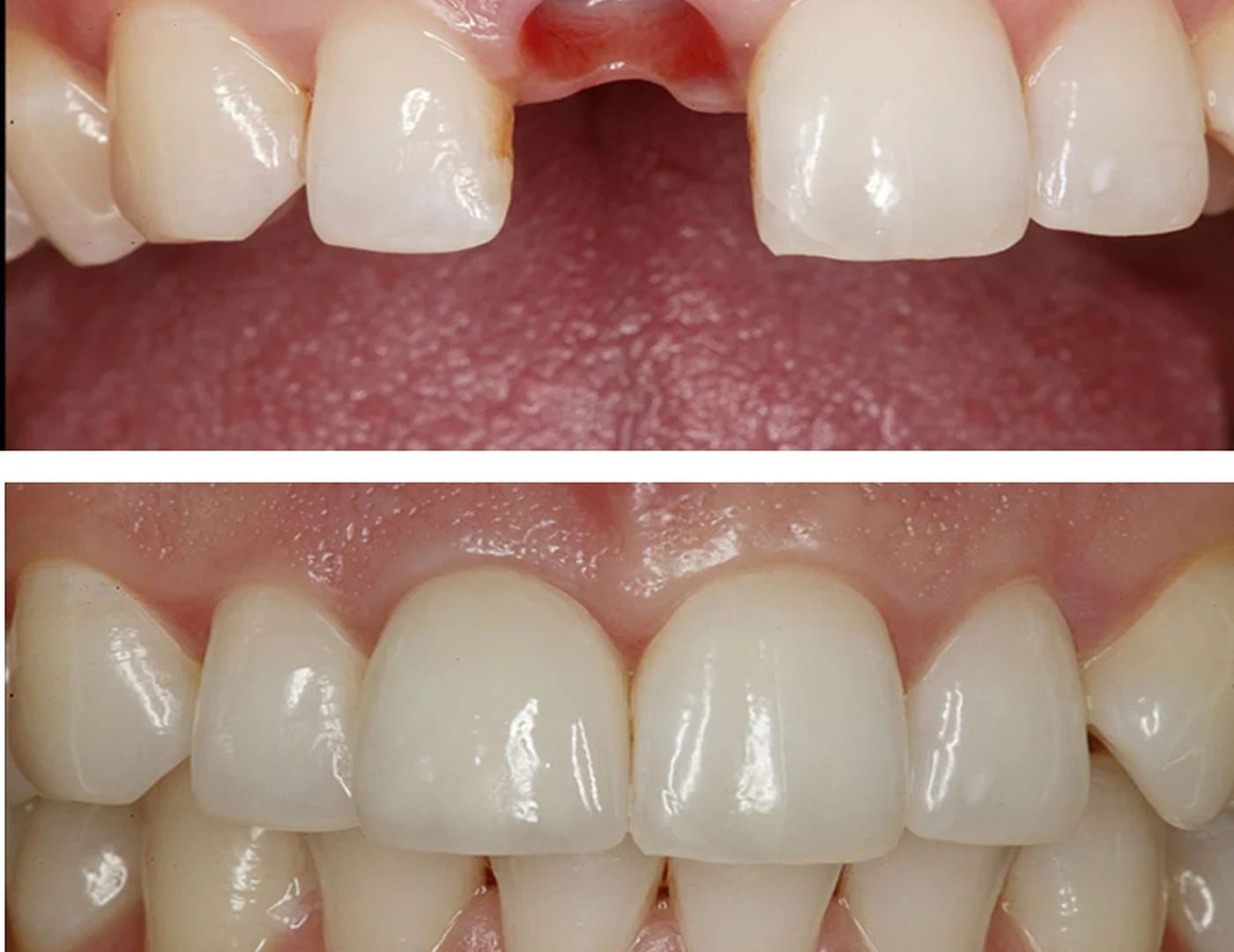
What an implant replaces
A dental implant replaces a missing tooth root. A separate crown, bridge or denture attaches above it to replace the visible teeth. An implant may avoid preparing healthy neighbouring teeth for a bridge, but involves surgery and continuing cleaning and reviews. The different parts may also need maintenance or repair over time. [1]
The decision starts with the remaining teeth
The assessment should compare an implant with a bridge, a removable denture and, where reasonable, leaving a space. The dentist needs your medical and medication history, oral examination and appropriate imaging. Not everyone needs grafting. Your plan should explain why a tooth cannot predictably be retained before extraction is agreed. [1]
Stages and the complete cost
Assessment, any preparatory treatment, implant placement and the final restoration are separate stages. Bone grafting can add a stage, and healing affects the sequence. A temporary tooth is different from the definitive restoration. Ask for an itemised estimate identifying surgery, abutments, teeth, additional procedures and follow-up; a placement-only price is not the complete replacement-tooth fee. [1]
Risks that matter after the tooth is fitted
An implant may fail to integrate; components can loosen or wear; and inflammation can affect the supporting tissues. Smoking and the condition of the mouth influence risk. Prevention and supportive care begin during planning and continue after loading. A comfortable implant does not prove that its supporting tissues are healthy. [1][2]
What the evidence can and cannot promise
Long-term studies distinguish an implant remaining in place from success without biological or technical problems. Their results describe studied groups, not an individual guarantee or an audited Iconic Smiles success rate. Ask how tissue health, cleaning access, function and repairs will be monitored, alongside whether the implant remains present. [3]
Compare approaches on clinical grounds
A surgical guide can help transfer a planned implant position to your mouth. Whether it adds useful control depends on the number of implants, complexity and nearby anatomy. The team also needs an alternative if the guide does not fit correctly or the implant is less stable at placement than expected.
Compare the whole cost of each route
A reline or replacement denture may be lower in upfront cost, although repeated maintenance can be needed. An implant-retained denture involves surgery, attachments, the denture itself and periodic component replacement. Ask for separate estimates covering scans, implants, attachments, any new denture and continuing maintenance. A tempting price for the implant fixtures alone is not a comparable total.
Make cleaning a treatment-design test
During the trial stage of a bridge, ask the clinician to place the proposed brush or floss beneath each accessible area and let you demonstrate the technique. If you cannot reliably reach an important surface, say so before the restoration is finalised. Ask how to spot new bleeding, unusual tastes or loosening components and whom to contact. The ability to maintain a fixed bridge should be checked with the same seriousness as its appearance and bite. This is particularly important for people with reduced dexterity or a history of gum disease, since plaque control cannot be assumed.
Understand why bone and gum conditions affect the sequence
The implant assessment may identify a need for additional tissue-related treatment. NHS information on bone grafting describes augmentation as a possible stage where the available bone is insufficient for the proposed approach. Ask why it is being recommended and how it serves the final replacement. Grafting is not an automatic requirement for every implant patient, and the possibility of placing a fixture does not automatically establish that the desired crown and tissue appearance can be achieved without further planning. NHS patient informationSupporting source (academy.iti.org)
Compare the consequences of problems, not just the starting fee
Request an explanation of how the team would investigate a fractured part, movement or an inflamed site and what might need separate treatment. Ask what is included in the estimate and which future costs cannot be predicted. At Iconic Smiles, confirm the responsible clinicians and maintenance arrangements. The decision should balance the intended support, extent of treatment, realistic alternatives and ongoing care. Neither an expensive high-count plan nor a lower-cost low-count plan is justified solely by its number; the rationale needs to show how it meets the patient’s clinical situation and priorities. See our current treatment fees · Meet the Iconic Smiles dental team · Read the supporting clinical study (3)
Immediate treatment versus preserving future choices
If a tooth is still present but cannot be retained, ask whether an implant can be placed at extraction, whether the socket should be preserved with grafting, or whether planned healing is preferable. Immediate placement does not prevent normal post-extraction remodelling, and it cannot compensate for every deficient socket wall. Socket preservation may help retain dimensions for a future implant but does not guarantee that no graft will be required later. The right decision depends on infection, remaining bone, gum architecture and whether initial stability can be achieved. Patients should not confuse immediate implant placement with having a definitive tooth loaded for normal chewing that same day.
Assessment checks the site and the wider clinical picture
The team takes a medical and dental history, examines the mouth and obtains appropriate records. Explain medicines, smoking, previous problems and the priorities that affect your choice. Ask which findings are established and whether more information is needed before the sequence can be confirmed. A responsible plan can distinguish a likely route from a conditional stage. It should not present every later decision as settled if the condition of the site or an existing tooth still needs clarification. NHS patient information
Smoking changes the risk calculation
Smoking is associated with more early implant failures. A 2024 review in the Journal of Dentistry drew on 32 observational studies. At implant level, its pooled cohort-study odds ratio was 2.59, with a 95% confidence interval of 2.08–3.23. That compares the odds in the studied groups; it is not your personal probability of failure. Your dentist also needs to consider gum disease history, site, diabetes, cleaning and the complexity of your proposed care.
Compare a revised plan before accepting the compromise
Request an explanation of the preferred option, the expected limitation and the alternative if additional treatment is declined or unsuitable. A bridge, a removable replacement or another appropriate pathway may deserve discussion. Confirm the intended final tooth, temporary care, important risks and complete estimate. You should be able to explain why the proposed compromise is acceptable to you, rather than discover its visible or practical consequences after surgery. If it does not meet your priorities, revisit the plan before an irreversible step. NHS patient information
Know which part of treatment the promise describes
Same-day full-arch treatment usually refers to providing an early temporary replacement supported by implants. It should not be understood as a promise that every patient receives the definitive bridge and completes all care on the day of surgery. Implant placement and loading are separate decisions, and the prosthesis itself needs a clear description. Ask whether the proposed teeth are temporary or final, which jaw is involved and what later appointments remain within the treatment pathway. NHS patient informationSupporting source (academy.iti.org)
A realistic first-day menu
Once the local anaesthetic has worn off enough for you to avoid biting your cheek or tongue, many people tolerate cool or lukewarm, easy-to-swallow foods. Examples can include yoghurt, scrambled eggs, smooth soup that is not hot, porridge that has cooled and soft mashed vegetables. Eat slowly on the comfortable side if your dentist has advised this. Avoid treating soup as automatically safe: a very hot bowl may irritate tissues, and a chunky soup can require chewing. Hydration matters, but avoid vigorously rinsing or creating suction if your team has advised against it.
What to do before you can be examined
Stop chewing on the affected side and contact the practice for advice rather than trying to tighten a component yourself. If a piece comes away completely, keep it in a clean container and take it to the appointment. Do not use household superglue or dental products intended for temporary natural-tooth crowns inside an implant connection. If the component is mobile enough to present a risk of being inhaled or swallowed, seek prompt professional instructions on safe management. A loose healing cap can also allow gum tissue to change shape, so do not postpone review for weeks.
Make cleaning access part of the handover
Before choosing an implant crown, understand how you would clean the tooth and the area where it meets the gum. The team should demonstrate aids that suit the space and what you can manage. If access is uncomfortable or impractical during your care, they need to assess the cause rather than leave you to force an aid through or stop cleaning. EFP guidance recommends prevention throughout treatment and regular care afterwards. Read the supporting clinical study
What is checked at a review
A clinician may assess soft-tissue healing, discomfort, plaque control, the position of components and whether the implant shows signs of instability. Radiographs are considered when clinically indicated, rather than as a universal substitute for examination. Some implant systems and situations permit objective stability measurements, but no single reading should be sold as a guarantee of success. The health of adjacent teeth and gum contours also informs the timing of crown impressions.
Why four, five or six implants may be discussed
Four implants can support certain carefully planned full-arch fixed restorations. Other arches may benefit from a different number or distribution of supports, and additional implants are not automatically better. Where bone is limited at the back, angled posterior implants may help avoid certain anatomical structures, but this is a surgical and prosthetic decision, not a simple shortcut. The surgeon must examine individual bone support, load paths and the feasibility of each site. The dentist planning the bridge must simultaneously consider where the prosthesis will sit relative to the lip, opposing teeth and available hygiene space.
Include tissues, space and the intended appearance
The replacement must fit the available restorative situation, not simply occupy enough implant positions. Full-arch guidance considers factors such as tissues, space and prosthetic design. Ask how any lost tissue is managed and how the intended teeth relate to your lips, smile and cleaning access. A visible aesthetic goal may affect design choices, while the available anatomy can limit them. If the plan includes a substantial bridge structure, understand what is replacing teeth and what is replacing tissue. This makes the proposal easier to assess than a fixture count accompanied by a generic smile photograph. Read the supporting clinical study
Assess the patient’s ability to reach the relevant areas
Tell the team about dexterity, vision, mobility or other practical issues affecting daily care. Explain if an aid is uncomfortable or a space is difficult to access. The assessment should connect those needs with the design and routine, not simply specify more products. The EFP guideline includes prevention during planning and after restoration, so the patient’s ability to perform the recommended care is relevant from the start. If assistance is needed, discuss how that can be provided and what demonstration or adaptation would help. Read the supporting clinical study
Complete the handover, records and review arrangements
The final appointment should leave you knowing what has been fitted, how to care for it and who assesses concerns later. Ask about the supportive-care schedule, technical review responsibilities and the route for advice if the bridge moves, breaks or becomes uncomfortable. At Iconic Smiles, confirm the clinicians and locations for surgery, restoration and maintenance and request the full itemised estimate. A coherent sequence links the intended bridge to its support and ongoing care. It should remain understandable if a clinical finding changes the plan, rather than depend on completing the original numerical package regardless of circumstances. Read the supporting clinical study · Meet the Iconic Smiles dental team · Find an Iconic Smiles practice · See our current treatment fees
Research and guidance
Your next step, when you’re ready
We would be pleased to welcome you for a £30 consultation at your preferred Iconic Smiles practice. Bring your questions, and we can talk through the options that may suit you.
Any additional investigations and their fees will be explained before you decide.