
Dental implants — replacing missing teeth
Dental implant maintenance: what to plan for before treatment
Implants need looking after, just as natural teeth do. Find out what daily cleaning, professional reviews and long-term maintenance really involve.
Explore your tooth replacement options
If you are considering replacing a tooth or several teeth, a £30 consultation gives you a chance to explain what matters most, ask questions and explore the options with our team.
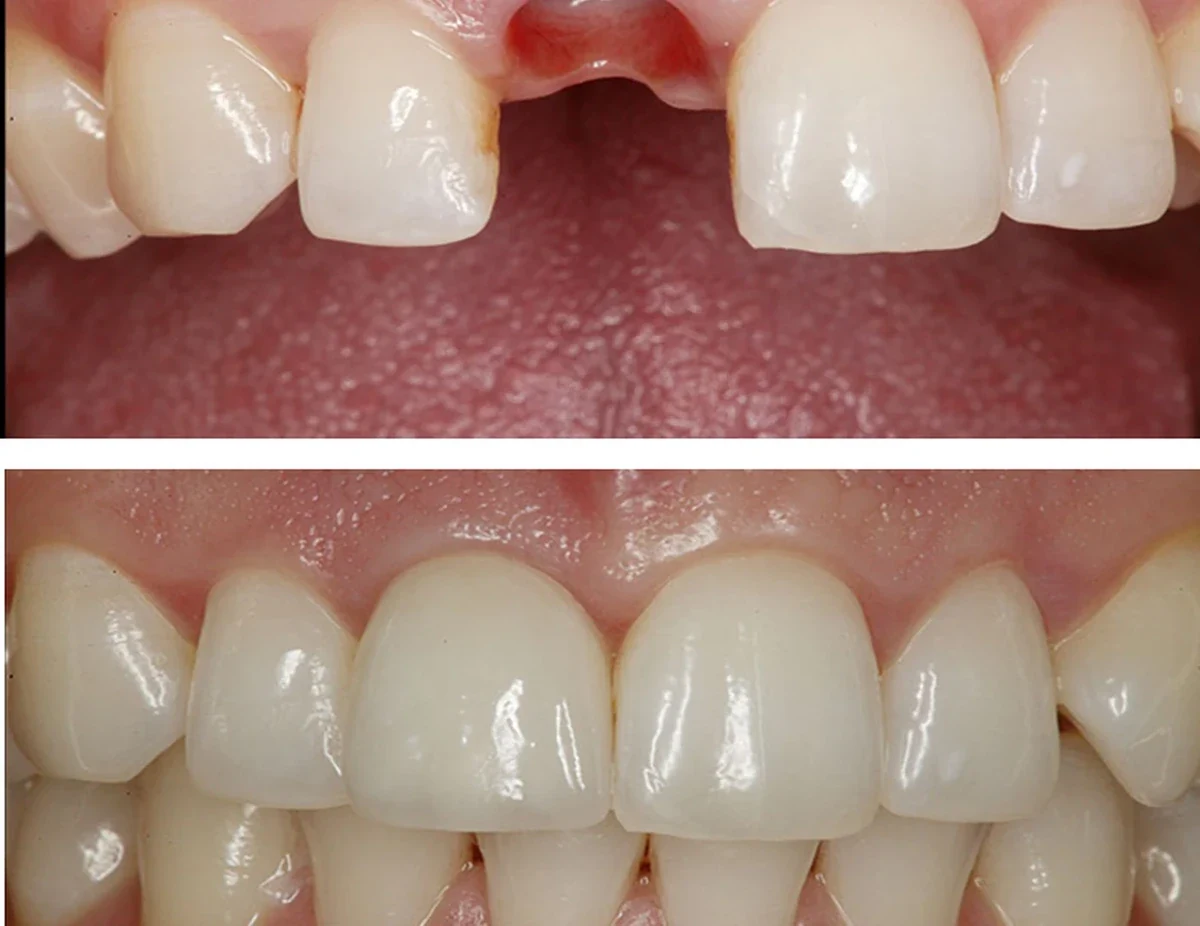
Implants are a long-term treatment decision, so it is worth understanding the commitment to cleaning and professional reviews before starting. Your clinician can explain how maintenance varies with your proposed implant restoration.
Maintenance starts before fitting the final teeth
Looking after implants starts with planning teeth you can keep clean. European Federation of Periodontology (EFP) guidance recommends prevention before and during treatment, followed by regular care once the replacement teeth are fitted. Reviews need to check the surrounding gums and bone, as well as whether the implant feels firm. [1]
Learn how to clean your particular restoration
Plaque can cause inflammation around an implant. Your team should demonstrate a cleaning method suited to the restoration and the spaces around it. Fixed full-arch bridges, individual crowns and removable prostheses create different access questions. Report areas you cannot reach rather than repeatedly forcing an unsuitable cleaning aid. [2]
Warning signs deserve assessment
Bleeding during cleaning, swelling, an unpleasant taste or a loose restoration can indicate a problem. Peri-implant diseases may be difficult to recognise at home. Arrange an assessment when these changes occur; the examination must distinguish inflammation from a mechanical component problem and assess supporting bone when appropriate. [2][3]
Use an individual recall plan
Supportive peri-implant care includes periodic assessment of tissue health. Your clinician should determine the schedule from your condition and risk, explain what each review covers and update the plan as findings change. A universal online cleaning timetable is not a substitute for that plan. [1]
Keep useful records
Ask for the implant system, restoration details and maintenance instructions, and clarify who to contact if a component loosens. Discuss foreseeable follow-up and costs when agreeing treatment. Keeping this information makes a future consultation more useful, particularly if care moves between providers. [3]
Further questions to consider before treatment
- If you are considering a fixed implant bridge, ask how you would clean around it and which parts need monitoring.
- If manual dexterity makes cleaning difficult, discuss practical implant-care routines before choosing treatment.
- Cleaning needs differ for single implant crowns and implant bridges; ask what daily care your proposed restoration requires.
Attachment choices influence day-to-day use
Different attachment systems have different heights, wear components and space requirements inside the denture base. A low-profile attachment still needs sufficient material around it to avoid weakening the prosthesis. Retentive inserts may require replacement after wear, and the dentist must ensure the patient can remove the denture without excessive force. Someone with arthritis or limited manual dexterity should try a demonstration rather than discovering after fitting that the new appliance is too difficult to handle safely.
The sequence from records to treatment
Before the final teeth are made, the team checks the bite records, temporary or digital design, component compatibility and contact with the gums. You should also see how the proposed restoration will be cleaned.
Comparing treatment routes
The daily care depends on the replacement: a single crown, connected crowns, fixed bridge and removable implant denture need different routines. When comparing conventional dentures, attachment-retained dentures and fixed bridges, include cleaning access, changes in the ridge and future attachment replacement.
Compare the professional review commitment
The EFP guideline recommends a structured programme after implants are restored, including assessment of tissue health. Daily removal or a fixed restoration does not eliminate that need. Ask who reviews the implants, prosthesis and any remaining teeth and how information is shared if more than one clinician is involved. The interval and procedures should follow the clinical situation. A proposed design is easier to judge when you understand both the home routine and the professional support it will require over time. Read the supporting clinical study
Plan an implant restoration you can clean
A restoration must be shaped for a patient who can actually clean it; technically possible screw access does not guarantee practical hygiene.
Ask how you will clean beneath the bridge
For a bridge spanning three teeth, the underside of the replacement tooth may sit close to the gum ridge. Before it is made, the team should explain how you would reach that area with suitable floss or brushes, how the tooth will contact the tissue and how its edges will be checked at reviews.
Understand what a tissue review is looking for
Peri-implant mucositis involves soft-tissue inflammation; peri-implantitis includes loss of supporting bone. The diagnosis and its extent require professional assessment, not a judgement based only on diabetes status or how the crown looks. Report persistent bleeding, swelling, discharge or another new change. Ask how current findings are compared with relevant previous records and what determines your review interval. The EFP recommends structured supportive care, but this does not mean every patient should receive an identical appointment schedule or the same procedures regardless of the condition of the tissues and restoration. Periodontology guidanceRead the supporting clinical study (2)
Report changes in how the tooth meets the bite
A new sensation when the teeth meet, movement of the crown or difficulty chewing deserves assessment. Explain when it began and whether it occurs during a particular activity. A loose-feeling replacement does not by itself identify whether the problem is in the crown, a connecting component or the fixture. The dentist needs to distinguish those possibilities. Do not repeatedly test the movement, try to tighten a part yourself or use household adhesive; obtain instructions for the actual restoration. NHS patient information
Use a cleaning routine matched to the actual restoration
Ask the team to show you how to reach the relevant surfaces and spaces around the crown, bridge or denture. Explain dexterity problems, discomfort or an area you cannot access. The right response is to assess the barrier and the proposed method, rather than repeatedly add products without knowing whether they solve it. EFP guidance includes prevention within planning as well as aftercare. A maintainable design and an achievable patient routine are connected decisions, so continuing difficulties deserve discussion rather than being treated as an inevitable price of the reconstruction. Read the supporting clinical study
Follow the instructions for your operation and restoration
A grafted site, a healing implant and a temporary bridge may have different care needs. Use the instructions provided for your procedure, and clarify anything that conflicts with advice you have read elsewhere. Do not change prescribed medicines, start leftover antibiotics or invent a more aggressive cleaning routine to offset smoking. NHS implant aftercare describes pain, swelling and bruising after surgery, but the meaning of a symptom depends on its severity, progression and the clinical stage. The treating team should explain what is expected, what is restricted and how to obtain help if recovery differs from the plan. NHS patient information
Compare access to the areas that need care
A removable prosthesis can allow access when it is taken out, but the patient still needs an appropriate routine for the appliance and supporting structures. A fixed bridge requires care around the relevant spaces and surfaces without home disassembly. Neither description establishes that cleaning will be effortless or that the tissues will remain healthy without review. Ask for a demonstration of the actual proposal and identify the areas that might be difficult. The clinically suitable design should be considered alongside the care the patient can realistically perform. Read the supporting clinical study
The clinical decision at the next appointment
A single implant crown and a bridge need different cleaning access. For example, two implants may support three teeth, with the middle replacement tooth touching the gum beneath it. The team should demonstrate suitable brushes or how to thread floss through that space, explain when a powered irrigator may help and when professional removal is appropriate. Before the design is finalised, you should understand what will be checked and the alternative if you cannot comfortably maintain it.
Keep the underside of an implant bridge accessible
The underside of the replacement tooth needs a shape and space that you can clean. This should be planned before the bridge is fixed in place.
Cleaning and maintaining an implant-retained denture
An overdenture provides removable access for cleaning but still requires maintenance of abutments, attachments and the denture base.
How the design is tested
A trial tooth arrangement can assess vertical dimension, lip support, speech and the smile line before committing to final components. Retention cannot compensate for a poorly balanced bite. The prosthesis may need sufficient flange support for appearance even when implants supply the principal retention. Patients who want very slim or completely palate-free dentures should know whether their anatomy and the planned implant distribution realistically permit that outcome.
Make your cleaning routine manageable
If arthritis makes holding floss threaders difficult, discuss that before choosing a fixed bridge. A design with easier cleaning access, suitable interdental brushes or powered aids may help; a removable implant-retained denture may also deserve comparison. A demonstration lets you judge the actual daily tasks.
Understand components, wear and repairs
NHS implant information notes that components may loosen or wear with time. Ask what a change in fit, damaged tooth or attachment concern would mean for each proposed restoration. Clarify which parts can be maintained or replaced and who provides that care. The aim is to understand the likely service pathway rather than obtain a guarantee that a particular design cannot need repair. A removable appliance and a fixed bridge can have different practical consequences when a component requires attention, which should be discussed before treatment. NHS patient information
Keep cessation support and dental follow-up connected
If stopping remains difficult, discuss the support available and let the team know about changes in nicotine products or general health. Do not assume evidence about cigarettes establishes that every substitute is harmless for implant treatment. At Iconic Smiles, confirm who provides maintenance, where you should attend and which contact route applies between visits. Ask what is included in review fees and what might need separate assessment. An effective handover leaves you with manageable daily actions, an appointment plan and clear triggers for earlier contact, without claiming that perfect aftercare guarantees a complication-free lifetime. Meet the Iconic Smiles dental team · Find an Iconic Smiles practice · See our current treatment fees · Read the supporting clinical study (4)
Research and guidance
Your next step, when you’re ready
We would be pleased to welcome you for a £30 consultation at your preferred Iconic Smiles practice. Bring your questions, and we can talk through the options that may suit you.
Any additional investigations and their fees will be explained before you decide.