
Dental implants — replacing missing teeth
Dental implant costs over ten years: maintenance and replacement fees
Look beyond the initial implant fee. Understand reviews, hygiene, component repairs and possible replacement costs when planning a long-term budget.
Explore your tooth replacement options
If you are considering replacing a tooth or several teeth, a £30 consultation gives you a chance to explain what matters most, ask questions and explore the options with our team.
£30 for a planned-treatment consultation. Scans, additional investigations and emergency assessments may have separate fees; please confirm when booking.
The price people usually ask about is, “How much does a dental implant cost?” It is a sensible starting point, but not the whole financial decision. The more useful question is, “What am I likely to pay for this tooth over the next ten years, including the care that keeps it healthy?”
That is not because an implant should be expected to need constant repairs. Many patients enjoy implant restorations for years without major problems. It is because an implant is a long-term piece of dental treatment, not a product bought once and then forgotten. The visible crown, the connecting components, the gum and the supporting bone each have their own maintenance needs and possible expenses.
There is no honest single figure that predicts everybody's next decade. Your gum health, how you clean, whether you smoke, the complexity of the original treatment, your bite and the practice's fee arrangements all change the picture. What we can do is separate predictable costs from possible ones, explain what a quotation should cover and show you how to compare two plans intelligently.
First, separate the implant from the tooth you see
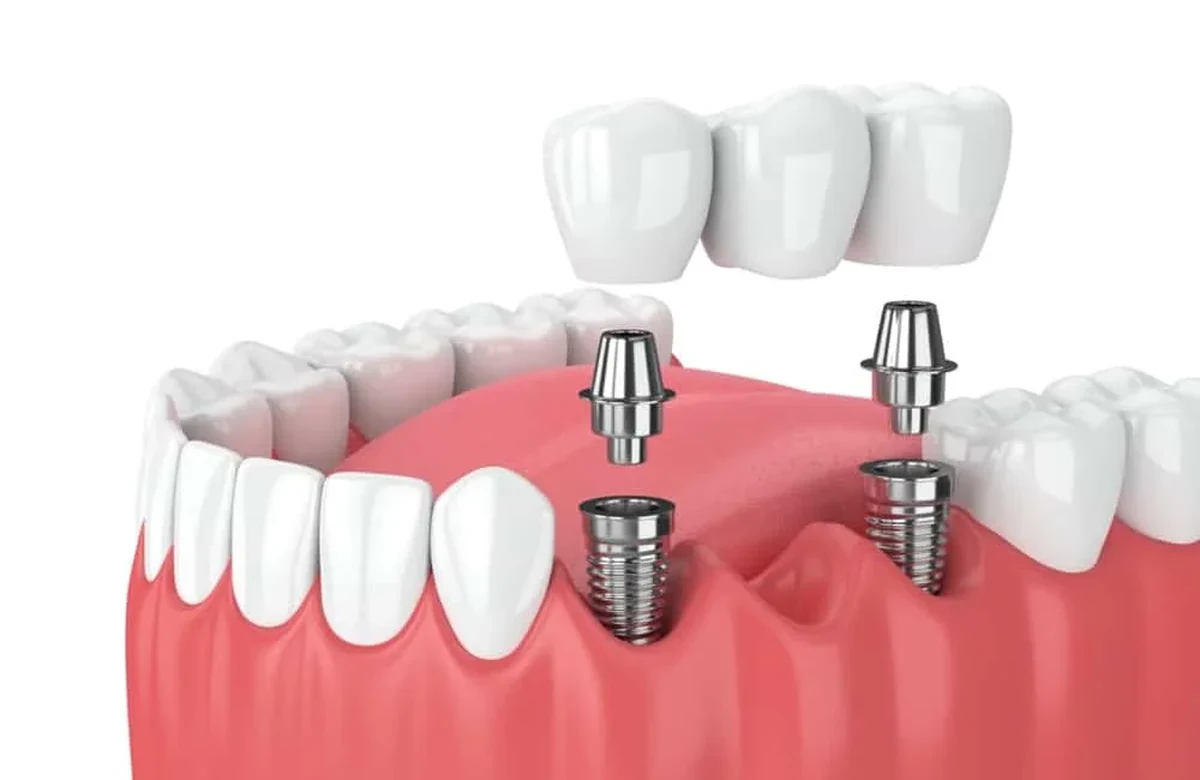
A typical single-tooth implant restoration has three practical parts. The implant fixture is placed into the jaw. A connecting component, often called an abutment, links it to a custom-made crown. The crown supplies the visible tooth shape and chewing surface.
When a dentist discusses “implant survival”, this often refers to the fixture remaining in place. It does not necessarily mean that the crown has never needed adjustment or replacement, or that the gum has remained completely healthy. Equally, a chipped crown is not the same thing as an implant failure.
This is important when comparing advertised success rates. A systematic review following single implant crowns reported high survival over five and ten years, but also documented biological and technical complications. The authors treated fixture survival and crown survival as separate outcomes. [1]
A quotation that includes only the surgical implant placement tells you less than you need to make a sensible budget. You want to know exactly what is included through to a usable final tooth.
The initial bill: what should be included?
An appropriate written treatment plan should make clear whether you are paying for:
- the assessment and clinical planning;
- relevant scans or radiographs;
- treatment of any dental or gum problems that must be addressed first;
- extraction of a tooth, if needed and agreed;
- bone or gum grafting if clinically indicated;
- the implant placement procedure;
- a temporary tooth during healing, where needed;
- the abutment and final crown;
- fitting appointments and planned early reviews;
- any sedation arrangements, if offered, clinically appropriate and requested.
Not everybody needs every step. In fact, an uncomplicated space with healthy bone may be quite different from a tooth that needs extraction, healing and additional grafting. An itemised estimate helps you see those distinctions rather than comparing two totals that contain different services.
Do not assume an advertised “implant from” price includes the final crown or everything involved in planning. Ask the practice to explain the full scope in writing. If another treatment may be necessary after further assessment, ask when that decision will be made and how any additional charge would be approved.
The first year after fitting: the costs most people overlook
Once the final crown has been fitted, you still need normal dental care. The clinician may want to assess the bite and the condition of the surrounding gum, particularly in the early period. Your everyday cleaning routine may need adjusting to the shape of the crown and the spaces next to it.
That does not mean buying every specialist brush on the market. It means learning which cleaning aids can reach the areas that a normal toothbrush misses. Depending on your restoration, appropriately sized interdental brushes or flossing aids may be recommended. A clinician or hygienist should demonstrate how to use them without injuring the tissue.
For somebody who already attends routine dental and hygiene appointments, some of this care may overlap with what they would ordinarily spend. For someone who rarely attends, those visits may represent a new recurring commitment. Either way, they belong in a realistic long-term plan.
The European Federation of Periodontology (EFP) recommends regular supportive peri-implant care, with the frequency tailored to the patient's risk and the restoration. This is a clinical recommendation, not a universal instruction to attend at a fixed interval. [2]
Years two to ten: what is routine, and what is only a possibility?
A useful way to budget is to put expenditure into three categories rather than frightening yourself with every imaginable problem.
Expected routine care includes regular dental assessment, hygiene or periodontal appointments where appropriate, suitable home-cleaning aids and occasionally monitoring images when clinically justified. Ask whether implant-specific reviews are included in a maintenance arrangement or charged separately.
Possible technical care includes bite adjustment, a loose retaining screw, repairs to a chipped ceramic surface or, in some circumstances, replacement of a crown. Not every patient experiences these events. The frequency varies with design, material and follow-up period; it would be misleading to treat any one complication percentage as an individual forecast.
Possible biological treatment concerns inflammation or disease in the tissues supporting the implant. Early gum inflammation may be manageable, particularly when identified promptly and contributing factors are addressed. More advanced peri-implant disease can require more involved treatment and may threaten the implant itself. It is important to discuss this risk before treatment, not only once an issue develops.
The UK guidance from SDCEP advises stabilising gum disease and addressing modifiable risk factors before implant treatment. The EFP also emphasises ongoing preventive care. [3]
Can a crown need replacing when the implant itself is fine?
Yes. Think of the restoration as two different investments: an implanted foundation and a visible, functional tooth. It is possible for the fixture to remain healthy while the crown wears, chips or no longer meets your aesthetic expectations. It is also possible for a screw or another connecting component to need attention.
Some modern ceramic restorations have performed very well in studies, but researchers continue to distinguish between a material's short-term survival and its longer-term evidence. A review of monolithic ceramic implant restorations found favourable outcomes across the studies it analysed, while calling for longer follow-up and better direct comparisons. [4]
You should not plan on replacing a crown every few years without a clinical reason. Nor should you assume the first crown is guaranteed to last for the rest of your life. Both statements pretend to know more than the evidence can tell us about an individual tooth.
If a crown ever does need replacing, the work required depends on the design, implant position and health of the tissues. It may be substantially different from repeating the complete original surgery. Ask whether your treatment plan allows practical access to the restorative components and whether implant records will be provided.
What makes an implant more expensive to maintain?
The biggest influences are not always the ones featured in adverts. A restoration that is difficult to clean, a persistent habit of smoking, unmanaged gum disease, uncontrolled diabetes or inadequate follow-up may make long-term care more complicated. The risk is not identical for every person with one of these factors; a proper assessment should identify what is relevant to you.
Regular care cannot remove every risk, but it gives your dentist opportunities to identify changes while they may be easier to manage. In its evidence-based guideline, the EFP identifies poor plaque control, a history of periodontitis and lack of supportive maintenance as important risk indicators for peri-implant disease. [2]
Grinding and heavy biting forces raise different questions: the crown's shape, opposing teeth, component design and possible protective appliances. If a dentist suggests a night guard, ask why it has been recommended for your bite and whether the price is included. A guard is not a blanket guarantee against complications.
One point is easy to miss: an inexpensive crown that is awkward to clean may not be a bargain, and an expensive crown with no convincing clinical advantage may not be good value. Planning, fit and follow-up have financial consequences too.
How to build a sensible ten-year budget without inventing a number
Use the following framework with actual fees from your chosen practice. Avoid guesswork dressed up as a precise forecast.
| Cost category | What to ask the practice | How to budget |
|---|---|---|
| Initial treatment | Exactly which stages and components are included? | Obtain one itemised total and list any conditional procedures separately. |
| Routine dental care | How often are reviews likely to be recommended for my risk? | Use the practice's current charges and your personalised review schedule. |
| Hygiene and home care | Is implant-specific cleaning included in existing visits? | Allow for realistic ongoing appointments and cleaning aids. |
| Protective appliance | Is one recommended for clenching or grinding? | Add its quoted price only if clinically indicated. |
| Technical attention | What would checking or replacing a component cost? | Keep a contingency rather than assuming failure will occur. |
| Complications | How are unforeseen treatment and referrals charged? | Understand the policy; do not treat a possible complication as an inevitable bill. |
Make two versions of your estimate: one covering expected routine expenditure and another showing what you could afford if the crown needed technical attention. This is more transparent than an apparently scientific “cost per day” calculated from an assumed lifetime.
Ask when quoted prices expire, whether planned maintenance is paid per visit and whether there are any additional charges for imaging or referral. If you are using finance, look separately at the total amount repayable, interest or fees, and the consequences of missed payments. A lower monthly figure does not necessarily mean lower total cost.
Is an implant cheaper than a bridge over ten years?
There is no reliable universal answer, because bridges are not all the same and their effects on neighbouring teeth matter. A conventional bridge may involve preparing adjacent teeth; an adhesive bridge can be more conservative in suitable cases. Some people are better served by a denture or by leaving a particular space unrestored, depending on the bite and their goals.
An implant has the important advantage of replacing a tooth without normally relying on neighbouring teeth to support a conventional bridge. But it involves surgery, sufficient bone, maintenance and a different set of possible complications. A bridge avoids implant surgery yet may carry costs related to supporting teeth and future replacement.
The useful comparison is therefore the likely care pathway, not just implant-versus-bridge sticker prices. Ask for two or three clinically suitable options with the same ten-year questions applied to each. If one option is not appropriate for you, the dentist should explain why rather than presenting every treatment as equivalent.
Guarantees: read the small print before they matter
A guarantee might cover a laboratory-made crown for a defined period, a particular material failure, or a component under specified conditions. It might exclude accidental damage, missed maintenance appointments, external treatment or biological complications. Some assurances come from a manufacturer; others are policies of the dental provider.
Do not assume “lifetime” means free lifetime replacement of every part of the restoration. Ask for the full written terms and the process for making a claim. More importantly, ask what happens if your treating clinician changes practice or if you move elsewhere. Portable records and continuity of care are valuable even when no guarantee is involved.
A responsible provider should be able to explain what is routinely included, what is not covered and how unexpected issues are handled. Clarity is more valuable than an impressive-sounding promise.
Frequently asked questions
Will I have to pay for hygienist visits forever? You should plan for ongoing oral care whether you have an implant or natural teeth. The type and frequency of care should be personalised, and the fees explained before you commit.
If my implant lasts ten years, does that mean the crown will too? Not necessarily. They are separate parts of treatment with separate outcome measures.
Does a more expensive crown definitely last longer? No. Material, design, bite, clinical execution and cleaning all influence outcomes. Price is not an independent guarantee of longevity.
Should I buy a maintenance plan? Only after checking what it includes, what it excludes, whether it fits the suggested review schedule and how its cost compares with paying for appointments individually.
Are there any warning signs I should never ignore? Persistent bleeding around an implant, swelling, discomfort, an altered bite or a crown that feels loose should be assessed. Do not try to tighten or repair components at home.
A consultation should give you clarity, not just a price
If you are weighing up an implant, bring any written estimates you already have and ask what the treatment will mean both now and later. Iconic Smiles offers a £30 consultation to explore whether implant treatment might suit you and what a complete, personalised plan would involve. That discussion can help you compare sensible alternatives, understand future maintenance and decide whether to proceed—without pretending that anyone can guarantee the next decade.
Clinical sources
- Pjetursson and colleagues, survival and complications of single implant crowns at five and ten years: https://pubmed.ncbi.nlm.nih.gov/23062124/
- European Federation of Periodontology, Prevention and treatment of peri-implant diseases, S3 clinical guideline: https://onlinelibrary.wiley.com/doi/10.1111/jcpe.13823
- Scottish Dental Clinical Effectiveness Programme, Managing peri-implant disease risk: https://www.periodontalcare.sdcep.org.uk/guidance/dental-implants/managing-peri-implant-disease-risk/
- Systematic review and meta-analysis of monolithic ceramic implant crowns and bridges: https://pubmed.ncbi.nlm.nih.gov/36564291/
Your next step, when you’re ready
We would be pleased to welcome you for a £30 consultation at your preferred Iconic Smiles practice. Bring your questions, and we can talk through the options that may suit you.
£30 for a planned-treatment consultation. Scans, additional investigations and emergency assessments may have separate fees; please confirm when booking.