
Dental implants — replacing missing teeth
Dental Implants vs Bridges: Which Is the Better Long-Term Solution?
An implant, a tooth-supported bridge and a removable denture solve a gap in different ways.
Explore your tooth replacement options
If you are considering replacing a tooth or several teeth, a £30 consultation gives you a chance to explain what matters most, ask questions and explore the options with our team.
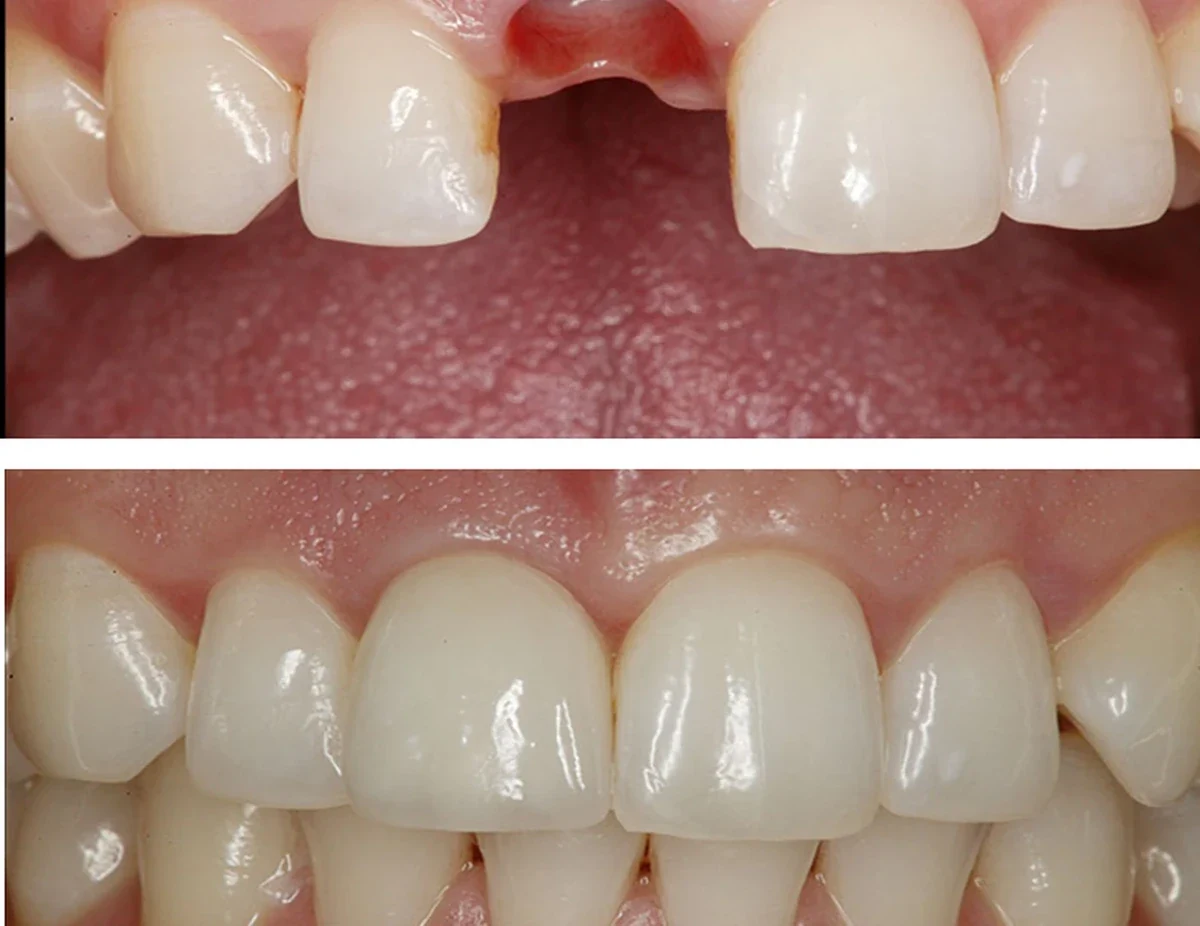
Start with the teeth beside the gap
Neither an implant nor a bridge is the better choice for every gap. An implant may preserve healthy neighbouring teeth but needs surgery. A bridge relies on suitable teeth for support, so their condition matters. Your gums, available bone, treatment priorities and willingness to manage future care help determine which option suits you. [1]
Surgery changes the trade-off
Implant treatment involves assessment, placement and restorative stages; some patients also need grafting. Failure to integrate is possible, and implant components may later loosen or wear. These obligations should be compared with the particular bridge design being offered, rather than with a generic promise of a permanent replacement. [1]
Maintenance follows different structures
A bridge needs healthy supporting teeth and cleaning beneath the replacement tooth. An implant needs cleaning around the crown and checks on the surrounding gums and bone. Either design should let you reach the areas that need care, with reviews suited to your findings. [2]
Ask about the complete treatment burden
Compare the number of stages, any irreversible changes, foreseeable repairs, and the full fee. Ask what happens if you defer treatment and whether another denture design or leaving the gap is reasonable. The clinician should make the recommendation specific to the examination findings and document your decision. [1]
At your consultation
Bring previous treatment details and identify your main concern: chewing, appearance, comfort or the effect on neighbouring teeth. Ask which finding most strongly favours the proposed option and what would make the alternative preferable. You are entitled to an explanation of options, risks, likely prognosis and costs, and to time to decide.
Further questions to consider before treatment
- When deciding between implants and bridges, consider how nearby teeth support a bridge and what the alternatives involve.
- If you are considering a fixed bridge, ask what cleaning beneath it will involve.
- When comparing implants with bridges, ask about the long-term care and serviceability of each option.
Compare the expected treatment sequence
Bridge treatment may involve preparing teeth, a temporary restoration, laboratory work and fitting. Implant treatment typically includes imaging where justified, surgical placement, healing and later restorative appointments; some cases involve grafting or temporary tooth replacement. Neither pathway guarantees an exact completion date. Discuss whether appearance must be maintained throughout treatment and whether your schedule can accommodate the stages. A bridge can sometimes deliver a fixed tooth sooner, but choosing purely on speed can overlook tooth preservation and longer-term care.
Understand what a conventional ceramic bridge asks of adjacent teeth
A conventional bridge usually requires prepared supporting teeth on either side of the missing tooth. The laboratory joins crowns or retainers to the replacement tooth, so they function as one structure. This may be a sensible approach when adjacent teeth already need crowns because of large existing restorations. It is harder to justify removing substantial sound enamel from healthy neighbours purely to replace one gap when another conservative solution may be available. The dentist should distinguish a full-coverage bridge from a resin-bonded bridge, whose reliance on enamel and suitability can be quite different.
Consider the condition of the neighbours
If both teeth beside the space are sound, preserving their enamel may weigh in favour of an implant or a suitably designed adhesive bridge. If one is heavily restored and the other has a poor long-term prognosis, the calculation changes. The clinician should explain the likely lifespan and replacement implications of the individual supporting teeth rather than counting only how long a bridge might survive. A bridge effectively links multiple teeth into one restoration; that can be advantageous in some circumstances and inconvenient when only one supporting tooth later requires treatment.
An implant depends on the bone, gum and final crown position
A dental implant supports the replacement tooth independently of neighbouring crowns. Surgery requires assessment of available bone, the nearby nerve or sinus where relevant and the proposed position of the final restoration. The clinician should design the crown first, then determine whether an implant can support it in a favourable location. If the ridge has narrowed, augmentation or a different sequence may be discussed. An implant does not prevent all future tissue changes and still needs cleaning, review and maintenance. Avoid judging suitability by how wide the visible gap looks alone.
Ask for a comparable written estimate
A good comparison includes preparatory treatment, scans, temporaries, laboratory fees, implant components where relevant, and reviews. It should not compare only the price of a bridge retainer against an implant fixture without the final crown. Ask which option preserves more of your healthy tooth structure, how a future repair would be handled and what happens if the adjacent teeth change over time. The goal is a durable, comfortable replacement chosen for your particular mouth, not a blanket rule that every missing tooth should receive an implant.
Hygiene is different for each design
Bridges require cleaning under the replacement tooth and around supporting teeth, often with floss threaders or appropriately sized interdental brushes. Implants require cleaning around the crown and implant tissues, with periodic monitoring of gum health. A poorly shaped restoration can make either solution difficult to maintain. The dentist should show how the chosen design will be cleaned before treatment is complete. Gum disease, smoking and medical risk factors may affect suitability and monitoring. Replacement teeth are not immune to biological problems simply because they are made of ceramic.
Research and guidance
Your next step, when you’re ready
We would be pleased to welcome you for a £30 consultation at your preferred Iconic Smiles practice. Bring your questions, and we can talk through the options that may suit you.
Any additional investigations and their fees will be explained before you decide.