
Dental implants — replacing missing teeth
From Loose Dentures to Fixed Teeth: Assessing Implant Options
A lower denture that shifts during conversation can affect food choices and confidence, yet replacing it with implants is not a single, standard procedure.
Explore your tooth replacement options
If you are considering replacing a tooth or several teeth, a £30 consultation gives you a chance to explain what matters most, ask questions and explore the options with our team.
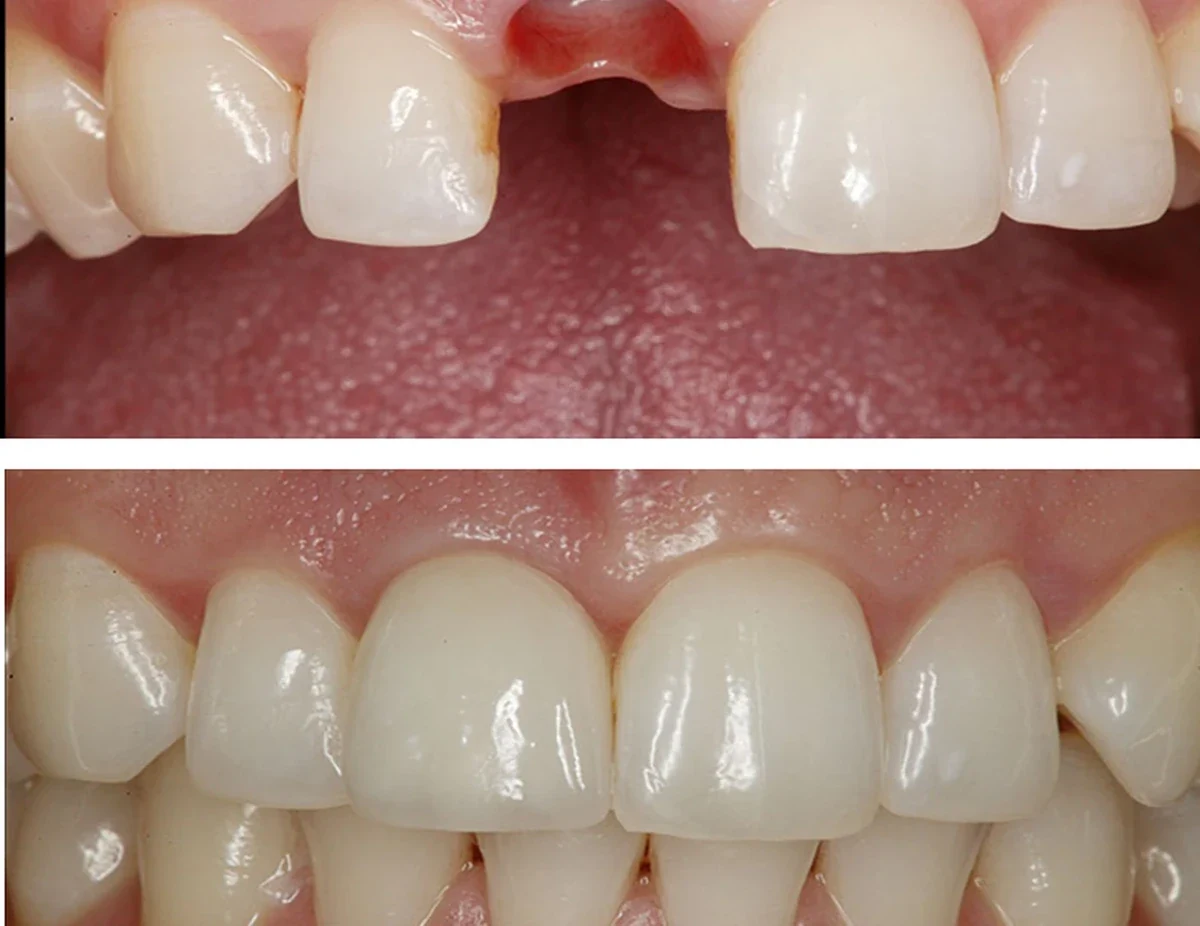
Implants can support either a removable overdenture that clips into place or a fixed bridge that normally stays in your mouth. Both may be worth considering if you are planning a replacement for a loose lower denture, but they have different cleaning and maintenance needs. The choice depends on remaining teeth, bone, space, hand dexterity and your expectations, with a budget for continuing care as well as the initial treatment.
What is actually unstable?
The first task is to understand whether the current denture moves because of its fit, changes in the supporting ridge, an unsuitable bite or inadequate muscular control. An assessment can determine whether a reline or new conventional denture would materially improve the situation. If a denture is fundamentally poorly designed, implants should not be used to disguise that problem. The shape of the existing prosthesis can nevertheless provide useful information about appearance, lip support and tooth position.
Implant-retained removable overdentures
An overdenture clips onto attachments connected to implants, and you remove it for cleaning. It may stay in place more securely than a conventional lower denture. Implant number and position, available bone and the attachment system influence the design. Before deciding, establish how worn attachments are replaced, how to clean around the implants and how easily you can operate the clips. Extra retention is only useful if you can still remove the denture comfortably.
Fixed full-arch implant bridges
A fixed bridge relies on several implant supports distributed across the jaw. A provisional bridge may be used during a healing phase when immediate loading is clinically appropriate; the definitive prosthesis may have different materials and contours. Planning needs to evaluate replacement teeth, gum-coloured material where indicated, speech, access for cleaning and how the bridge will withstand bite forces. A fixed bridge still requires daily hygiene beneath it, and its parts may eventually need professional servicing.
Bone and soft-tissue limitations
Years without teeth can alter ridge height and width. The clinician needs to assess whether implant positions are feasible without compromising anatomy or the proposed bridge. Sometimes the available restorative space creates a challenge even when there is enough bone. The dentist should explain whether grafting, shorter implants, altered tooth positioning or a removable approach offer proportionate solutions. More extensive surgery is not automatically the better choice.
Testing the proposed new smile
A trial denture or temporary arrangement can help assess lip support, the level and angle of the biting surfaces, speech and tooth length. A substantial change in tooth position may take some adjustment after years with an existing denture. Before surgery, establish whether a trial or diagnostic simulation is possible and which features it can reasonably show about the final replacement.
Comparing true lifetime costs
An itemised plan should separate surgery, temporary teeth, the final bridge or overdenture, attachments, cleaning access, reviews and possible repairs. Consensus literature published in 2026 on upper jaws with no remaining teeth considers implant number, the timing of use and the type of replacement separately: choosing one does not settle the others. To compare options for a loose denture, establish which design addresses its movement and can be maintained in daily life, alongside the number of implants proposed.
A useful way to compare the daily experience
Consider two patients who both say their lower denture moves. One is primarily troubled by it lifting during speech, yet values the ability to remove it for thorough cleaning. The other wants a fixed solution but has restricted hand mobility and needs to understand how an implant bridge would be cleaned beneath its underside. The same implant count would not necessarily serve both people equally well. A wax or digital tooth set-up can demonstrate whether their existing denture provides adequate lip support and how much replacement gum material may be required. At consultation, ask to handle an example overdenture attachment and to see the cleaning aids for a fixed bridge. Those practical details are as clinically important as a photograph of the finished smile. Future replacement of attachment inserts, periodic professional bridge removal where relevant and the possible repair of prosthetic teeth should be included in the lifetime comparison.
Your next step, when you’re ready
We would be pleased to welcome you for a £30 consultation at your preferred Iconic Smiles practice. Bring your questions, and we can talk through the options that may suit you.
Any additional investigations and their fees will be explained before you decide.