
Dental implants — replacing missing teeth
Snap-On Implant Dentures: Options
An implant-retained denture is intended to give a removable appliance greater resistance to dislodgement.
Explore your tooth replacement options
If you are considering replacing a tooth or several teeth, a £30 consultation gives you a chance to explain what matters most, ask questions and explore the options with our team.
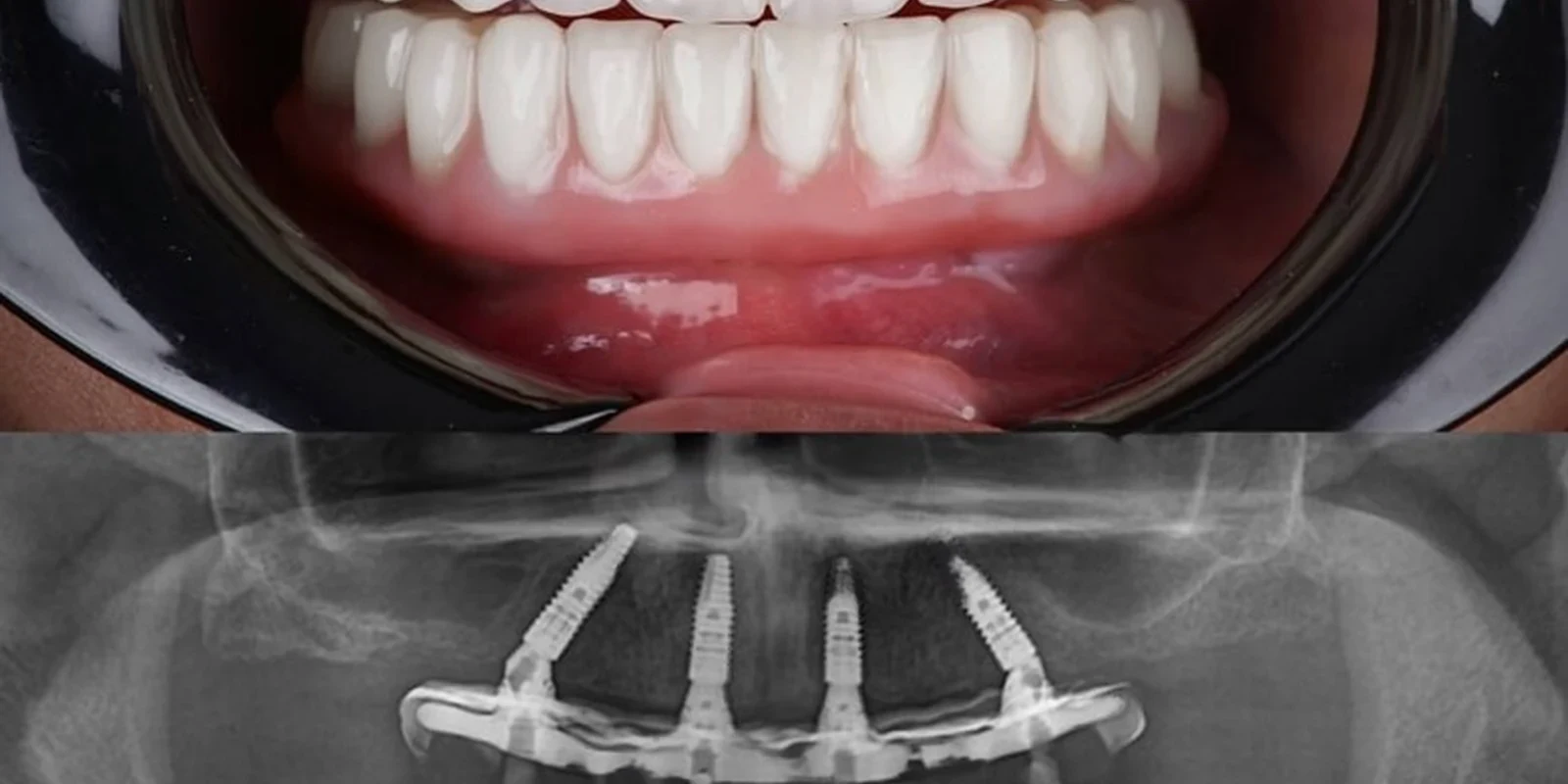
A snap-on implant denture is a removable denture whose clips or attachments engage components on implants. It may feel more secure during speech and chewing, but the design needs to suit how you will remove, clean and reinsert it every day. Attachment positions and space for the parts matter alongside retention. The assessment should compare practical designs, rather than assume all 'snap-on teeth' work alike.
Why lower and upper dentures behave differently
The lower denture often has limited supporting area and must function alongside the tongue and floor-of-mouth muscles. The upper denture may obtain additional retention from palate coverage and saliva, so patients sometimes seek implants mainly to reduce the amount of palate covered. Those aims have different anatomical and mechanical implications. The dentist needs to assess ridge form, available bone, existing denture stability and the planned tooth arrangement before suggesting how implants might change the prosthesis.
Attachment choices influence day-to-day use
Different attachment systems have different heights, wear components and space requirements inside the denture base. A low-profile attachment still needs sufficient material around it to avoid weakening the prosthesis. Retentive inserts may require replacement after wear, and the dentist must ensure the patient can remove the denture without excessive force. Someone with arthritis or limited manual dexterity should try a demonstration rather than discovering after fitting that the new appliance is too difficult to handle safely.
Hygiene is not optional when the denture comes out
Food and plaque can accumulate around attachment housings and exposed implant components. The patient needs instruction in brushing the denture outside the mouth, cleaning the implant tissue interfaces and selecting any additional aids advised by the clinician. Abrasive cleaning methods or unsuitable products can damage certain components. Professional reviews may identify inflammation, worn inserts, occlusal changes or damage to the denture base before these become major problems.
How the design is tested
A trial tooth arrangement can assess vertical dimension, lip support, speech and the smile line before committing to final components. Retention cannot compensate for a poorly balanced bite. The prosthesis may need sufficient flange support for appearance even when implants supply the principal retention. Patients who want very slim or completely palate-free dentures should know whether their anatomy and the planned implant distribution realistically permit that outcome.
Ask about a decade of servicing, not just fitting day
An itemised treatment plan should cover attachments, denture fabrication, relining as tissues change, replacement inserts and follow-up costs. A fixed bridge may be a suitable alternative for some, but requires a different hygiene strategy and often different restorative space. A consultation should make clear which aspects of comfort are expected to improve, and which limitations of a removable denture remain even with implants.
An illustrative problem: the appliance grips but cannot be removed comfortably
For example, someone with arthritis may find a conventional lower denture moves during speech. An implant attachment that grips firmly on a demonstration model could still be difficult to release with limited finger strength. Planning should include whether the person can insert and remove it, and whether a different attachment or level of retention would help. There also needs to be enough room for the housings without weakening the denture base. A secure fit needs to be manageable in daily use.
The same patient may have a high smile line and want reduced upper palate coverage. That goal has different anatomical implications from lower-denture retention and may require a separate assessment of implant distribution and the denture's support. Patients can ask whether attachment inserts are replaced chairside, what a normal review includes and which cleaning tools suit the exposed components. A good overdenture provides a manageable routine: remove, clean the prosthesis, clean the implants, reinsert and attend periodic reviews. The key question is not how firmly it snaps into place, but whether the entire routine remains comfortable and sustainable.
Implant-Supported Dentures: Cleaning, Attachment and Night-Time Care
An overdenture provides removable access for cleaning but still requires maintenance of abutments, attachments and the denture base.
Clinical assessment and suitability
The assessment should show how the replacement meets the gum, where cleaning aids can pass and how the teeth contact during biting. Establish which components can be serviced later. Examination and justified imaging provide different information, and both need to answer the relevant planning questions.
Depending on the remaining teeth and findings, the wider choices may include individual or connected crowns, fixed bridges and removable replacements retained by attachments. Compare conventional dentures, locator-style implant attachments and fixed bridges by their support, cleaning routine and servicing needs. Discuss worn attachment replacement and changes in the supporting ridge.
One reason to consider implants is a lower complete denture that still lifts during speech despite appropriate adjustment of its border.
Implant overdentures still load the denture-bearing ridge and may need relines as that ridge changes. Attachment inserts can wear and alter retention. Patients need a practical demonstration of cleaning around the abutments after removing the prosthesis, as well as instructions for cleaning the denture itself.
Limitations to discuss include food trapping, forces on unsupported extensions, components that are difficult to retrieve and repair costs. Cleaning beneath a bridge tooth or around an attachment needs to be practical; neglecting these areas has consequences for surrounding tissues.
The care plan should explain attachment and night-time care for the specific appliance. Its fit, retention, tooth contacts and surrounding tissues need to remain accessible for professional review.
Further reading (background sources)
- International Team for Implantology: consensus database — background reading
- — background reading
- NHS: dental treatment information — background reading
Your next step
Areas we serve: Hertfordshire · Bedfordshire · Buckinghamshire · Essex. Our actual clinics are in Hatfield, Cheshunt and Friern Barnet; Bedfordshire, Buckinghamshire and Essex are patient catchment areas, not additional clinic sites.
Your next step, when you’re ready
We would be pleased to welcome you for a £30 consultation at your preferred Iconic Smiles practice. Bring your questions, and we can talk through the options that may suit you.
Any additional investigations and their fees will be explained before you decide.