
Dental implants — replacing missing teeth
Full-Arch Implants: Which Teeth Can Be Saved?
Patients who have several missing or heavily restored teeth sometimes assume that full-arch implants require extracting everything first.
Explore your tooth replacement options
If you are considering replacing a tooth or several teeth, a £30 consultation gives you a chance to explain what matters most, ask questions and explore the options with our team.
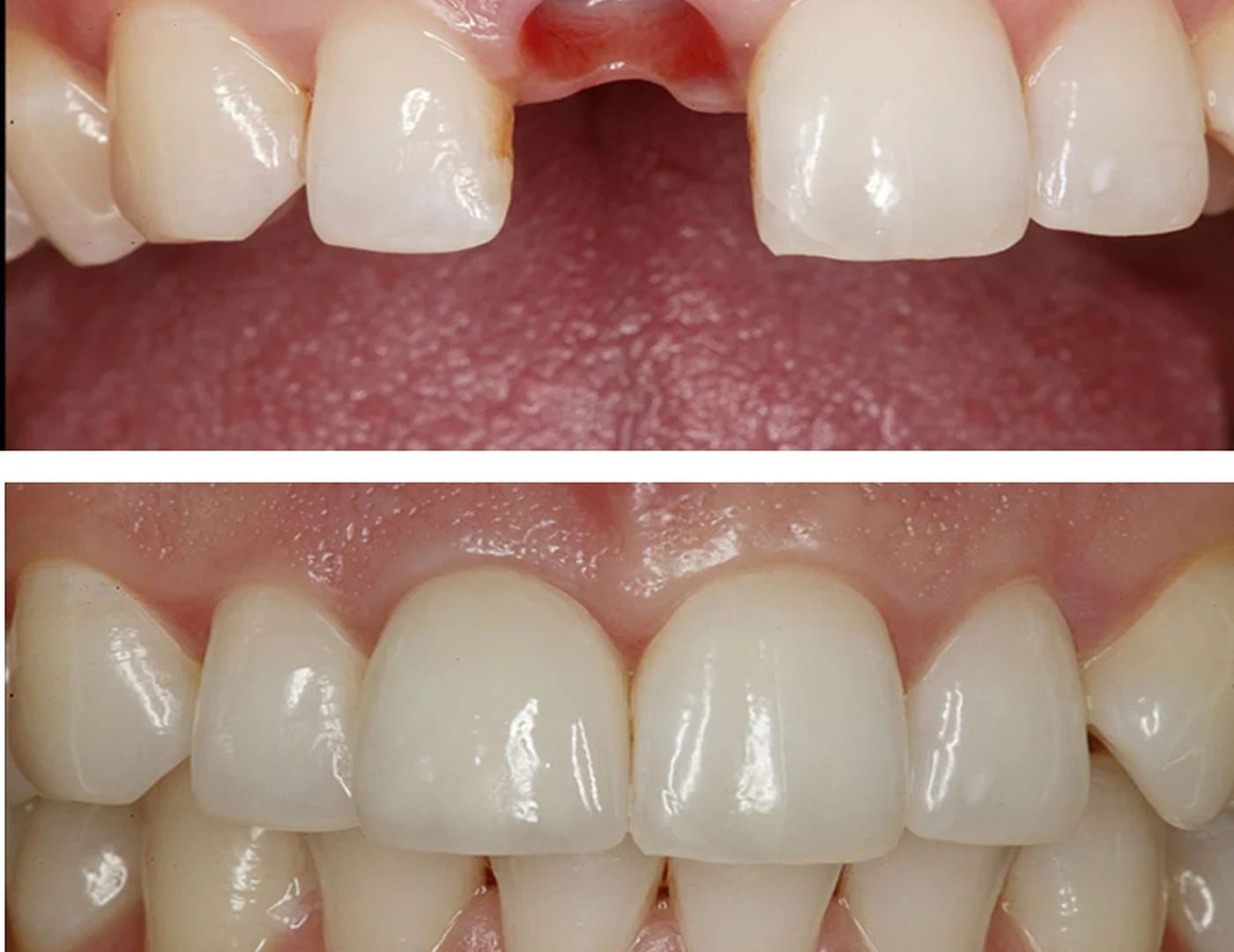
A full-arch assessment should establish which natural teeth can be saved before any decision to remove them. Several missing or heavily restored teeth do not automatically mean that every remaining tooth needs extraction. Healthy, well-positioned teeth may contribute to a stable, cleanable restoration. Compare realistic tooth-preserving and implant-supported plans before choosing the extent of treatment.
Give each remaining tooth a separate prognosis
An assessment looks beyond the number of teeth. Bone support, mobility, decay, root treatment, cracks, periodontal pockets, available crown structure and position in the bite all influence what can reasonably be retained. A front tooth with good periodontal support may be worth preserving even if several molars are poor. Conversely, a heavily damaged tooth may be unsuitable as a bridge support despite looking acceptable above the gum. The reasons for saving or removing each tooth should be recorded and understandable to the patient.
The design problem in mixed dentitions
The complete arrangement needs stable support and a bite that distributes forces appropriately. Keeping selected teeth may allow a tooth-supported bridge, partial denture or staged reconstruction. Teeth with an uncertain outlook or poor distribution may instead make later care more difficult. The question is whether retaining them contributes to a functional design you can clean and maintain, with a sensible plan if their condition changes.
Why extraction changes the planning timetable
Removing teeth alters bone and soft-tissue anatomy, sometimes quickly in the initial healing phase. An immediate provisional may preserve appearance during a staged course, but its fit and load-bearing capacity may need adjustment. If implants are proposed on the extraction date, site condition, primary stability and restorative loads must be assessed; same-day fixed teeth are not possible or appropriate for everyone. The team should explain the fallback restoration if the intended immediate approach cannot proceed safely.
What a fair comparison includes
Compare a tooth-preserving reconstruction with the proposed implant plan in terms of surgery, future root-canal or periodontal care, appearance, cleaning technique and expected component servicing. Treatment plans should separately itemise extractions, implants, grafting, temporaries, definitive bridgework and reviews. A lower initial fee can be misleading if the prosthesis demands frequent component replacement. Equally, a higher implant price does not prove that all remaining teeth should be sacrificed.
Ask for a shared decision, not a slogan
The EFP guidance for advanced periodontitis explicitly discusses rehabilitation using natural teeth, implants and removable prostheses according to case complexity. A sensible consultation identifies which teeth are salvageable, shows the planned final bite and clarifies what happens if a key tooth or implant does not meet the expected milestones. If several clinicians are involved, ask who integrates their decisions and who owns the long-term maintenance plan.
An illustrative decision: several poor molars but sound front teeth
Consider someone with four missing back teeth, two heavily damaged molars and six front teeth with good bone support. The assessment should establish whether retaining those front teeth alongside back-tooth replacements is a realistic, maintainable option. Records might support posterior implants with conservative front-tooth care. Widespread advanced disease, fractured roots and poorly distributed support in another mouth could lead to a different recommendation. The label of 'failing teeth' cannot decide the extraction plan for both.
Establish which teeth provide useful support and how losing a compromised molar later would affect each design. Compare speech, cleaning and repair access, with a temporary trial of the bite where useful. The estimate should distinguish the cost of preserving viable teeth from implants and full-arch replacement materials over time. Where the outlook remains uncertain, reassessment or a joint clinical discussion may be needed before an irreversible choice.
Your next step, when you’re ready
We would be pleased to welcome you for a £30 consultation at your preferred Iconic Smiles practice. Bring your questions, and we can talk through the options that may suit you.
Any additional investigations and their fees will be explained before you decide.