
Dental implants — replacing missing teeth
All-on-4 vs All-on-6: Which Full-Arch Implant Treatment Is Right for You?
Four implants or six? It is easy to focus on the number. What matters more is how your new teeth will be supported, feel and be looked after.
Explore your tooth replacement options
If you are considering replacing a tooth or several teeth, a £30 consultation gives you a chance to explain what matters most, ask questions and explore the options with our team.
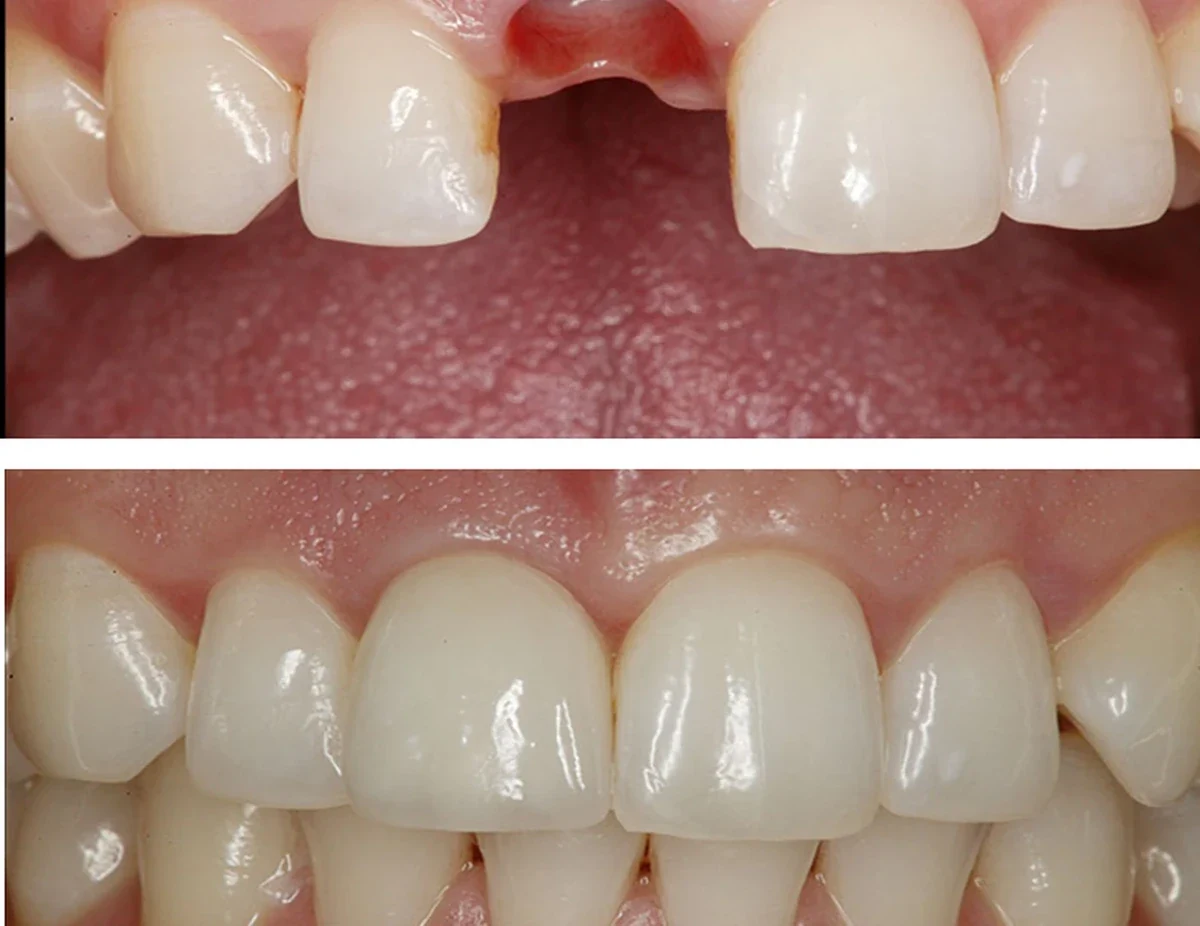
Four or six implants is a planning question
All-on-4 uses four implants to support a full arch of replacement teeth; All-on-6 uses six. The suitable choice depends on where the bone can support them, the planned bridge, your opposing teeth and the space available. Your assessment should also compare suitable removable implant options, rather than choosing by implant count alone. [1]
What comparative studies actually examine
Researchers have compared the number of implants supporting full-arch teeth over at least five years, and four versus six implants for fixed upper-jaw teeth specifically. Those distinctions matter: findings about one jaw and bridge design may not apply to a different design or to your mouth. [2][3]
Same-day teeth require a separate decision
Placing implants and fitting teeth to them straight away are separate decisions. Early use of a temporary bridge depends on suitable stability and tissue conditions, and does not mean the final teeth are completed on the day of surgery. Before treatment, agree the alternative temporary teeth, timetable and any cost change if the preferred approach cannot proceed. [4]
Compare the restoration and its upkeep
Ask whether the restoration is fixed or removable, how you will clean under it, and how individual teeth or components can be repaired. Material selection, available space and the relationship between the arches affect full-arch care. A higher implant count does not remove the need for supportive peri-implant care. [1][5]
Questions that make quotations comparable
Request the reasons for the proposed implant positions, any need for grafting, the temporary and final restoration designs, and all planned fees. Ask what would change the plan during surgery and what happens if an implant fails. Consent should cover reasonable alternatives, material risks and costs before treatment starts.
Start with the bridge you are trying to support
The appropriate number of implants cannot be decided meaningfully before the proposed replacement is defined. A single crown, a bridge replacing several teeth and a fixed full-arch restoration are different situations. NHS information describes implants supporting crowns, bridges and dentures. Ask which restoration is proposed, what it replaces and how it is intended to function. A package name or fixture count may describe only part of the plan. The assessment should connect the support to the final teeth, tissues and practical requirements rather than begin with the assumption that the highest or lowest number is always best. [source][source]
A larger count is not a complete quality measure
The number of supporting implants is one part of a fixed-bridge plan. Their distribution, the available tissues and bone, and the design of the prosthesis also matter. Full-arch consensus considers these together rather than treating count as a standalone measure of quality. Ask what an additional implant is intended to improve in your plan and what additional intervention it requires. Equally, a lower-count proposal needs a clinical rationale rather than a claim that fewer components must always be better. The relevant comparison is between complete, suitable reconstructions for the same problem. [source][source]
Define the replacement before agreeing a number
The starting plan should identify which teeth are being replaced, which are being retained and what kind of fixed bridge is intended. Implant count is a consequence of that restorative decision, not a complete treatment plan by itself. Full-arch guidance considers prosthetic design and clinical conditions together. Ask how the proposed support relates to the final teeth, available space and tissues. If several configurations are possible, the explanation should show why the recommended one suits your mouth. A package title should not conceal an unresolved decision about the actual restoration you will receive. [source]
Use four-versus-six evidence within its limits
A 2024 review of fixed full-arch upper-jaw teeth found no statistically significant survival difference between support on four and six implants. That does not prove every design or maintenance need is identical, and it does not settle the choice for lower jaws or other restorations. Your dentist needs to relate the evidence to your anatomy, proposed teeth and any benefit or extra procedure associated with another implant. [source]
Understand the purpose of a tissue review
Peri-implant mucositis concerns the soft tissues, while peri-implantitis includes supporting-bone loss. The diagnosis requires clinical assessment rather than a patient judging health by the bridge’s appearance. A review should explain the relevant findings and whether further care is needed. Persistent bleeding, swelling or discharge should be reported even if the bridge feels stable. The EFP recommends structured supportive care with periodic assessment; the interval and procedures should follow the clinical situation. Neither an attractive smile nor a particular implant count is proof that the supporting tissues can be left without professional review. Periodontology guidanceRead the supporting clinical study (3)
Compare the consequences of problems, not just the starting fee
Request an explanation of how the team would investigate a fractured part, movement or an inflamed site and what might need separate treatment. Ask what is included in the estimate and which future costs cannot be predicted. At Iconic Smiles, confirm the responsible clinicians and maintenance arrangements. The decision should balance the intended support, extent of treatment, realistic alternatives and ongoing care. Neither an expensive high-count plan nor a lower-cost low-count plan is justified solely by its number; the rationale needs to show how it meets the patient’s clinical situation and priorities. See our current treatment fees · Meet the Iconic Smiles dental team · Read the supporting clinical study (3)
Maintenance is part of the design
An implant does not have the natural cushioning ligament that surrounds a tooth root. With a fixed bridge, you also need access beneath the replacement teeth for the cleaning aids demonstrated by your team. The design affects future servicing: screw openings, any unsupported extension beyond the last implant, materials and the ability to remove parts professionally all matter. Your plan should explain cleaning, bite checks and how repairs would be handled.
Keep the loading decision distinct from placement
Placing implants and connecting teeth for use are different clinical decisions. The ITI distinguishes placement and loading protocols and emphasises suitable conditions and stability. A count of implants does not alone establish whether immediate loading is appropriate. Ask how the decision will be made and what happens if the planned criteria are not met. The agreed fallback should explain the temporary replacement, any altered timetable and the practical or financial implications. A conditional plan can still be clear; uncertainty becomes harder to manage when it has been hidden behind an unconditional same-day promise. Supporting source (academy.iti.org)
Consider an implant-retained removable design where appropriate
An implant-supported or retained removable replacement is not the same restoration as a fixed bridge. Full-arch guidance considers different prosthetic options and their requirements. Ask how the proposed appliance is supported and retained, how it is removed for care and what its everyday handling involves. Appearance, tissue replacement, available space and patient preferences may be relevant to the choice. A removable design should not be dismissed as automatically inferior, but neither should it be presented as identical to fixed teeth. Understanding the practical differences helps you decide which compromises are acceptable in your situation. Read the supporting clinical study
Describe mechanical changes without trying to repair them
Contact the treating service if the bridge moves, a part fractures, a sharp edge develops or the bite changes unexpectedly. NHS information recognises loosening and wear of implant components. Tell the team when the change began and whether eating, cleaning or comfort is affected. Do not repeatedly test the bridge by biting harder, attempt to tighten it or use household adhesive. The clinician needs to identify which structure is involved and assess the appropriate response. A repair may be possible in some circumstances, but the presence of a symptom cannot establish the solution without examination. NHS patient information
What a comprehensive full-arch quote should show
Your quote should separate any extractions, imaging, surgical guides, grafting, implants, temporary teeth, final laboratory-made bridge and reviews. It should identify the clinicians providing surgery and the replacement teeth, and the alternative if immediate fixed teeth prove unsuitable. Compare suitable implant-retained removable dentures and conventional dentures too. The right choice reflects your priorities for security, daily care, cost and function.
Compare cleaning and future component care
The EFP recommends prevention and structured supportive care around implants, whichever suitable design is chosen. Ask the team to demonstrate the expected routine and explain how professional maintenance will work. NHS information also notes that implant components can loosen or wear. The comparison should therefore include how concerns are assessed and what a repair or replacement might involve. More support does not guarantee effortless care, and removability does not remove the need for review. Dexterity, vision and the ability to reach cleaning surfaces deserve attention before you commit to the definitive reconstruction. Read the supporting clinical studyNHS patient information
Assess the available support and any additional procedures
The team needs to assess the sites and explain how the intended implant positions fit the anatomy and restoration. Ask whether bone management or another preparatory procedure is proposed and what it changes. NHS information describes bone grafting as a possible stage in implant care, not something every patient necessarily requires. If preparation affects the choice of support, compare the complete alternatives rather than count fixtures in isolation. The sequence should state which information is still needed and which decision follows from it, including what would make the preferred configuration inappropriate. NHS patient informationNHS patient information
The number is an output, not the starting point
Planning a toothless upper jaw involves several connected decisions: the replacement design, implant number and when the teeth can be used. Your desired smile and chewing function guide the assessment of available space, bone and medical factors. The number needs to support a plan that can be maintained in that particular jaw.
Keep survival and maintenance separate in your expectations
Full-arch research considers both survival and technical complications. A bridge or implant can remain present while needing a repair, adjustment or treatment around the supporting tissues. Ask what was included when a survival figure was discussed and what future care might be charged separately. There is no contradiction between a reconstruction being retained and a patient needing maintenance. Understanding that distinction helps avoid surprise and encourages timely contact. It also prevents a long-term headline rate from being misread as a promise of no component wear, no appointments or no further treatment costs. Supporting source (access.archive-ouverte.unige.ch)NHS patient information
Review the definitive design for function and maintenance
As the definitive bridge is planned, confirm the intended teeth, bite, appearance and cleaning access. Full-arch consensus addresses the prosthetic design as well as implant support. Ask what the temporary stage has shown, what further changes are possible and what limitations remain. A restoration should be practical for the person who will use and maintain it. The EFP recommends prevention throughout implant care, so explaining cleaning before completion is part of the pathway. If an area appears difficult to manage, raise that concern while the design and care arrangements can still be discussed. Read the supporting clinical study · Read the supporting clinical study (2)
Include tissues, space and the intended appearance
The replacement must fit the available restorative situation, not simply occupy enough implant positions. Full-arch guidance considers factors such as tissues, space and prosthetic design. Ask how any lost tissue is managed and how the intended teeth relate to your lips, smile and cleaning access. A visible aesthetic goal may affect design choices, while the available anatomy can limit them. If the plan includes a substantial bridge structure, understand what is replacing teeth and what is replacing tissue. This makes the proposal easier to assess than a fixture count accompanied by a generic smile photograph. Read the supporting clinical study
Research and guidance
- Recommendations for Implant-Supported Full-Arch Rehabilitations in Edentulous Patients: The Oral Reconstruction Foundation Consensus Report.
- Optimal number of implants for complete-arch implant-supported prostheses with a follow-up of at least 5 years: A systematic review and meta-analysis.
- Outcomes that may affect implant and prosthesis survival and complications in maxillary fixed prosthesis supported by four or six implants: A systematic review and meta-analysis.
- Implant Placement and Loading Protocols - Consensus Statements - ITI ITI â International Team for Implantology
- Prevention and treatment of peri-implant diseases-The EFP S3 level clinical practice guideline.
Your next step, when you’re ready
We would be pleased to welcome you for a £30 consultation at your preferred Iconic Smiles practice. Bring your questions, and we can talk through the options that may suit you.
Any additional investigations and their fees will be explained before you decide.