
Dental implants — replacing missing teeth
Full-Arch Implant Recovery Explained
Recovery after full-arch implants depends on whether you are having teeth removed, bone grafting or a temporary bridge. Before surgery, agree what to eat, how to clean the temporary teeth and when you can return to work or travel. Ask whom to call if recovery differs from the plan.
Explore your tooth replacement options
If you are considering replacing a tooth or several teeth, a £30 consultation gives you a chance to explain what matters most, ask questions and explore the options with our team.
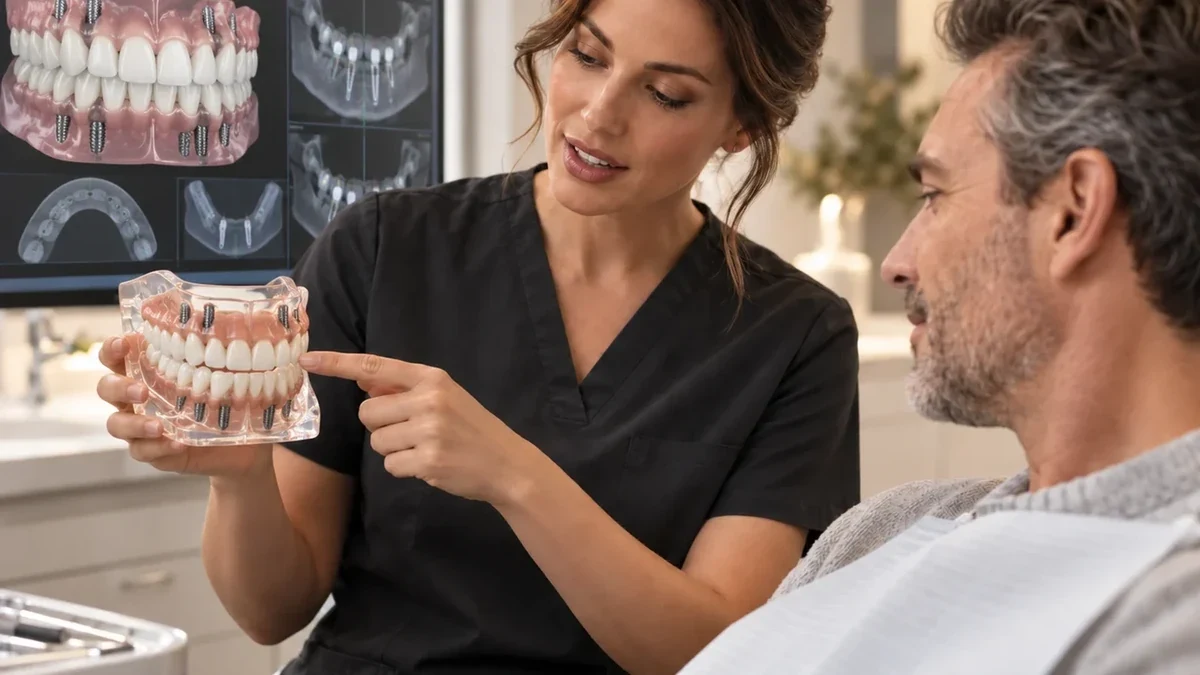
For broader context on this question, read Dental Implant Recovery: What to Expect During the First 24 Hours, 7 Days and 6 Months and All-on-4 vs All-on-6: Which Full-Arch Implant Treatment Is Right for You?.
Recovery from full-arch implant treatment depends on the surgery and the temporary teeth, including whether extractions or grafting are involved. It can be more demanding than recovery after one straightforward implant. Before treatment, establish what to expect for eating, cleaning, work and travel in light of your medical history. Same-day teeth describe a possible restoration stage, rather than completed healing.
Understand the planned surgery before taking leave
The number of sites, whether bone augmentation or extractions are expected and the anticipated anaesthetic or sedation arrangements influence practical recovery. Swelling, bruising and tenderness can occur, and the clinic should provide written advice about bleeding, medicines, hygiene and when symptoms warrant urgent contact. A patient who expects to drive, fly or return to strenuous work should discuss those commitments before treatment. The plan should account for escort requirements if sedation is used.
Provisional teeth have different mechanical limits
An early full-arch temporary may need a modified diet while implants heal. The instructions should match your actual loading plan rather than someone else's experience. As tissues change, the bridge may need adjustments. Keep the clinical contact details for loosening or breakage, and leave tightening implant components to the dental team. The temporary has different limits from the final long-term bridge.
Learning the new cleaning technique
A full-arch bridge can have spaces beneath its underside that require specially selected brushes, threaders or other aids. If a removable overdenture is provided instead, the patient needs to practise insertion, removal and component cleaning. Daily hygiene should begin according to the surgeon's written protocol and adapt as the tissues recover. After healing, periodontal or implant maintenance reviews remain necessary; implants do not eliminate the need for professional care.
Why a second stage may be required
Even if the first provisional looks good, a definitive restoration often needs updated records of gum contours, the bite and the intended tooth arrangement. The dentist may assess speech, facial support and chewing before selecting materials for the final bridge. Where surgical findings differ from expectations, a removable temporary or delayed fixed restoration might be safer than forcing an immediate protocol. This contingency should be discussed and priced before surgery.
The best question for the surgeon
Rather than asking only how soon you can have teeth, request a written recovery and loading plan: what will be fitted immediately, what foods are restricted, when adjustments may be required and who handles an urgent problem. A considered plan helps a patient evaluate full-arch treatment against dentures, staged implants or retention of viable natural teeth without reducing the decision to an impressive before-and-after photograph.
A practical recovery schedule should be personalised
For example, planned upper extractions and an immediate temporary bridge may require time away from physical work, help getting home after sedation and suitable meals during healing. Your treating team should give instructions for the procedures involved. Arranging help with meals or childcare can be part of that preparation. Know the direct clinical contact route if the bridge loosens or swelling increases unexpectedly, and avoid adjusting components yourself.
If someone is helping you get home after full-arch treatment, give them the address your team confirms and the time they have asked your lift to arrive. For care organised through us in Hertfordshire, the practice finder has reception details if you need to check the arrangements.
The plan also needs an alternative if the implants are not stable enough for immediate use. A removable temporary may be appropriate during integration, or further treatment may be needed before fixed teeth. Discuss the effects on appearance, speech and possible costs before extraction. Updated gum and bite records may be needed for the final bridge. Establish who makes adjustments and what the fee includes. A slower staged route may reasonably suit your circumstances better.
Guy’s and St Thomas’ NHS guidance on general implant aftercare
Your next step, when you’re ready
We would be pleased to welcome you for a £30 consultation at your preferred Iconic Smiles practice. Bring your questions, and we can talk through the options that may suit you.
Any additional investigations and their fees will be explained before you decide.