
Dental implants — replacing missing teeth
Replacing All Upper and Lower Teeth with Implants: Treatment Design Across Both Jaws
Patients facing major tooth replacement sometimes ask whether every missing tooth needs its own implant.
Explore your tooth replacement options
If you are considering replacing a tooth or several teeth, a £30 consultation gives you a chance to explain what matters most, ask questions and explore the options with our team.
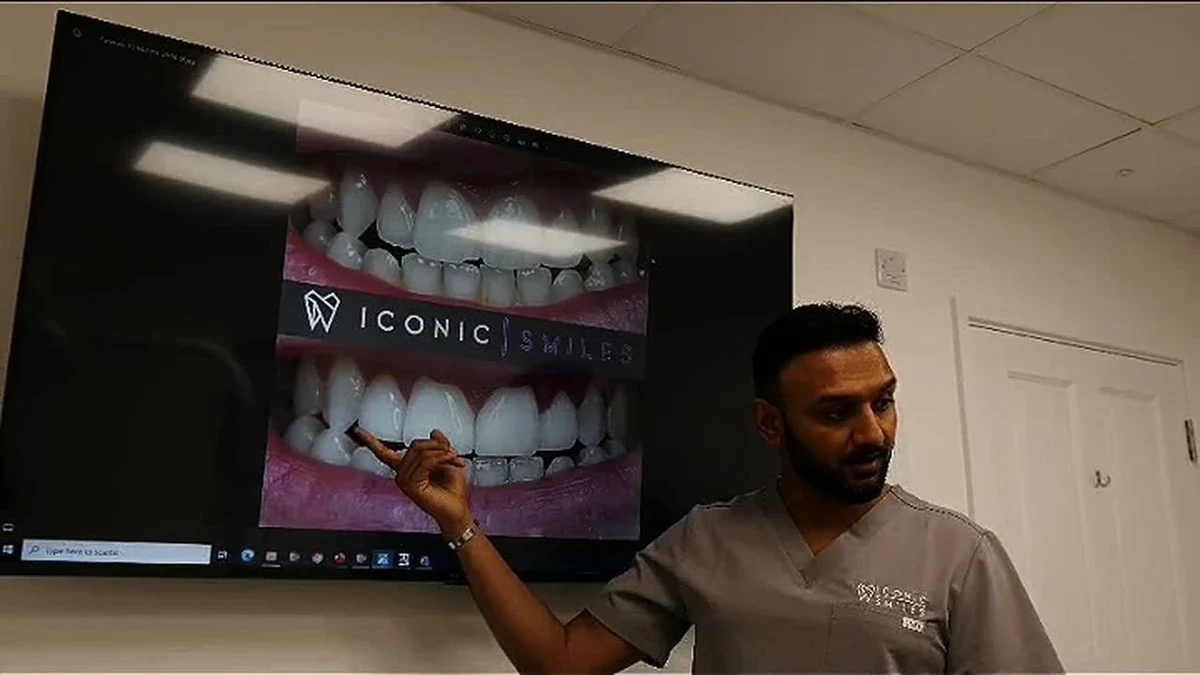
Replacing teeth in both jaws does not mean every tooth needs its own implant: selected implants can support a bridge or retain a denture. The two jaws need planning together because their bone, anatomy and contacts differ. Fixed teeth may be appropriate for some people, with the design based on diagnosis, speech, appearance, bite and cleaning rather than implant number alone.
Plan the bite as a connected system
Upper and lower tooth positions need compatible contacts when you close and move your jaw. Tooth shape, bite height and the front teeth's guidance affect speech and chewing. Records, trial dentures or temporary bridges may help test the proposed relationship. Lip and facial support should be assessed at rest, smiling and speaking, alongside the space needed for material to withstand load.
The two jaws have different anatomical limits
The upper sinus and bone quality can limit placement differently from the lower-jaw nerve canal and available front-jaw support. Three-dimensional imaging is used when justified for those planning questions. Implant numbers and positions may differ between jaws, with extraction changes and possible grafting also considered. The final upper and lower designs still need to work together as one bite.
Fixed bridges or implant-retained dentures?
A fixed bridge is not removed by the patient and requires cleaning around its underside. An implant overdenture usually comes out for daily cleaning and can sometimes be easier to maintain for someone with limited dexterity. Both can improve retention compared with conventional complete dentures in suitable cases. Patients may prefer different designs for their upper and lower jaws, and there is no rule that both must be fixed. Lip support, speech, hygiene ability, cost and access to repairs all matter. A frank comparison helps match treatment to everyday life, not just a brochure photograph.
What happens before definitive teeth are fitted?
If several teeth need removal, the team may discuss extractions, healing, immediate provisional restorations and staged implant placement. Loading a provisional bridge immediately requires adequate initial implant stability and suitable force control. The final ceramic or other prosthesis may be fitted later after tissues and the bite have been reassessed. The clinician should explain how many stages involve temporary dentures or bridges and whether changes to the appearance are possible after trials. Complex work often benefits from deliberate checkpoints, especially when vertical dimension is being altered.
Maintenance and total cost across both arches
A complete quote should include scans and records, surgery, provisional restorations, definitive prostheses, laboratory work and expected service visits. Some components can wear or require repair even when the implants remain integrated. Professional removal of a fixed prosthesis may be necessary for selected repairs or hygiene assessment. Ask how daily cleaning will reach beneath the bridges, which accessories you will need and whether your hands can use them comfortably. A two-jaw plan should consider gum health, medical factors and realistic maintenance commitments from the outset.
The result must fit the person, not a package
Compare fixed and removable options, stages and how the teeth would function in speech and chewing. Implant number, loading time and restoration type are separate factors in the evidence, and none predicts your personal result alone. Where treatment is elective, alternatives remain reasonable. The aim is a maintainable reconstruction that fits your health, anatomy and priorities.
Evidence and further reading
- Consensus: implant number and loading for an edentulous upper jaw — PMCID PMC12930125
- NHS: dental treatment choices
- HPA: dental CBCT justification guidance
The practices are in Hatfield and Cheshunt in Hertfordshire, and Friern Barnet in North London. If travelling from Bedfordshire, Buckinghamshire or Essex, use the actual clinic address on your confirmation.
Your next step, when you’re ready
We would be pleased to welcome you for a £30 consultation at your preferred Iconic Smiles practice. Bring your questions, and we can talk through the options that may suit you.
Any additional investigations and their fees will be explained before you decide.