
Dental implants — replacing missing teeth
Two adjacent missing front teeth: planning a natural-looking replacement
Compare options for two adjacent missing front teeth and understand how gum contours, spacing and tooth proportions influence a natural-looking result.
Explore your tooth replacement options
If you are considering replacing a tooth or several teeth, a £30 consultation gives you a chance to explain what matters most, ask questions and explore the options with our team.
£30 for a planned-treatment consultation. Scans, additional investigations and emergency assessments may have separate fees; please confirm when booking.
Losing two front teeth can feel very different from losing teeth further back. You may be able to manage the practical side of eating, yet find yourself thinking about the gap whenever you speak, laugh or have your photograph taken. It is understandable to want a solution that does more than fill the space. You want the new teeth to look as though they belong in your smile.
That is possible for many patients, but the best result usually comes from careful planning rather than simply choosing the most permanent-looking option. The challenge is not just making two white teeth. It is recreating their shape, the small amount of gum between them, the way light reflects from them and their relationship to the neighbouring teeth.
Why are two adjacent front teeth difficult to replace beautifully?
Your front teeth are especially visible. Small differences in length, alignment or colour can attract attention in a way that the same differences further back might not. The gum line also frames the teeth, so the appearance of the pink tissue is part of the result.
When two neighbouring teeth are missing, the bone and gum between them may no longer provide the same natural support. That can make it difficult to recreate the little triangle of gum, called the interdental papilla, that normally fills the space between teeth. If it is absent, a dark triangular gap can appear even when the replacement teeth themselves are beautifully made.
What are the main ways to replace them?
There are several broad possibilities. Two individual implants may support two separate crowns. In selected circumstances, one implant can support a two-tooth restoration, with the second tooth extending from the first. A bridge may instead be supported by neighbouring natural teeth. A removable partial denture is another option, sometimes used temporarily and sometimes chosen as a longer-term solution.
There is no rule that the newest or most surgical solution is best for everyone. The condition of adjacent teeth, the amount and shape of bone, your bite, gum health, age, preferences and budget all influence what is suitable. Some patients also need the position of neighbouring teeth adjusted before a replacement can be designed well.
Do you need two implants for two teeth?
Not always. The answer is more nuanced than one implant per tooth. Two implants with individual crowns can be an appropriate approach, but placing implants close together in the front of the mouth can create particular challenges with spacing and the appearance of the gum between them.
A 2023 systematic review compared two adjacent implant crowns with a single implant supporting a two-unit restoration in the aesthetic region. It found that a one-implant approach can be a viable alternative in selected circumstances, with encouraging implant survival and patient satisfaction in the available studies. The evidence has limitations, particularly for long-term comparative data, so it does not establish one option as universally preferable. Review of adjacent front-tooth implant options.
What if the two missing teeth are different sizes?
A common situation is losing a central incisor and the smaller lateral incisor beside it. These teeth have different shapes and proportions, and your dentist must decide how to recreate that difference convincingly. Another person may have lost the two central incisors, where symmetry becomes a more prominent concern.
The shape of the remaining teeth is an important guide. A naturally rounded smile will usually look more believable when the replacements share that character, rather than being made into perfectly square, identical teeth. Likewise, colour is seldom a single block shade. Natural teeth contain subtle variations in brightness and translucency.
How much does the gum line matter?
A great deal. If the two missing teeth have been absent for some time, the bone and gum may have changed shape. The height of the gum line and the presence of tissue between the new teeth help determine whether the result looks naturally framed.
In some cases, soft-tissue or bone procedures may be considered. In others, the restoration itself can be shaped to create an acceptable visual result. These are specialist decisions requiring examination and imaging; there is no responsible way to tell from a photograph whether grafting is needed.
Can you preserve the neighbouring healthy teeth?
One reason some patients are drawn to implants is the possibility of replacing missing teeth without using the adjacent natural teeth as the main supports of a conventional bridge. But this is not the only consideration.
If neighbouring teeth already have large restorations or need treatment for other reasons, a tooth-supported bridge may have advantages worth discussing. Resin-bonded bridges can also be useful in selected cases, although their suitability depends on the bite and tooth surfaces available for bonding.
The healthiest long-term choice is not determined by a slogan such as ‘implants never damage other teeth’. Every option carries trade-offs. Ask which natural tooth surfaces would be prepared, how the bridge would be maintained and what could happen if a supporting tooth later needed treatment.
What happens between the consultation and the final teeth?
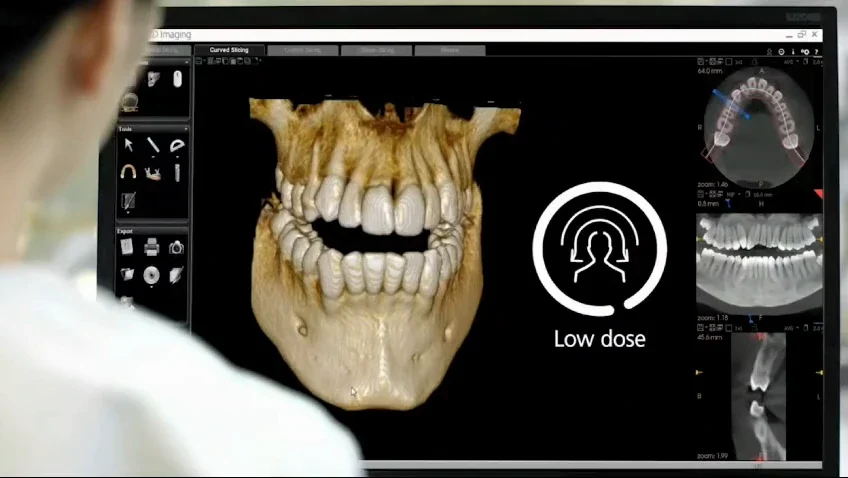
Planning may include photographs, digital scans, X-rays and further imaging when clinically justified. Your dentist will examine the gums and remaining teeth, discuss your preferred appearance and assess how your jaws bite together. If implants are appropriate, there may be surgical and healing stages before the final crowns are fitted.
You should also ask about the temporary solution. Many patients understandably do not want to walk around with a visible front gap while treatment progresses. Depending on the clinical circumstances, a temporary removable or fixed restoration may be possible. Its design should protect healing tissues and any newly placed implants.
The timing varies. Some situations allow rapid provisional replacement; others need more healing or additional treatment. Be cautious of any promise of a permanent perfect smile on a fixed timetable before your individual anatomy has been assessed.
Could orthodontic treatment improve the result first?
Sometimes the best way to make replacement teeth look natural is to create the right space before making them. Neighbouring teeth may have drifted towards the gap, tilted or rotated. Straightening them can improve proportions and create room for an appropriate restoration.
This does not mean everyone needs braces before dental implants. It means the available space should be measured carefully, rather than asking a dental technician to squeeze two crowns into an unsuitable gap. The British Orthodontic Society notes that orthodontic treatment can be used to create space for replacement teeth in adults where appropriate. BOS information for adults.
How do you avoid a smile that looks artificial?
Tell your dentist what ‘natural’ means to you. For one person it means matching the exact shape of their remaining teeth. For another it means a slightly brighter but still believable smile. Some people want the replacements to be almost invisible; others hope to improve the overall balance of the front teeth while filling the gap.
Bring older photographs if you have them. Look at the edges of the teeth, the curve of the smile, the relationship to the lips and the spaces between the teeth. Request an explanation of whether provisional restorations or try-in stages can help you approve the result before final manufacture.
Be equally candid about anything you do not want. ‘I do not want large, brilliant-white teeth’ is valuable design guidance.
A practical first step
A successful front-tooth replacement is a small architectural project. It involves bone, gum, tooth shape, bite and the way your smile moves, not just two artificial teeth. A careful assessment should give you a realistic view of your options, including their limitations and maintenance needs.
At Iconic Smiles, a £30 consultation offers a straightforward place to start. You can explain what you miss about your smile, ask which replacement approaches might be suitable and understand what investigations would be required before committing to treatment.
Frequently asked questions
Will two implants look more natural than one? Not necessarily. The gum shape and available space can make a one-implant, two-tooth design worth considering in selected cases. Both approaches need careful planning.
Can new front teeth match slightly uneven natural teeth? Yes, restorations can often be designed with individual character. A convincing smile does not require every tooth to be identical.
Will I be without front teeth during treatment? Not always. Temporary options may be available, but their suitability depends on the planned treatment and healing requirements.
What if my gums have shrunk? Changes in bone and gum shape may affect the design. Your dentist will assess whether tissue procedures, restorative contours or another approach could provide an acceptable result.
Clinical sources
Your next step, when you’re ready
We would be pleased to welcome you for a £30 consultation at your preferred Iconic Smiles practice. Bring your questions, and we can talk through the options that may suit you.
£30 for a planned-treatment consultation. Scans, additional investigations and emergency assessments may have separate fees; please confirm when booking.