
Dental implants — replacing missing teeth
Natural-Looking Front Dental Implants: Gumline and Smile Design
Replacing a front tooth requires more than matching the shade of a ceramic crown.
Explore your tooth replacement options
If you are considering replacing a tooth or several teeth, a £30 consultation gives you a chance to explain what matters most, ask questions and explore the options with our team.
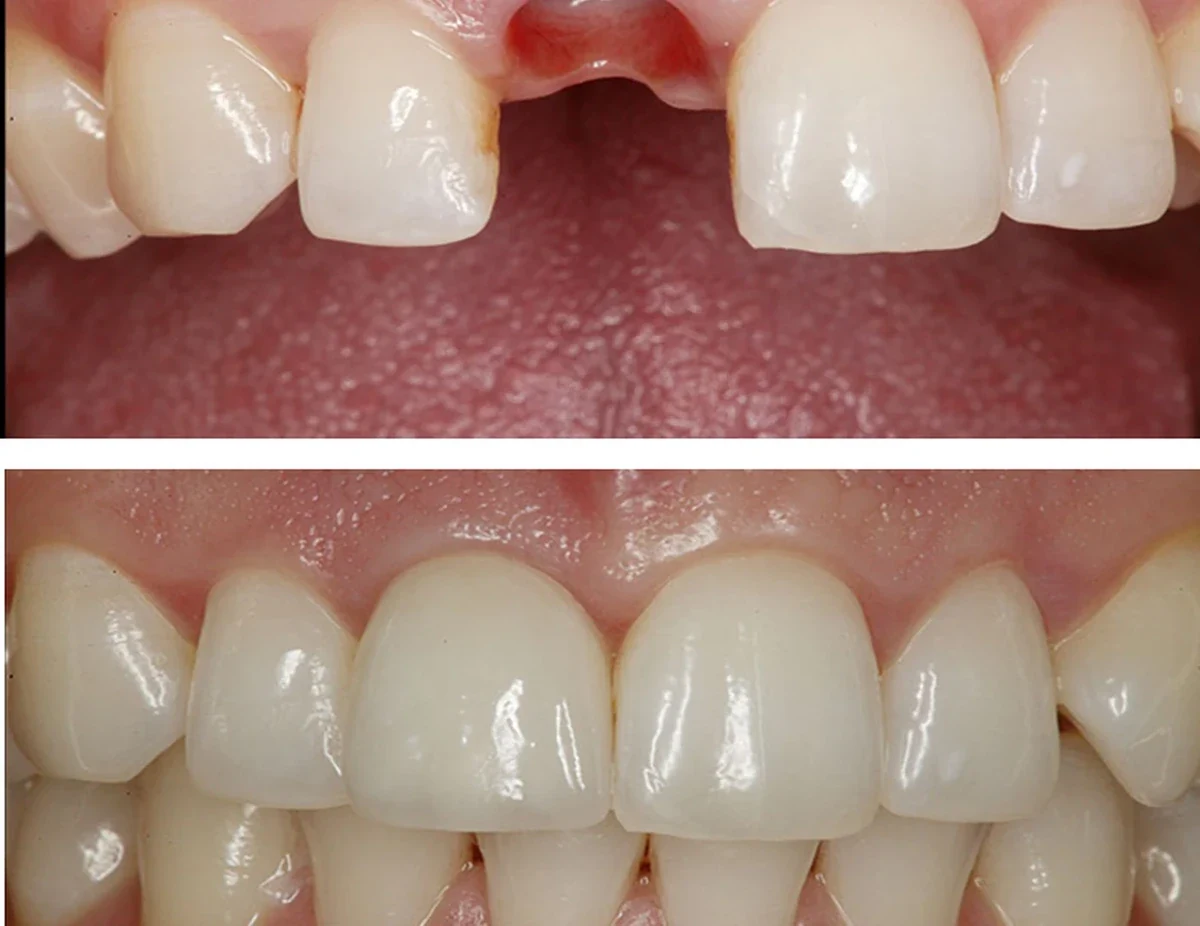
A natural-looking front implant depends on the crown position and surrounding gum as well as its shade. Tooth edges, gum symmetry and the way light passes through the replacement all affect how it sits beside a natural tooth. An implant can integrate with bone yet still look different if the position or tissue contours are unfavourable. These factors need discussion before the original tooth is removed.
The role of the smile line
Some smiles reveal very little gum; others expose several millimetres of gingiva above the upper front teeth. This changes how visible small differences in contour may become. The clinician records the lip position at rest and during a full smile, examines the adjacent papillae and considers tooth proportions. A photograph taken only with lips retracted cannot represent how the result will look during ordinary conversation.
Planning the emergence profile
The crown widens from its implant connection beneath the gum into the visible tooth. That transition needs to look natural and allow cleaning. Too much bulk can press on tissue or trap plaque; too little support can leave shadows or spaces that catch food. Implant depth and position towards the lip or tongue are therefore central to the design. Laboratory work cannot always disguise an implant placed too far towards the lip.
Thin facial tissues and bone
The facial bone plate and the thickness of gum influence how the tissue margin behaves after extraction and surgery. Some patients require discussion of grafting or other site-management procedures, while others are suitable for a less involved approach. Tissue changes during healing are partly biological and cannot be predicted to a fraction of a millimetre. A good treatment plan explains the possible cosmetic compromises before requesting consent.
What the temporary tooth achieves
A provisional crown or alternative temporary replacement can help preserve an acceptable smile while the tissues settle. In selected situations a carefully shaped provisional may assist the development of a suitable soft-tissue contour, but it must not transmit inappropriate forces to a healing implant. The patient should know whether a temporary attaches to neighbouring teeth, a removable appliance or the implant itself, because those choices have different implications.
Colour and surface texture
Matching a single central incisor is particularly demanding. The ceramic needs the right brightness, translucency, surface shape and edge detail, beyond a shade code alone. Photographs, digital shade records and clear laboratory instructions help the technician understand the neighbouring tooth. Natural teeth can look lighter as they dry during an appointment, so viewing conditions and realistic expectations matter when choosing the match.
Questions for your first implant consultation
Ask to see a proposed smile design, identify what controls the gumline and clarify whether there will be a temporary tooth throughout treatment. Request explanations of implant position, expected tissue healing, cleaning access and any alternatives if the visible result would be compromised. Consensus recommendations on immediate implants emphasise careful selection and restorative preparation. The aim is a tooth that belongs in your smile, not simply a fixture that occupies the socket.
A visible-gumline planning example
For example, two people may each need an upper lateral-incisor implant but have different appearance risks. One may show little gum when smiling and have thick tissue with fairly even neighbouring gumlines. The other may show the full gumline, with delicate tissue towards the lip and an uneven ridge. Even with enough bone in both sites, the second situation needs a fuller discussion of temporary shaping, tissue treatment and alternatives to an implant. A crown can copy colour but cannot guarantee restoration of a lost gum peak between teeth or the original supporting bone contour. Relaxed and full-smile photographs help the team explain which features can realistically change.
Your next step, when you’re ready
We would be pleased to welcome you for a £30 consultation at your preferred Iconic Smiles practice. Bring your questions, and we can talk through the options that may suit you.
Any additional investigations and their fees will be explained before you decide.