
Invisalign and teeth straightening
Can Teeth Be Straightened if You Already Have a Dental Implant?
Adults often consider teeth-straightening treatment after having a missing tooth replaced with an implant.
Talk to us about straightening your teeth
You might have a particular change in mind, or simply want to know what is possible. At a £30 consultation, we can talk through your goals and explain how the next steps are planned.
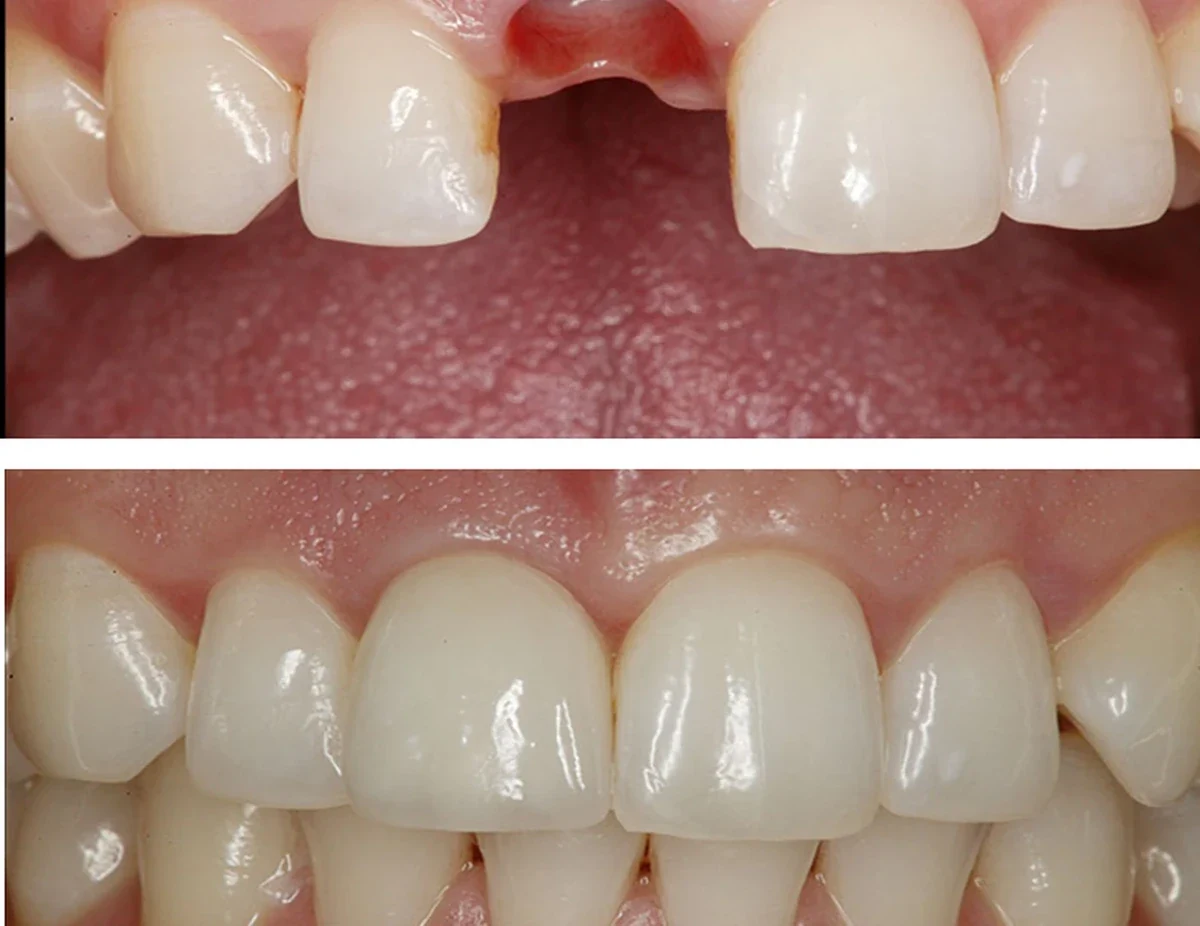
You may still be able to have braces or Invisalign with an existing dental implant, but the implant itself generally cannot move once integrated with bone. Natural teeth can move under controlled orthodontic forces, so the plan works around that fixed position. Its crown may limit where neighbouring teeth can finish, and some plans need a change to the crown after alignment.
The implant is a fixed reference point
Natural teeth have a supporting ligament between root and bone that allows orthodontic movement. An integrated implant is anchored directly to bone, without that mechanism. Aligners cannot simply move it into a better place in the arch. Recording its position, crown shape, neighbouring teeth and the overall bite helps establish what can change while the restoration remains in place.
What can still be moved?
Adjacent natural teeth may be aligned around an implant, and the clinician can sometimes use an integrated implant as a reference or for particular anchorage strategies, subject to specialist planning. The sequence requires care because changing adjacent tooth positions may alter the contact points around the implant crown. Space between the replacement tooth and a moving natural tooth can change, potentially revealing a need for crown reshaping or replacement at the end.
Why a scan is only the beginning
Digital aligner simulation can show desired tooth positions, but the plan must respect the fact that the implant is not movable. Appropriate radiographs and examination may be needed to assess neighbouring roots and supporting tissues. The crown's contour, contacts and gum margin also matter. A highly accurate digital model does not make an impossible tooth movement biologically feasible.
One implant versus an implant-supported bridge
One implant crown creates different limits from a fixed bridge supported by several implants. A longer joined replacement may leave less room for natural teeth to move and needs close coordination with the restorative dentist. The team checks whether the bridge would obstruct movement and whether its bite contacts might need adjusting afterwards. The plan should distinguish the fixed parts from the parts that can change.
Deciding whether the crown needs revision
Sometimes the natural teeth can be straightened successfully while the existing implant crown stays untouched. In other cases, a new crown is considered to improve shape, contact or shade after alignment. Replacing the crown does not move the implant beneath it. Where the fixture position seriously compromises the desired result, the clinician should explain realistic limitations and alternatives instead of promising a completely symmetrical arch.
Questions before beginning aligners
Which teeth will actually move? Will the implant crown remain the same? Could new gaps appear around its contacts, and who would restore them? What retention will be used after orthodontics? The British Orthodontic Society stresses individual diagnosis and appropriate case selection for clear aligners. For patients who already have implants, successful treatment is principally about respecting fixed anatomy while improving the movable teeth around it.
The crown may need to be redesigned, not moved
For example, someone with a lower premolar implant may want crowded front teeth straightened. Natural teeth may move successfully while the implant remains a fixed point in the final arch. As contacts change, its crown could look slightly out of line or leave a gap beside a neighbouring tooth. Changing the crown's contour may help, but does not reposition the implant beneath it. The restorative dentist should assess whether that revision is justified and explain its possible cost. Joined implant bridges can create further limits. The digital plan needs to mark integrated implants as fixed and show how neighbouring teeth and roots would move.
Your next step, when you’re ready
We would be pleased to welcome you for a £30 consultation at your preferred Iconic Smiles practice. Bring your questions, and we can talk through the options that may suit you.
Any additional investigations and their fees will be explained before you decide.