
Invisalign and teeth straightening
Your child's first orthodontic consultation: what parents should know before choosing braces
An initial orthodontic assessment does not automatically mean your child needs braces now. Sometimes reassurance and monitoring are the best next step; sometimes earlier treatment is important
Talk to us about straightening your teeth
You might have a particular change in mind, or simply want to know what is possible. At a £30 consultation, we can talk through your goals and explain how the next steps are planned.
Please confirm the £30 planned-treatment consultation fee when booking. Scans, additional investigations and emergency assessments may have separate fees.
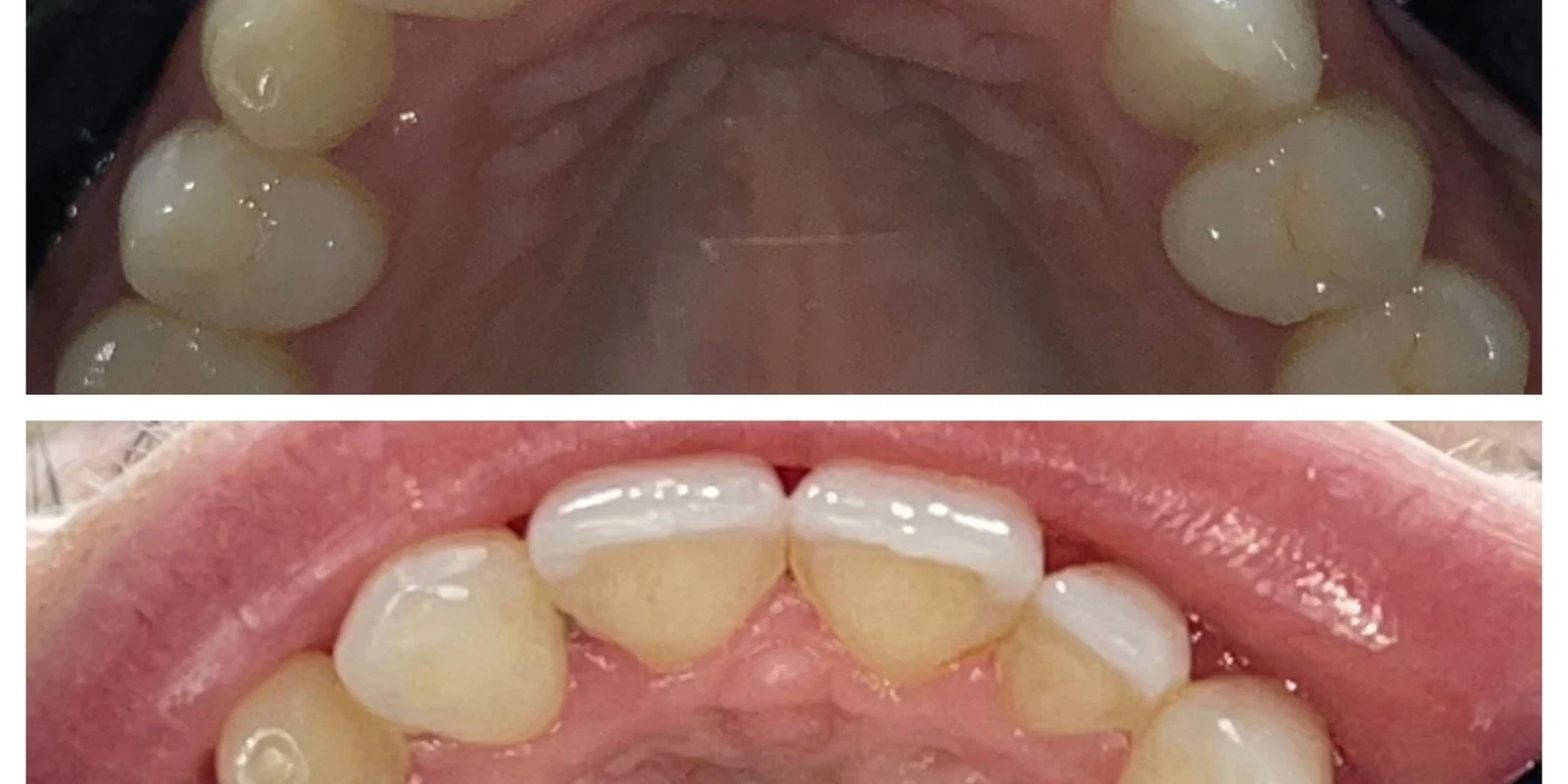
The short answer: An initial orthodontic assessment does not automatically mean your child needs braces now. Sometimes reassurance and monitoring are the best next step; sometimes earlier treatment is important.
There is often a moment when you notice that your child's teeth are coming through in a way you did not expect. Perhaps the two front teeth overlap, a canine seems to be appearing high in the gum, or a friend has mentioned that their child is starting braces. It is natural to wonder whether you should do something now, whether you have missed the right age, or whether treatment will interfere with school.
An orthodontic consultation should help you answer those questions without making your child feel that there is something wrong with their smile. Many young people benefit from orthodontic treatment. Others do not need it, or will be better assessed again when more adult teeth have come through.
The first appointment is about understanding how the teeth and jaws are developing, whether there is a clinical reason to act and what choices your child and family have. It is not a commitment to braces.
When should a child first be assessed?
There is no single birthday when every child needs an orthodontist. In many cases, treatment starts around the early teenage years, when most of the permanent teeth have erupted. That does not mean all children should wait until then. Some developing bite problems, impacted teeth or unusual eruption patterns benefit from assessment earlier.
Your family dentist can help identify when a referral is useful. For example, a crossbite that causes the lower jaw to shift, an upper canine that is not coming through as expected, a significant discrepancy between the jaws or teeth that appear to be missing may warrant earlier consideration.
Conversely, a crowded-looking smile in an eight-year-old does not automatically mean treatment should start straight away. Teeth, jaws and available space change during growth. A recommendation to monitor development and review later can be the most sensible advice.
If you are uncertain, ask specifically what is being watched, when it should be checked again and which changes would prompt earlier review.
What actually happens at the first appointment?
The orthodontist or assessing clinician will usually begin by asking what you and your child have noticed. Your child may want straighter front teeth, be embarrassed by a prominent tooth or have no concerns at all. It matters that their view is heard, rather than assuming the parent's concern and the child's feelings are identical.
The clinician examines the teeth and bite, looks at how the upper and lower jaws fit together and checks whether the permanent teeth are erupting as expected. They may ask about cleaning, previous dental treatment, thumb or finger habits, mouth injuries or problems biting into food.
Photographs, digital scans or X-rays may be advised when needed to understand tooth positions and plan care. They should not be treated as an automatic package that every child must have. Ask what each record will show and whether it is necessary at that stage.
At the end, you should have an explanation in ordinary language. Is treatment indicated now? Is it better to wait? What are the main options and why? What might happen if nothing is done at present?
Can children be referred too early or too late?
An early appointment is not inherently a problem, provided it leads to proportionate advice. A child may have an initial assessment followed by monitoring rather than immediate braces. If there is a developing issue where timing matters, early recognition can be helpful.
A later consultation is not automatically too late either. Teenagers and adults can have orthodontic treatment, although growth can influence the options for some jaw and bite problems. A clinician should explain if a particular treatment is more effective during a stage of growth, without using urgency to pressure you into a decision.
If your child has had a previous assessment and the plan was to wait, take the letter or records to the new consultation if available. That can make the discussion more useful.
Does a crowded tooth always need braces?
Not necessarily. Slight crowding may be primarily an appearance concern, and some families choose not to treat it. Other cases affect the bite, the risk of dental trauma, tooth cleaning or how the teeth are coming through.
The dentist should distinguish between what is clinically necessary, what is a reasonable optional improvement and what may be better monitored. For a child who is not bothered by mild irregularity and has a healthy bite, doing nothing for now may be an entirely appropriate choice.
Where treatment is advised, it should have clear aims: creating appropriate space, improving the bite, reducing the prominence of teeth at risk of injury or helping teeth erupt more favourably. 'Perfectly straight teeth' is not the only measure of a good outcome.
NHS or private orthodontics: what is the difference?
In England, NHS orthodontic treatment is generally available to eligible patients under 18 who have a defined clinical need. Suitability is assessed using the Index of Orthodontic Treatment Need (IOTN) and the relevant commissioning arrangements. Being under 18 does not automatically mean every child qualifies for NHS-funded braces. Waiting lists may also apply.
Private orthodontic care can be considered when a child does not meet NHS funding criteria or when a family wishes to explore different timing, appliances or appointment arrangements. A private consultation should not be presented as proof that NHS treatment is unsuitable, and choosing private care does not necessarily mean that treatment is clinically necessary.
Ask who will assess your child's eligibility, whether a referral to an NHS service would be appropriate and what is included in a private treatment offer. The choice should be informed, not made in a rush because friends are already having braces.
Will my child need teeth removed?
Most parents would understandably prefer to avoid extractions, but the decision cannot be made from a photograph or a simple measure of crowding. It depends on how much space is available, the position of the teeth, facial proportions, jaw relationship, gum support and the desired bite.
Options for creating space can include expansion in selected growing patients, moving teeth within safe limits or carefully planned removal of particular teeth where justified. Each approach has limitations. Promising 'no extractions for everyone' is no more responsible than assuming teeth must be removed whenever they overlap.
If extractions are proposed, the clinician should explain why, which teeth would be involved, what alternatives were considered and how the spaces would be closed. It is reasonable to ask for time to consider that information before agreeing to anything irreversible.
Fixed braces, ceramic braces or clear aligners?
For many children and teenagers, fixed braces are a dependable option because they stay in place and can address a wide range of tooth movements. Metal brackets are visible but familiar to many young people. Ceramic brackets may be less noticeable, although their suitability, durability and price can differ.
Clear aligners may suit some teenagers, but they depend on consistent wear and careful management. They are not automatically the best option because they look discreet. A teenager who frequently forgets removable retainers or struggles with routine may find a fixed appliance easier to manage. Other young people value the ability to remove aligners for eating and cleaning.
The clinical question comes first: which appliance can achieve the necessary movement and bite result safely? Your child's preferences and ability to manage it come next. There is little value in choosing a nearly invisible appliance if it is unlikely to be worn as prescribed.
What about sports, musical instruments and school?
These are practical questions worth raising early. A child who plays rugby, hockey or another contact sport may need a suitable mouthguard and guidance on fitting it around an appliance. Wind instruments can take some adjustment with fixed braces. Some teenagers worry about speech, photographs or discomfort during important school activities.
Braces can cause temporary soreness after fitting or adjustment. Fixed appliances also mean being careful with very hard or sticky foods that could damage them. Clear aligners involve removing them for most eating and drinking and keeping track of them at school.
Tell the clinician about exams, school trips, major sporting events or periods when your family will be away. These do not necessarily rule out treatment, but they can help you choose a sensible start date and understand how appointments may fit around everyday life.
Who will make sure their teeth stay healthy during treatment?
Orthodontics is not a substitute for routine dental care. Your child still needs good brushing with fluoride toothpaste, cleaning between teeth as advised and regular dental checks. Fixed braces create more places for plaque to collect, which can increase the risk of decay, white marks on enamel and gum inflammation if cleaning slips.
It is worth discussing how your child manages brushing before treatment starts. A teenager who needs extra support is not excluded from orthodontics, but the team should help establish an achievable cleaning routine. Sometimes dental or gum problems need treating before braces are fitted.
Ask whether hygiene appointments are included in a private fee, whether your usual family dentist should continue routine examinations and who to contact if a bracket comes loose or a wire causes irritation.
How long will treatment take?
It depends on the teeth, the bite, how much movement is required and how treatment progresses. Many orthodontic courses take months rather than weeks, and more involved cases may take considerably longer. No scan or computer animation can promise an exact finish date.
The clinician should explain what the initial estimate is based on, how regularly reviews are needed and what could extend the course. Missed appointments, breakages or difficulties wearing removable appliances may affect progress.
If the proposed treatment has two stages — perhaps an earlier intervention followed by braces when the permanent teeth come through — ask whether both stages are genuinely expected and what each is intended to achieve. Not every child benefits from two-stage treatment.
What should a private quotation include?
A clear quotation should identify the appliance, estimated treatment stages, routine adjustment appointments and what happens if the plan changes. Ask specifically about replacement brackets or lost aligners, emergency visits, retainers, follow-up after treatment and any additional dental or hygiene work.
Retainers are not an optional afterthought. Teeth can move after braces come off, so your family needs to understand the proposed long-term retainer routine and its likely future costs. A lower headline fee can look less appealing if retainers and essential follow-up are excluded.
Your child should also understand what is expected of them. An orthodontic treatment plan is something the young person takes part in, not something adults simply arrange around them.
How to approach the decision as a family
It can help to ask your child three simple questions before the consultation: Is anything about their teeth bothering them? What would they most like to change? What worries them about wearing braces? Those answers may be quite different from yours.
At the appointment, ask the clinician to explain what happens if you wait, what can realistically improve, which option they favour and why. If the recommendation is to monitor for a year, ask for a review plan. If active treatment is proposed, take the written information home if you need time.
Iconic Smiles advertises a £30 planned-treatment consultation, but the availability and fee for a particular child's orthodontic assessment, any specialist appointment and diagnostic records should be confirmed when booking. Families can ask which service is appropriate rather than assuming that a general consultation covers every orthodontic assessment.
Your child deserves to feel listened to, and you deserve to understand the clinical reasoning. A successful first consultation gives both of you confidence about the next decision — even when that decision is simply to wait.
Questions parents often ask
My child is eight and the teeth look crowded. Are braces needed now? Not necessarily. Development and bite problems should be assessed individually; monitoring may be best, while some specific problems merit earlier referral.
Will NHS treatment be free because my child is under 18? NHS-funded treatment in England generally requires a qualifying clinical need and assessment. Age alone does not establish eligibility.
Can we choose clear aligners rather than fixed braces? Sometimes. Suitability depends on the movements required and whether your child can manage the prescribed wear routine.
Should we wait until after GCSEs? That depends on the clinical timing and your child's circumstances. Discuss exams and other commitments before deciding on a start date.
Will teeth move after the braces come off? They can. Long-term retainer use and follow-up are essential parts of planning, whatever appliance was used.
Support your child without rushing the decision
You can tell the team about feeding, cleaning, speech, confidence or any concern that prompted the referral. Explore children's dentistry and orthodontic assessment, then ask which changes need treatment and which can be monitored.
Independent patient information: NHS: braces assessment and referrals for children · NHS Business Services Authority: eligibility for funded orthodontics. These explain general clinical considerations; a personal recommendation requires assessment.
Your next step, when you’re ready
We would be pleased to welcome you for a £30 consultation at your preferred Iconic Smiles practice. Bring your questions, and we can talk through the options that may suit you.
Please confirm the £30 planned-treatment consultation fee when booking. Scans, additional investigations and emergency assessments may have separate fees.