
Invisalign and teeth straightening
Coordinating orthodontics with crowns, bonding and implants
The best time to move teeth may be before a crown, veneer or bridge is designed.
Talk to us about straightening your teeth
You might have a particular change in mind, or simply want to know what is possible. At a £30 consultation, we can talk through your goals and explain how the next steps are planned.
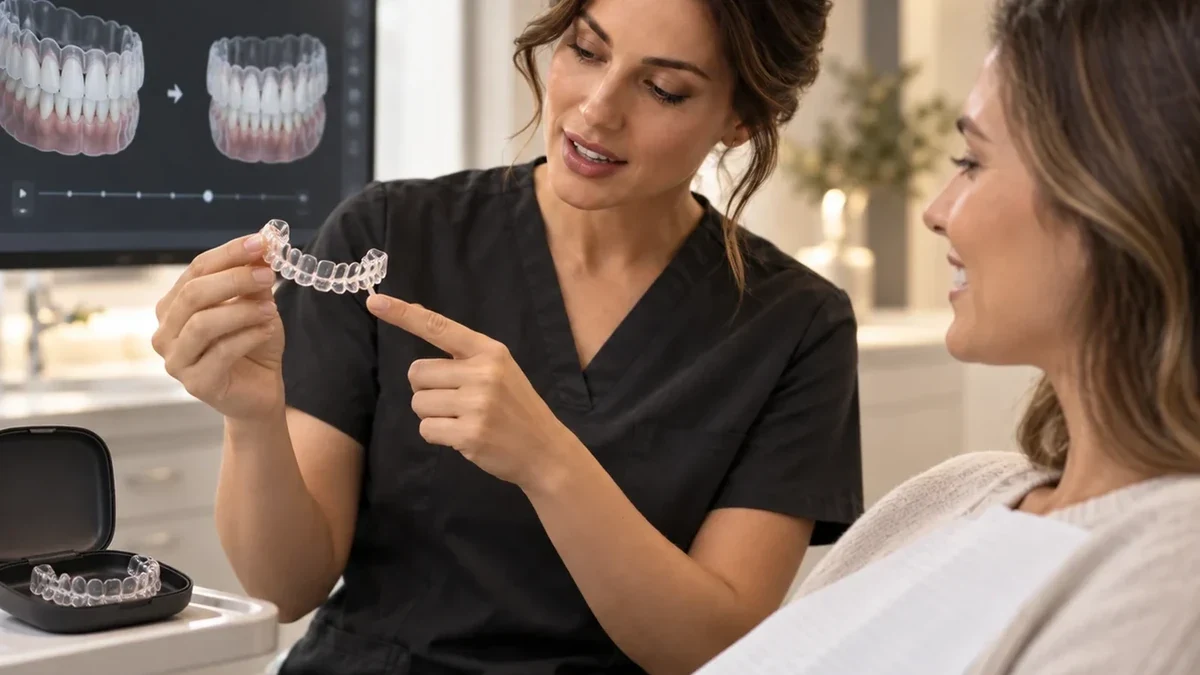
When teeth need straightening and restoration, movement is often planned before a crown, veneer or bridge is made. Tooth positions affect the space for the restoration, its contour beside the gum and how it meets the opposing teeth. Whether you attend Cheshunt or Friern Barnet, the clinicians involved need to agree the sequence and final result together.
Iconic Smiles Cheshunt: Coordinating Orthodontics and Restorations
At Cheshunt, a combined plan should establish the intended tooth positions, bite and restorative space before movement starts. This can reduce unnecessary enamel removal or thick composite used to hide remaining asymmetry. The team considers gum health, root spacing, edge design and proposed crowns, implants or veneers, including whether changes to existing restorations would affect aligner fit. The sequence may be alignment, suitable whitening and then conservative bonding, although individual needs differ. Restorations placed too early may need remaking, so confirm which clinician coordinates the overall plan and how the restoring dentist contributes to the endpoint.
Iconic Smiles Friern Barnet: Coordinating Orthodontics and Restorations
At Friern Barnet, the assessment similarly separates changes needed in tooth position from changes needed to rebuild the tooth itself. Gum levels, worn edges, crowding, proportions and contacts help guide that decision. Moving teeth first can sometimes reduce the ceramic thickness or enamel preparation needed; in other cases, whitening and a small repair may be enough afterwards. Existing fillings, the intended final edge positions and retention also need planning. Final tooth-shape changes can alter how retainers fit, so the written sequence should identify who manages them after the restoration is placed.
Working around a bridge or fixed implant
For example, an existing bridge may join teeth that would otherwise need to move separately. An implant creates a different limit because it cannot move orthodontically. Planning ahead establishes root positions and replacement space, who provides any temporary tooth and how that space will be retained. It should also explain how a later change in restorative design would be managed.
The restoration sets part of the orthodontic target
For a missing lateral incisor, the visible gap needs to fit the intended replacement while neighbouring roots remain appropriately separated to protect supporting bone. The gap already present may not meet those requirements. Similarly, a new crown can change the required overlap and contacts, so the restoration's design forms part of the orthodontic target.
How the team should hand over care
The handover plan should say who checks the orthodontic finish, who designs the final restoration and when retention begins. Temporary bonding or a provisional tooth may be needed while spaces are maintained. Colour may need to settle before final shade matching. If an implant is planned, space and root positioning must be assessed before placement because an implant integrated with the bone cannot later move like a natural tooth. A shared transition plan helps make the relationship between the two treatment estimates clear.
Coordinating the move from alignment to restoration
Before treatment, you should understand what must move, what the restoration requires and who will check that these goals have been met. Include temporary work and retention in that discussion so the transition from straightening to restoration is planned from the outset.
Coordinating orthodontics and tooth repair
When central incisors are crowded and lateral incisors are unusually narrow, moving the teeth and then adding planned composite widths may preserve more enamel than reshaping teeth in their original positions. Closing every space during orthodontics could leave too little room for proportionate restorations. A staged digital plan can show where space is to be distributed, using tooth-width proportions, restoration clearance, retention and the shade sequence to agree provisional finishing positions before movement begins.
Sources for further reading
Your next step, when you’re ready
We would be pleased to welcome you for a £30 consultation at your preferred Iconic Smiles practice. Bring your questions, and we can talk through the options that may suit you.
Any additional investigations and their fees will be explained before you decide.