
Invisalign and teeth straightening
What makes teeth straightening successful beyond appearance?
Mild crowding does not always require treatment. In more complex cases, however, a pleasing front view can hide bite or root-control problems that need careful finishing.
Talk to us about straightening your teeth
You might have a particular change in mind, or simply want to know what is possible. At a £30 consultation, we can talk through your goals and explain how the next steps are planned.
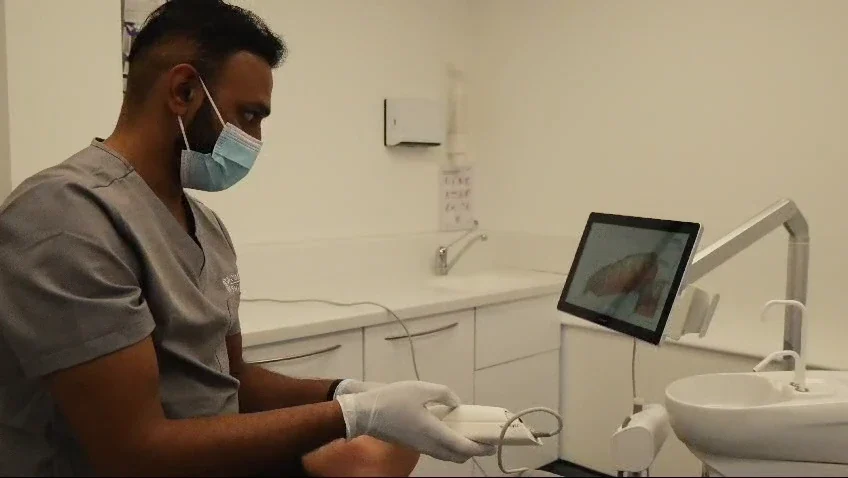
Successful teeth straightening should meet agreed goals for function, tooth and gum health, cleaning and a maintainable result, alongside appearance. Mild crowding may not need treatment at all. More complex movement can need careful root and bite control, sometimes with an additional anchor such as a temporary anchorage device.
How is success measured beyond straight teeth?
The clinician compares the intended outcome with baseline and progress records, considering gum health, root positions, chewing contacts, bite stability, symmetry and cleaning access. Meaningful improvements may include reducing damaging contacts or making teeth easier to clean. A visually straight arch can still need functional finishing, while a small remaining irregularity may be an appropriate compromise if more movement would add disproportionate risk. Anatomy and your priorities can limit ideal goals. Agree which outcomes will be measured, what cannot responsibly be changed and how retention will support the result.
Mild crowding with stable gums: when monitoring is reasonable
A mildly crowded adult tooth arrangement is not automatically a disease. Where the gums are stable, contacts are cleanable, chewing is comfortable and there is no damaging bite contact or progression, monitoring may be reasonable. Baseline records or photographs can be compared at reviews for new recession, inflammation or wear. Elective treatment adds effort, biological risks, maintenance and long-term retention. These commitments should be weighed against the improvement you value and the findings that would make intervention worthwhile.
Temporary anchorage devices in complex orthodontics
A temporary anchorage device is a small screw used as an extra point against which teeth can move. It may help with a selected complex movement when relying on other teeth would cause unwanted changes elsewhere. Placement may involve local anaesthetic, and the device needs its own consent and cleaning advice. Local discomfort, inflammation, irritation and loosening or failure are possible. It is not needed routinely. If one is proposed, understand its mechanical benefit, how to care for it and the alternative plan if it loosens.
Front-tooth alignment and bite correction can differ
For example, improving the front teeth may be straightforward while changing the overlap or back-tooth contacts requires more complex control. Those extra movements need a worthwhile benefit. In a stable minor irregularity, monitoring may be preferable; in a complex case, additional anchorage may help but brings its own care commitments.
Agree how your result will be assessed
Before starting, agree how success will be assessed for your case. Overjet, overbite, contacts, midlines, gum health and the expected stability may all matter. A diagnosis and clear goals help you compare monitoring with treatment and judge what further finishing would achieve.
Sources for further reading
Your next step, when you’re ready
We would be pleased to welcome you for a £30 consultation at your preferred Iconic Smiles practice. Bring your questions, and we can talk through the options that may suit you.
Any additional investigations and their fees will be explained before you decide.