
Invisalign and teeth straightening
Deep bites: comparing teeth straightening and veneers
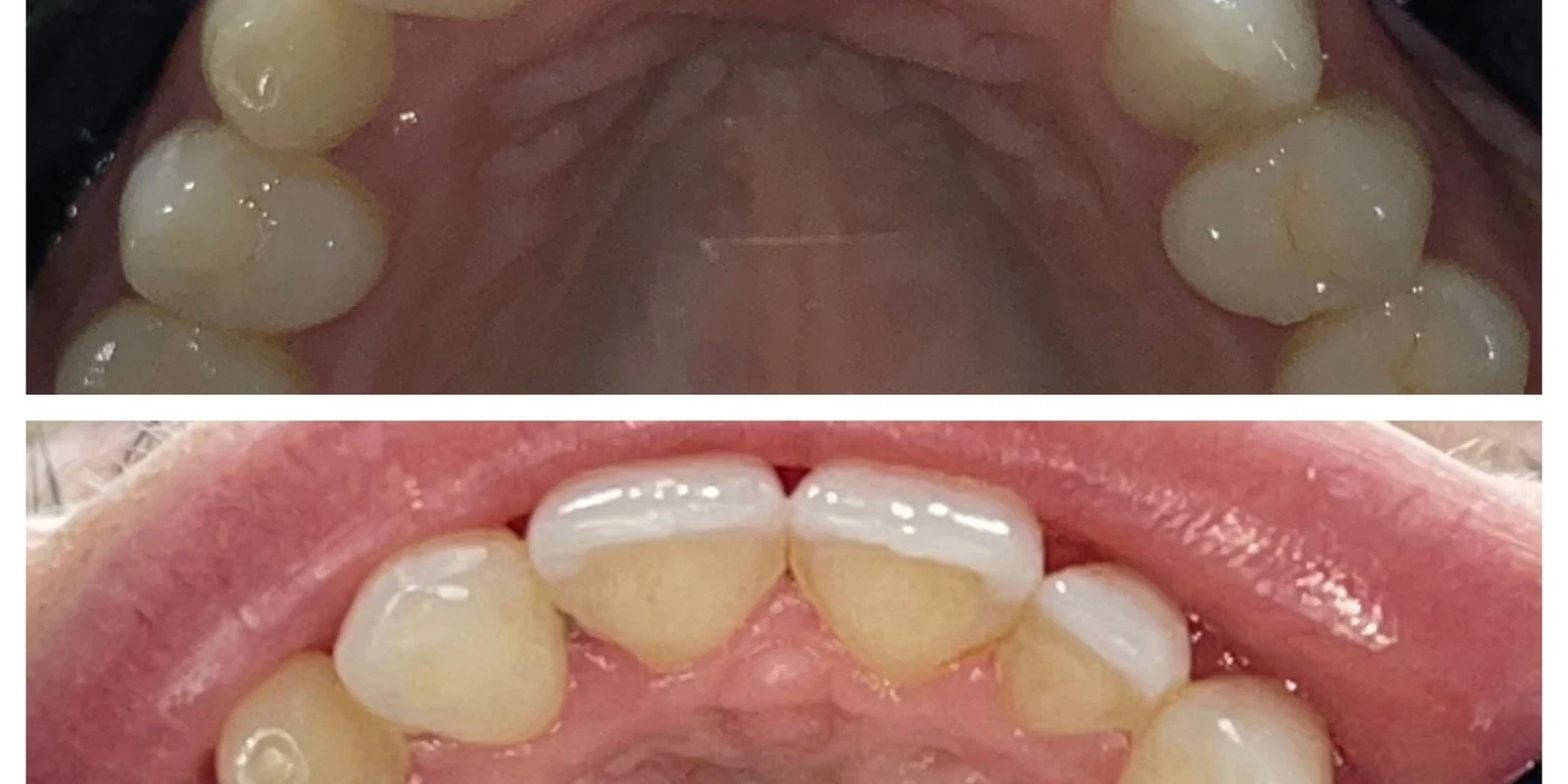
A deep bite describes excessive overlap of the front teeth. A wish for longer-looking, more even or differently shaped teeth may be related, but it is not itself the same diagnosis.
Talk to us about straightening your teeth
You might have a particular change in mind, or simply want to know what is possible. At a £30 consultation, we can talk through your goals and explain how the next steps are planned.
Start by separating the clinical and appearance goals
Teeth straightening changes tooth position; veneers change the visible surfaces and shape. For a deep bite, where the upper front teeth overlap the lower teeth too much, these treatments therefore address different things. Your examination should establish whether the concern is the bite, tooth appearance, damage or a combination, so you can compare options that fit your goal. [1][2]
Consider orthodontic correction with reassessment afterwards
Straightening your teeth first may reduce how much restorative treatment you later want or need. The team should explain the intended movement, its limits and how the position will be retained. Complex movements or jaw differences may need additional techniques. Once the teeth have moved, you can review which appearance concerns remain before deciding on veneers or other repairs. [3][4][5]
Evaluate veneers for the problem they actually address
If veneers are offered, request an explanation of the teeth involved, proposed preparation and intended change. The Oral Health Foundation describes the treatment and its implications. Ask whether the veneer plan leaves the bite relationship unchanged and how that has been assessed. A cosmetic preview does not establish that veneers can appropriately replace every orthodontic objective. Conversely, a deep-bite label does not by itself prove that veneers are never reasonable. The recommendation should connect the actual findings to the intervention and explain its important risks, maintenance needs and realistic alternatives without universal claims. [2]
Compare a combined plan with simpler alternatives
Some patients may be offered orthodontics followed by selected restoration, while others may have a suitable different restorative option or choose to accept the appearance after movement. Ask why both interventions are needed and what each adds. A combined plan brings additional stages and responsibilities, so its benefit should be explicit. A less extensive alternative may involve a compromise that matters to you; the clinician should explain it rather than dismiss it. The appropriate choice depends on diagnosis, priorities and proportionality, not on treating the largest cosmetic package as the definition of a high-quality result.
Discuss no elective change while keeping necessary care separate
You may choose not to pursue an appearance goal after understanding the assessment. Ask whether any separate disease, tissue trauma, symptoms or damage still requires treatment or monitoring. No elective cosmetic treatment is not the same as ignoring a diagnosed problem, and an acceptable cosmetic compromise is not automatically a clinical failure. The decision should explain the likely consequences in your mouth and what would prompt review. This keeps the consent discussion anchored in the actual findings and your preferences, without implying that every patient with a deep bite must accept either veneers or a comprehensive combined pathway.
Compare the full pathway, care and costs
Ask for the expected stages, practical demands, important risks, retention and restoration maintenance in each suitable plan. Published starting fees at Iconic Smiles do not establish the complete price of a combined course. Confirm who coordinates orthodontic and restorative decisions and how the plan can be revised after reassessment. Veneer research includes complications and varying follow-up, so no option should carry a fixed-lifespan guarantee. A useful comparison leaves you understanding the irreversible intervention, the continuing commitment and the limits of each route, rather than choosing on the basis of a single simulated photograph or headline price. [6][7][5][8]
For your decision:
Compare what each treatment would change, any irreversible steps and future care. If both are proposed, you should understand why, with time to reconsider the cosmetic part after teeth straightening.
Record symptoms and findings without assuming their cause
Tell the team about discomfort, wear, damaged restorations or contact with the gums, and explain what matters most to you. The clinician should assess the findings rather than infer that every symptom is caused by the deep bite. BOS teeth-straightening assessment guidance recognises deep-overbite presentations with and without tissue trauma as different findings. A proper examination therefore matters more than assigning a label from a selfie. If another diagnosis needs investigation, clarify how that fits into the plan. The proposed benefit should relate to what has been established, not to a promise that one bite change will cure every complaint. [source][source]
Do not assume veneers and orthodontics solve the same problem
A deep bite concerns excessive overlap of the front teeth, as described by the BOS. Veneers concern the surfaces and form of selected teeth. The interventions can be related within a plan, but their purposes are not interchangeable. Ask which finding requires movement, which requires restoration and what remains unchanged. A cosmetic preview should not be presented as proof that the underlying bite has been fully assessed. If veneers are proposed without orthodontics, request the clinical rationale and realistic alternatives; if both are proposed, understand why each part is needed rather than assume a combined plan is automatically better. [source][source]
Explain the movement plan and progress reviews
The appliance should be selected for the required correction and clinical situation. BOS guidance notes that complex movements or underlying jaw discrepancies may need additional techniques. Ask how the proposed changes will be assessed during treatment and what a different response could mean for the goal, timetable or fees. A digital preview can assist communication but cannot replace clinical review of the actual response. Follow the given appliance instructions and report problems rather than adapting it yourself. At this stage the focus is achieving an appropriate assessed position, not guaranteeing that a preselected veneer design must be delivered unchanged. [source][source]
Further clinical details: Deep bites, worn incisors and orthodontics before veneers
Orthodontics before veneers may help create space and protect restorations when a deep bite is contributing to wear. Heavy front-tooth contacts can damage lower incisors and leave little room for new material. Placing veneers without considering those contacts may expose them to chipping. The plan therefore needs to include function and the way teeth meet, alongside appearance.
Deep overbite with worn lower incisors: treatment planning
With a deep bite and worn lower incisors, the assessment checks overlap, enamel loss, mobility and contacts against the upper teeth. Already shortened teeth may have limited enamel available for rebuilding. Orthodontics, restoration or a combination may be needed to create repair space and avoid further trauma. Rebuilding an edge before addressing a damaging contact can expose it to repeat fracture. The coordinated plan should explain which movement creates room and how that room will be maintained for restoration.
Assessing a deep bite before veneers
Before veneers, an orthodontic assessment distinguishes tooth-position problems from a difference between the jaws. It considers overlap, grinding, wear and sideways contacts to establish whether movement can create space conservatively. In selected cases this can reduce the thickness of ceramic and the enamel preparation needed. Veneers do not move roots or correct every bite relationship. If straightening is appropriate first, the team can record the resulting restorative space before final material and design choices are made.
Orthodontic finishing: evaluating contacts and guidance
Orthodontic finishing means checking the intended result after alignment, rather than stopping solely because the last tray has been worn. The clinician considers front and back contacts, tooth heights and angles, horizontal overlap, midlines, cleaning access and root relationships where relevant. Checks from both sides and during jaw movement help identify traumatic contacts, unwanted gaps at the back or interference at the front. Small final movements may improve function even when photographs already look satisfactory. You should understand the benefit of any proposed adjustment, remaining discrepancies and the retention plan.
Creating room to rebuild worn edges
If lower front teeth are worn, adding length can place the new material directly in a heavy bite contact. Moving teeth may create space for a repair, but the clinicians need to agree the intended tooth positions and bite first. Temporary restorations or a model of the proposed teeth can help test the plan. You should understand whether the aim is appearance, protection of the remaining teeth or a wider change in how your teeth meet.
Linking wear prevention with the treatment sequence
The sequence depends on your wear history, remaining tooth tissue and jaw movements. Some people benefit from movement before restoration; others need combined care. The plan should explain how the worn teeth will be rebuilt and how the causes or contacts contributing to wear will be managed.
Finish with one understandable care plan
The handover should explain the achieved result, any accepted limitation, appliance care and review of the restorations. Ask how chipping, a changed bite, discomfort or a fit problem will be assessed and which service to contact. At Iconic Smiles, confirm the clinicians, locations and itemised fees across both parts of the pathway. A good combined sequence remains responsive to the findings at each stage. It should not lock you into irreversible preparation before reassessment or suggest that correcting the bite guarantees lifelong veneers without repairs, retention needs or further professional care. Meet the Iconic Smiles dental team · Find an Iconic Smiles practice · See our current treatment feesSupporting source (bos.org.uk)
Report a chip, changed contact or altered bite
Contact the treating service if a restoration chips, develops a rough edge, feels different or the bite changes unexpectedly. A review is needed to identify the affected structure and discuss the response. Ceramic-veneer research reports complications as well as survival across varied studies; it does not provide a guaranteed repair method or lifespan for every patient. Do not use household adhesive, file a restoration or repeatedly test it by biting harder. Describe what happened, when it began and whether there is pain or difficulty eating, so the team can advise on the appropriate assessment. Read the supporting clinical study (2)
Make irreversible preparation visible in the decision
Veneer treatment may involve changing tooth tissue. The Oral Health Foundation explains the treatment and preparation considerations, while GDC consent guidance requires material risks and alternatives to be discussed. Ask how much intervention is proposed for each tooth and why it is appropriate. Do not assume an attractive simulation establishes that a particular preparation is necessary. If tooth movement could change the restorative requirement, clarify whether that assessment should occur first. An elective appearance goal deserves honest discussion of the irreversible step and future maintenance, not pressure to accept more extensive treatment because the overall result has already been pictured. Supporting source (www.dentalhealth.org)
Choose the appliance according to the intended movements
Clear aligners and fixed appliances may be considered according to the diagnosis and treatment objective. BOS guidance notes that complex movements or underlying jaw discrepancies can require additional techniques. Ask which changes are proposed, what their limitations are and how progress will be assessed. The appliance’s visibility does not establish its suitability for a particular bite problem. A digital preview can help explain the ambition, but it is not a guarantee that every displayed movement will occur without adjustment. Understand the contingency if the response differs from the plan or a more limited result is recommended. Supporting source (bos.org.uk)Read the supporting clinical study (2)
Agree what the bite treatment and veneers would each achieve
The first decision is whether the concern involves tooth position, tooth form, damage or a combination. The BOS defines a deep bite as excessive upper-front overlap and notes that orthodontics can prepare for other dental treatment. Veneers have a different role in changing selected tooth surfaces and appearance. Ask for the intended outcome of each part before agreeing a combined sequence. The plan should not assume that every tooth will require a veneer or that cosmetic restoration automatically corrects the bite. An explained objective gives the later reassessment something meaningful to compare with the starting situation. Supporting source (bos.org.uk)Supporting source (bos.org.uk)Supporting source (www.dentalhealth.org)
Check that retention instructions match the final tooth shapes
A retainer needs to be considered in relation to the teeth and restorations it is intended to fit. Ask which appliance should now be used, how it is worn and what review is planned. If an appliance no longer fits as instructed after restorative work, seek advice rather than forcing or modifying it. Tell the team when the change began and what treatment has occurred. A final aligner, an older retainer and a newly supplied appliance should not be assumed interchangeable. The responsible clinicians should coordinate a clear instruction so you are not left choosing between conflicting advice. Supporting source (bos.org.uk)
Avoid unrelated symptom-cure promises
Mention jaw discomfort, headaches or other symptoms during your assessment so their cause can be considered separately. Guidance on persistent temporomandibular pain, which affects the jaw joint or related muscles, does not show that correcting every deep bite or fitting veneers will cure facial pain. Any separate pain assessment should be explained before irreversible treatment is agreed. Read the supporting clinical study
Separate tooth position from tooth appearance
The British Orthodontic Society describes a deep bite as the upper teeth covering the lower teeth too much. Veneers change the visible form of teeth, while orthodontic treatment changes tooth position. If you are considering both, the assessment should explain which concern each intervention addresses. A photograph may show short-looking or uneven teeth without explaining the full bite relationship. Ask the clinician to distinguish the diagnosed bite issue, any damage and the appearance you want to improve. That prevents a cosmetic proposal from silently becoming a substitute for assessing how the teeth meet. Supporting source (bos.org.uk)Supporting source (www.dentalhealth.org)
Make daily care specific to the actual design
Ask how to clean the restored teeth and any fixed retainer or relevant spaces. Explain difficulties with access, discomfort, vision or dexterity. The Oral Health Foundation describes veneers and their care considerations, while BOS information addresses retainers and the continuing retention commitment. A list of products is less useful than knowing which surfaces need attention and how the method applies to your mouth. Do not assume that cosmetic restorations eliminate the need for ordinary dental assessment or that a fixed retainer can be ignored because it does not require nightly insertion. The routine should be practical and clearly explained. Supporting source (www.dentalhealth.org)Supporting source (bos.org.uk)
Reassess the cosmetic need after the relevant movement
Once the agreed position has been achieved or reviewed, ask what appearance concern remains and which restorative options are now reasonable. The original cosmetic plan may need confirmation or revision. Veneer consent should identify the teeth involved, preparation, benefits, important risks and alternatives. You may decide that less restoration is acceptable after orthodontics, while another may still want the proposed change. Neither outcome should be assumed in advance. This review protects the opportunity to make an informed restorative choice based on the current mouth, rather than proceed automatically because veneers appeared on the first estimate. Supporting source (www.dentalhealth.org)
Coordinate retainers, final shapes and ongoing responsibility
Retainers are needed after orthodontic treatment, and a change in tooth shape may affect how an appliance fits. Ask who coordinates the final restoration and retention stages and what to do if fit changes. Do not force or modify an appliance yourself. At Iconic Smiles, identify the responsible clinicians and request an itemised plan with reviews, temporary stages where relevant and fees. A coordinated decision keeps the bite objective, restoration choice and long-term care understandable. It should never rely on a claim that one sequence guarantees a permanently perfect result or removes the need for patient participation and professional follow-up. Supporting source (bos.org.uk)Meet the Iconic Smiles dental team · See our current treatment fees
Plan retention and restoration care together
The final arrangement needs a retention plan compatible with the finished tooth shapes, as well as care for any restorations. Ask who coordinates the transition and what to do if an appliance no longer fits after dental work. At Iconic Smiles, confirm the orthodontic and restorative clinicians, locations and full itemised estimate. A useful assessment makes the whole pathway understandable while keeping the decisions separate. It should not promise that veneers alone resolve every deep bite or that orthodontic preparation eliminates all later restorative risks, and it should leave room to revise the cosmetic plan after clinical reassessment. Supporting source (bos.org.uk)Meet the Iconic Smiles dental team · Find an Iconic Smiles practice · See our current treatment fees
Complete relevant preparation before movement
The BOS adult leaflet states that decay and gum disease should be treated before braces are fitted. Tell the team about earlier trauma, symptoms, restorations and any other treatment in progress. Ask what preparation is needed and how readiness will be reviewed. If another diagnosis remains uncertain, clarify whether it affects the proposed movement or restoration. A coordinated pathway should make responsibilities clear between clinicians. The aim is to avoid committing to a final cosmetic design while a relevant clinical question is unresolved, rather than complete unrelated appointments without understanding their effect on the plan. Supporting source (bos.org.uk)NHS patient information
Discuss restoration complications without inventing a lifespan
Ceramic-veneer research reports both survival and complications across varied studies and materials. A 2025 systematic review also identified limits in the longer-term evidence for some materials. Such findings do not establish that your veneers will last a fixed number of years or never need repair or replacement. Ask which evidence is relevant to the proposed material and how the team would assess chipping, discomfort or a changed contact. A bite-related plan should not promise that orthodontic preparation removes every technical risk. The estimate should make the current intervention clear without disguising future care as impossible or unnecessary. Read the supporting clinical study (2)
Research and guidance
- Why Orthodontics? - British Orthodontic Society (BOS)
- Veneers - Oral Health Foundation
- Clear aligners - British Orthodontic Society (BOS)
- Primary professional guidance — bos.org.uk
- Retainers - British Orthodontic Society (BOS)
- Dental Fees & Finance: Treatment Prices | Iconic Smiles
- Dental Team | Meet the Iconic Smiles Clinicians
- Survival and Complication Rates of Feldspathic, Leucite-Reinforced, Lithium Disilicate and Zirconia Ceramic Laminate Veneers: A Systematic Review and Meta-Analysis.
Your next step, when you’re ready
We would be pleased to welcome you for a £30 consultation at your preferred Iconic Smiles practice. Bring your questions, and we can talk through the options that may suit you.
Any additional investigations and their fees will be explained before you decide.