
Invisalign and teeth straightening
A prominent canine tooth: straighten it, reshape it or leave it?
Compare straightening, reshaping and leaving a prominent canine alone, with attention to bite function, healthy tooth structure and your smile goals.
Talk to us about straightening your teeth
You might have a particular change in mind, or simply want to know what is possible. At a £30 consultation, we can talk through your goals and explain how the next steps are planned.
£30 for a planned-treatment consultation. Scans, additional investigations and emergency assessments may have separate fees; please confirm when booking.
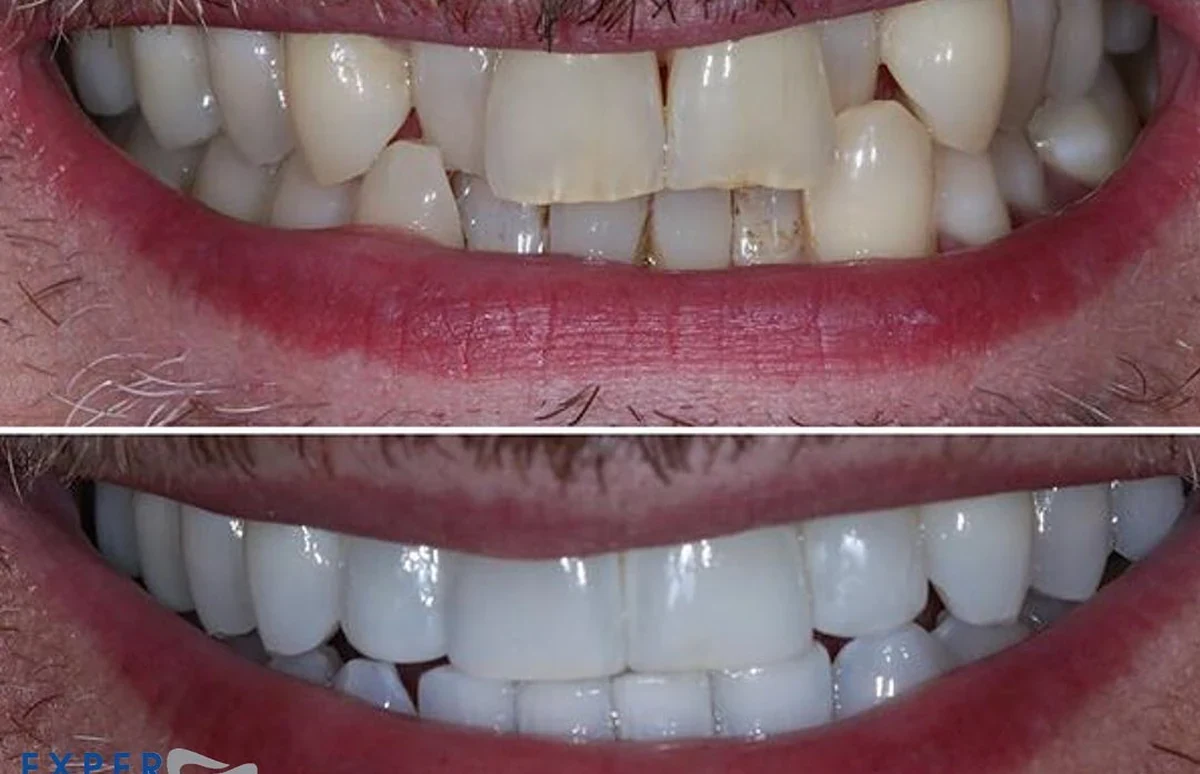
One tooth can give a smile enormous character. A canine that sits slightly forward, has a pointed tip or catches the light more than its neighbour may be a feature you have always had. Perhaps you used to like it, but now it is the first thing you notice in photographs. Perhaps you want to soften it without making your whole smile look different.
Before deciding on Invisalign, reshaping or bonding, the most useful task is working out why that canine looks prominent. It could be its position, its angle, its shape, a difference in the gumline, or the size of the teeth alongside it. Each explanation opens a different set of choices.
Canines are meant to look a little different
Canines sit between the incisors and premolars and have a characteristic shape. Their more prominent contour and tip are part of normal dental anatomy. They may also contribute to how the upper and lower teeth guide certain jaw movements.
That is why copying the shape of a lateral incisor onto a canine can be a poor idea. Filing a pointed tip completely flat may alter the tooth's appearance and potentially its functional contacts. Building a bulky layer of composite over a forward-positioned tooth can make it look even more prominent from the side.
A healthy, slightly distinctive canine does not automatically need treatment. The decision depends on whether its appearance genuinely bothers you, whether there is an associated bite issue and what would have to be changed to achieve the result you prefer.
Some of the best cosmetic outcomes come from recognising that a feature is distinctive rather than defective.
First work out whether the problem is position or shape
Imagine the canine has a perfectly ordinary pointed tip but sits a little in front of its neighbours. The front surface catches more light and looks prominent. In that situation, reshaping the tip would not address the main reason it stands out.
Alternatively, the canine could be well positioned but unusually pointed compared with the other side. A very modest enamel contouring procedure might be worth discussing if clinically safe, while orthodontic movement would be unnecessary.
There is a third possibility: the canine only appears larger because the lateral incisor next to it is smaller or angled differently. Correcting the neighbouring tooth may be more conservative than changing the canine itself. This is why the clinician needs to inspect the whole smile, not just the tooth you have circled in a photograph.
Ask your dentist to show you where the prominence comes from using front and side views, and whether it is visible in normal conversation.
When tooth straightening may be the better route
If the canine is rotated, tilted or positioned outside the ideal dental arch, orthodontics may address the underlying position. Clear aligners or fixed braces may be considered after assessment, but canine movements can be demanding because of root shape, position and the biomechanics required.
Not every movement is equally predictable with every appliance. There may be reasons a fixed brace or a more comprehensive orthodontic plan is preferable to a limited cosmetic alignment. The clinician should explain whether space needs to be created, how adjacent teeth will be affected and how the upper and lower bites will fit at the end.
Orthodontic treatment also requires retention. The British Orthodontic Society advises long-term retainer use because teeth can shift after alignment. [1] A subtle cosmetic concern may not justify a lengthy course for every patient. On the other hand, repositioning a tooth can preserve enamel that might otherwise be removed through camouflage.
The decision should compare the time and retention commitment with the scale of aesthetic benefit and any functional reasons for treatment.
What is enamel contouring and what can it change?
Enamel contouring involves carefully adjusting small amounts of the outer tooth surface in selected circumstances. On a canine, that might mean subtly softening an unusually sharp-looking tip or correcting a minor edge irregularity. It cannot move the tooth or change its entire profile.
Because enamel does not grow back, removing any of it requires a clear reason and limits. A dentist should assess how much enamel is available, whether the proposed change would expose sensitive tissue or affect the bite, and whether a polished surface can be maintained.
You should not attempt the procedure at home with a file or abrasive product. It is easy to remove more tissue than intended and difficult to judge the functional consequences without examining the bite.
Ask the clinician to explain the smallest change likely to make a visible difference. If the canine's prominence comes from its position, extensive reshaping may be the wrong tool.
FDI guidance on tooth wear stresses preservation and diagnosis before altering tooth structure; that preventive principle is equally relevant to elective reshaping. [2]
Could composite bonding make the canine look softer?
Composite can add to a tooth, change a contour or adjust a small neighbouring tooth to create better proportions. In selected situations, this may allow a subtle improvement without removing significant enamel.
But adding material to an already prominent canine is not always sensible. If the front of the tooth projects forward, extra composite can make the profile more noticeable. If the aim is to conceal a rotation, bonding may produce a tooth that looks wide from one view and bulky from another. The dentist should consider how it appears when you turn your head and when the tooth contacts its opposite partner.
Sometimes bonding the smaller tooth beside the canine provides better visual balance. That may sound counterintuitive, but it illustrates why whole-smile planning matters. The aim is not to treat the canine at all costs; it is to understand the visual relationship that is troubling you.
Composite also needs occasional maintenance and can stain, chip or lose surface polish. It is a restoration, not a temporary digital filter.
Should you consider a veneer on one canine?
A ceramic veneer might be appropriate in certain restorative or aesthetic circumstances, but it is a much larger decision than smoothing a small tip. The available enamel, tooth position, occlusal contacts and intended shade all matter. Canines can experience meaningful functional loading, so a generic 'one veneer solves it' promise is inadequate.
Ask whether the veneer would require preparation, whether tooth movement first would allow a more conservative result and how it would look next to untouched neighbouring teeth. The clinician should also discuss the risk of complications and the prospect of future repair or replacement.
A systematic review reports good long-term survival for some ceramic veneer materials in selected clinical settings, while documenting complications and differing evidence quality. [3] That research cannot justify using a veneer when a simpler approach would meet the goal.
If the canine is structurally healthy and the issue is modest, it is reasonable to explore observation, reshaping or orthodontics before choosing ceramic coverage.
Does the canine affect the way your teeth meet?
Potentially. In certain bite patterns, canines help guide sideways jaw movements; in others, contacts are shared among several teeth. There is normal variation, and it would be inaccurate to claim every person needs exactly the same canine contact pattern.
Before changing a canine's tip or position, a clinician should examine how it meets the opposite teeth during closing and movement. Altering a pointed tip for appearance could remove or change a contact. Adding composite could introduce a new heavy point. Correcting tooth position could improve or complicate an existing relationship if the broader bite is not considered.
The plan should therefore include function as well as photographs. Ask what role the canine currently plays and what the dentist expects to change. If the bite is healthy and comfortable, preserving it is a valuable objective.
How much difference would a small change make?
A subtle canine issue is exactly the kind of concern that benefits from comparing alternatives before committing. Ask the dentist to demonstrate a small reshaping proposal, if safe, or create a conservative visual simulation. A temporary composite addition on a neighbouring tooth may sometimes help you assess balance without a major procedure.
Look at the result from the front, from a three-quarter angle and while smiling naturally. A tooth that seems too prominent in one close-up may be part of a balanced smile from every ordinary distance. Equally, a tiny adjustment may be enough to stop it drawing your attention.
If a proposed correction requires moving several teeth or preparing substantial enamel, make sure the expected improvement matters enough to justify that commitment. Your preference is valid, but the cost should be proportionate to the benefit.
A decision framework for a single prominent canine
If the issue is mostly position, discuss an orthodontic opinion. If it is mostly the tip shape, ask whether limited contouring is safe or whether leaving the tooth alone would be preferable. If the canine only appears large beside a small lateral incisor, discuss whether a conservative neighbouring addition could improve the proportions. If there is active wear, pain or a bite problem, the health and function need assessment before elective reshaping.
A dentist might recommend no treatment at all. That can be a sound professional conclusion when a tooth is healthy, the difference is minor and the options carry disproportionate risk.
The Care Quality Commission notes the need to explain alternatives, risks and costs for voluntary informed consent. [4] In elective treatment, hearing a reason not to intervene is part of genuine choice.
Frequently asked questions
Can Invisalign move one canine? Certain canine movements are possible with aligners, but suitability and predictability depend on the exact position and the full bite.
Can I just file down the point? Do not do this yourself. A dentist can assess whether very limited enamel contouring is appropriate and safe.
Would bonding hide a canine that sticks out? Sometimes contour changes can help, but adding material to a tooth that already projects forward may make the problem worse.
Is a prominent canine a problem? Not necessarily. Canines naturally differ from incisors, and a slightly prominent one may be healthy and functional.
Could altering the canine affect my bite? Yes, depending on the present contacts and proposed change. Functional assessment is essential.
Keep the smile's character while improving the detail
An Iconic Smiles £30 consultation can help you find out whether the canine's prominence comes from position, shape or its relationship with neighbouring teeth. Confirm the current fee when booking.
You do not need to choose between leaving a concern untouched forever and committing to a full smile makeover. Sometimes the right answer is a small, carefully considered change. Sometimes it is preserving a perfectly healthy tooth that gives your smile its individuality.
Clinical sources and further reading
- British Orthodontic Society. Long-term retention after orthodontic treatment.
- FDI. Tooth wear: preservation of dental tissue.
- Long-term ceramic veneer survival and complication review.
- Care Quality Commission. Informed consent for dental care.
Your next step, when you’re ready
We would be pleased to welcome you for a £30 consultation at your preferred Iconic Smiles practice. Bring your questions, and we can talk through the options that may suit you.
£30 for a planned-treatment consultation. Scans, additional investigations and emergency assessments may have separate fees; please confirm when booking.