
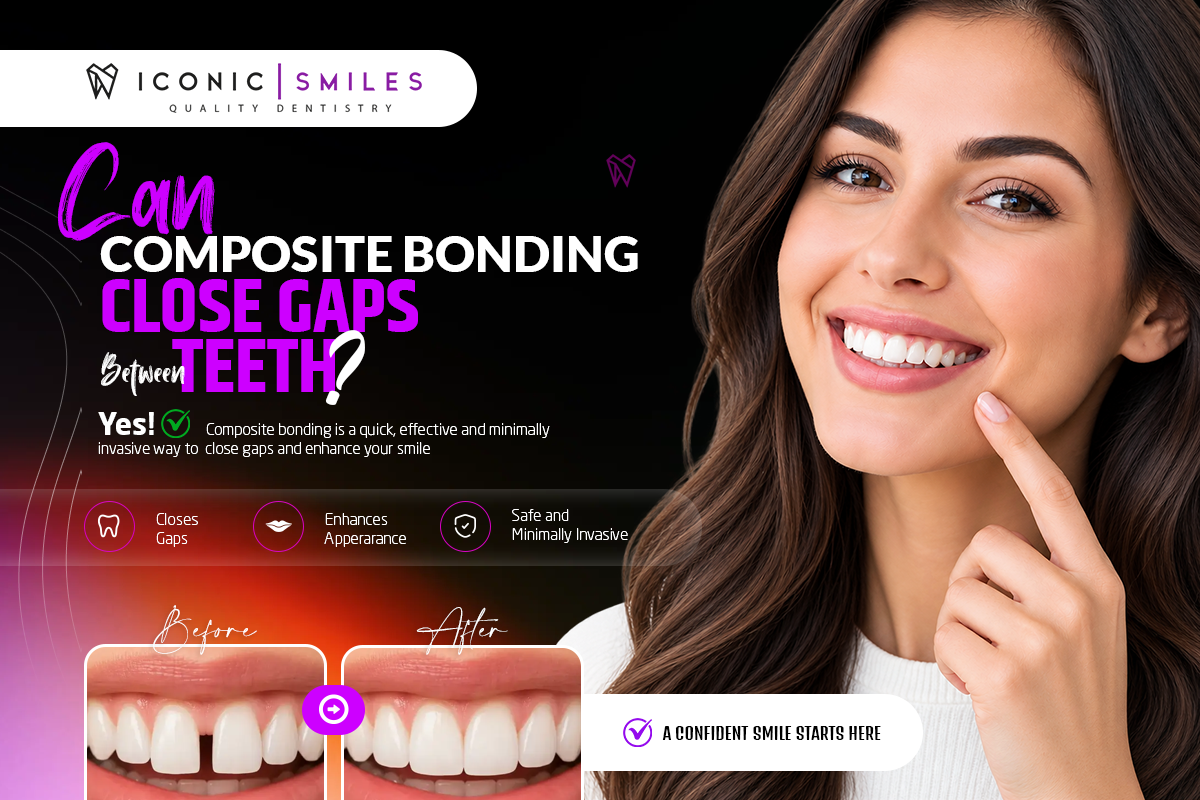
Composite bonding can be used to close or reduce many small gaps between teeth by adding tooth-coloured resin to one or more teeth. Whether it is suitable depends on the size and distribution of the spaces, tooth proportions, gum health and your bite.
When can bonding work well for a gap?
Small spaces are often the most straightforward. Composite can be added to the neighbouring tooth surfaces to change width and shape without moving the teeth. In suitable cases little or no healthy enamel needs to be removed.
The important point is proportion. Closing a space by simply making two teeth much wider can create an unnatural result. The dentist therefore looks at the whole smile, not just the gap.
When might orthodontics be a better choice?
Clear aligners or fixed braces may be preferable where the space is larger, there are several gaps, tooth positions affect the bite, or moving the teeth would produce better proportions. Some patients benefit from a combined plan: orthodontics first, followed by conservative bonding to refine tooth shape.
Why do gaps need assessment first?
Spacing can be completely natural. It can also relate to undersized or missing teeth, tooth position, or changes in gum and bone support. A new or increasing gap in an adult should be assessed before cosmetic treatment, particularly if there are signs of gum disease or tooth movement.
What happens at a bonding assessment?
We assess the teeth and gums, the size and position of the spaces, tooth proportions and the way the teeth meet. Photography, digital scans or a mock-up may be useful where several teeth are involved. The aim is to decide whether bonding, orthodontics, another restorative option, or no treatment at all is the most sensible route.
Explore composite bonding or tell us what you would like to change.