
Choosing dental care
How to Choose a Dentist for Full-Mouth Rehabilitation and Tooth Replacement
Thinking about more extensive dental work? Find out how to compare treatment plans, understand the team involved and make decisions with confidence.
Get answers before you decide
Choosing dental care should feel straightforward. A £30 consultation gives you the opportunity to explain your wishes, ask about our approach and understand your options.
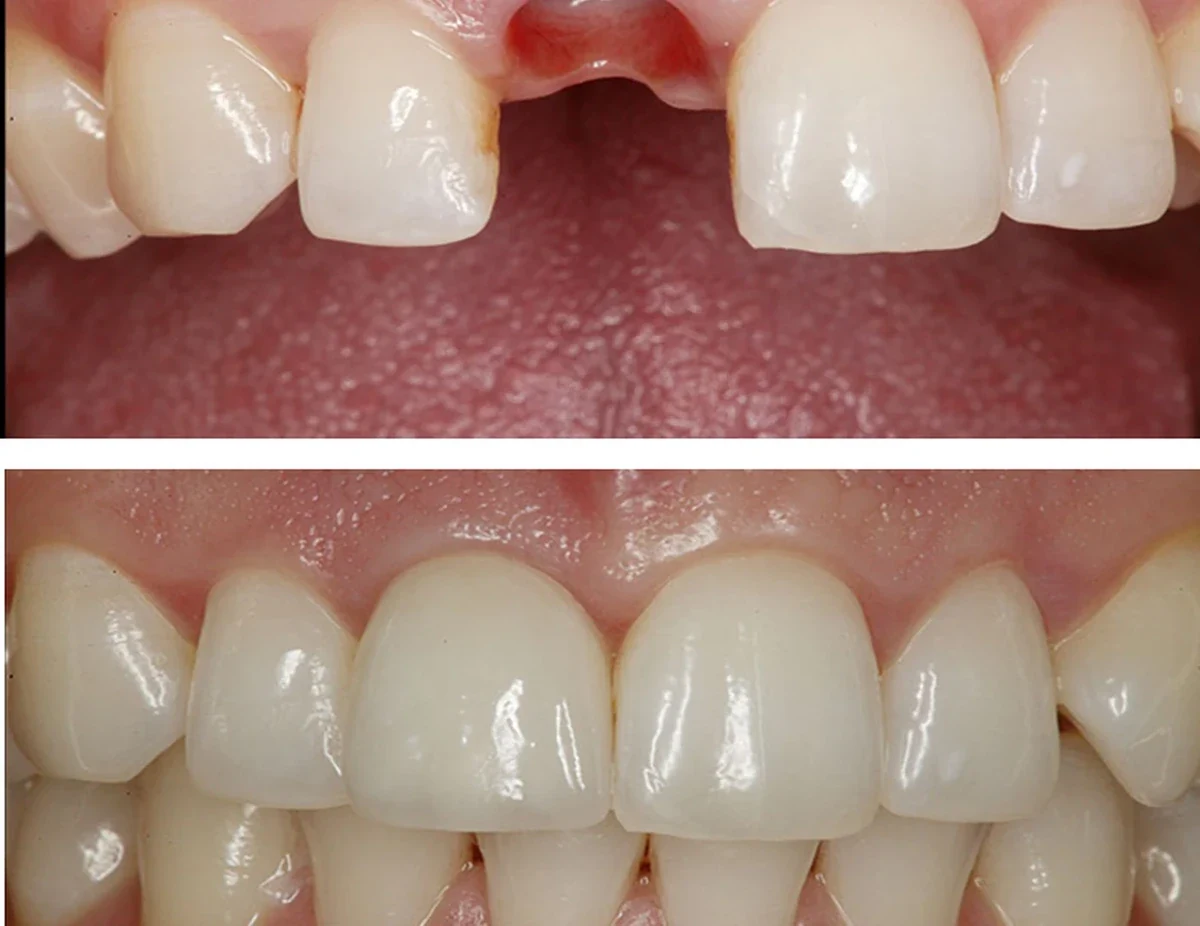
Choose a dentist for full-mouth rehabilitation by looking for a coordinated diagnosis, a tooth-preserving plan and clear responsibility for each stage and its aftercare.
Several worn, damaged or missing teeth may need a combination of treatments rather than one procedure. Implants, bridges, orthodontics, dentures and selected restorations have different roles. A useful assessment explains how those choices fit together in manageable stages, with your health, comfort, function and appearance considered throughout.
The plan needs to balance existing teeth, gum and bone health, bite function, appearance, cleaning, cost and long-term maintenance. If you are comparing care in Hertfordshire or North London, establish how the team will assess those needs and turn the findings into a written sequence.
Discuss a complete functional restoration. For missing teeth, extensive wear or multiple restorative needs, our team can explain how an initial conversation leads to staged, multidisciplinary assessment. £30 introductory consultations apply where available. Book an introductory consultation · Tell us what you would like to change. Alternatively, explore restorative treatment options.
Discuss a complete functional restoration. For missing teeth, extensive wear or multiple restorative needs, our team can explain how an initial conversation leads to staged, multidisciplinary assessment. £30 introductory consultations apply where available. Book an introductory consultation · Tell us what you would like to change. Alternatively, explore restorative treatment options.
1. What rebuilding your teeth and bite can involve
The term can describe a range of treatment, from restoring several worn teeth to replacing missing teeth across an entire arch. It may involve preserving and restoring natural teeth, periodontal therapy, orthodontic movement, implant-supported restorations or removable prostheses.
A full-arch implant bridge is one possible solution, not an automatic endpoint. If some teeth are healthy and maintainable, their preservation deserves proper consideration. Where teeth have a poor prognosis, alternatives and the implications of extraction should be discussed candidly.
The European Federation of Periodontology's advanced periodontal guidance recognises different restorative approaches—including tooth-supported, implant-supported and removable options—depending on tissue health, tooth prognosis and clinical circumstances. [1]
2. Check the health of your teeth and gums first
Before extensive treatment, establish what has caused the damage or discomfort. Gum disease with loss of tooth support, recurrent decay, wear, trauma, failing restorations and bite relationships may act alone or together. Each can change the treatment order and the outlook for individual teeth.
Aesthetic planning without stabilising underlying disease risks creating restorations that are difficult to maintain. Where significant gum disease is present, treatment may require staged therapy and review before the final restorative decisions are made.
Iconic Smiles has access to visiting specialist periodontist Dr Bhavya Mohan, also listed by King's College Hospital as a Consultant in Periodontics. Her involvement may be appropriate in selected cases requiring specialist periodontal input. [2]
3. A written whole-mouth plan should answer five questions
What can be saved? Each tooth's structure, periodontal support, restorability and functional role should be considered, rather than applying a single rule to all teeth.
What sequence is sensible? The clinician may need to address disease control, extractions, provisional restorations, orthodontics, implant placement and definitive prostheses in stages.
What will you function with between stages? Temporary restorations or removable options may be relevant, particularly when healing and laboratory fabrication take time.
How will the final bite work? Occlusion, existing wear, habits such as clenching and the design of restorations can affect comfort and maintenance.
Can you maintain the result? Cleaning access, periodontal support, ability to attend ongoing care and expected repairs all matter when choosing fixed or removable solutions.
These questions make the actual stages and continuing responsibilities clearer than a headline such as 'teeth in a day' or a promise of a permanent new smile.
4. Implants, bridges, dentures or retaining natural teeth?
Dental implants may support single crowns, bridges, overdentures or full-arch prostheses, provided the patient and tissues are suitable. They require surgical planning and long-term monitoring.
Tooth-supported bridges can be appropriate when neighbouring teeth and their support are suitable, but may require preparation of those teeth and have their own maintenance needs.
Removable dentures may be an appropriate definitive choice for some people, not merely an inferior placeholder. They vary in design, retention, cost and maintenance.
Retaining existing teeth can be beneficial where they have a reasonable prognosis. Treatment should not be driven by the visual simplicity of replacing an entire arch if a less extensive plan is clinically preferable.
The NHS describes implants as a fixed alternative to removable dentures and highlights the need for restorative components and staged care. [3]
5. Immediate implants and full-arch restoration: what “immediate” does not mean
Immediate placement means inserting an implant during the extraction appointment. Immediate loading describes early connection and use of a restoration, which may be temporary and have limits on biting. They are separate decisions with different requirements, and neither is suitable for everyone.
The availability of bone, implant stability, infection, surgical conditions and prosthetic design can influence whether a same-day provisional restoration or staged approach is appropriate. A clinician should explain the intended temporary restoration, diet and functional restrictions during healing, and how the final prosthesis will be made.
Iconic Smiles offers selected immediate implant placement, bone grafting and full-arch solutions. Mr Mayur N. Pandya, who leads implant and reconstructive care, undertakes crestal sinus elevations in appropriate situations but not lateral-window sinus lifts. More complex procedures outside the group's scope are referred.
This explicit boundary is important: confidence in a clinician should increase when they can explain not only what they can do, but also when they would seek another opinion.
INDEPENDENT RECOGNITION · PATIENT EXPERIENCE
Our independent group has received national dental-practice awards and workplace recognition. These are reasons to explore our team and approach—not guarantees of any individual clinical outcome.
Explore our awards · Read patient reviews · Hear patient stories · Meet our clinicians
6. Occlusion, wear and the problem with “perfect bite” promises
Planning considers how the upper and lower teeth meet, existing wear, symptoms, materials and the distribution of forces. Records, adjustment and review may all be needed. A computer design can help, but cannot establish the complete functional result on its own.
A reconstructed bite cannot be guaranteed to prevent every future jaw-joint symptom or stay unchanged for decades. Grinding or clenching, material wear, gum-support changes and ageing can alter the result. Discuss the diagnosed functional problem and what the proposed change can realistically address.
Discuss which functional problems are actually diagnosed, which proposed changes address them and how the new restorations will be monitored.
See what this could mean for you
Complex restoration needs thoughtful diagnosis rather than a ready-made package. Review the rehabilitation pathway, meet our clinical team and discuss the right starting point for a full assessment.
Explore first: Explore restorative treatment options · See restorative patient stories · Meet the treating team.
When you are ready: Arrange a consultation or send a Smile Enquiry.
7. Who should be involved in multidisciplinary planning?
Coordinated care depends on relevant expertise, communication and the order of decisions. Establish which clinicians need to contribute to your plan and who brings their recommendations together.
At Iconic Smiles, Mr Mayur N. Pandya brings surgical and implant assessment, Dr Vishal Patel restorative planning and aesthetic judgement, Dr Kishan Patel specialist teeth-straightening assessment and Dr Bhavya Mohan visiting specialist periodontal expertise where relevant. Other colleagues may contribute within their scope.
The team reports using multidisciplinary discussion and internal clinical audit processes. The specific plan should still identify your named treating dentist and who is responsible for coordinating any contributions.
8. The role of scanning and the dental laboratory
Carestream CS 8100 3D can be used for appropriately indicated three-dimensional imaging, while TRIOS digital scanning supports restorative communication and planning. In complex cases, an anatomical scan is a source of information, not a substitute for judgement or the need to verify fit and function clinically.
For a long-span replacement, the team and laboratory need to agree materials, support, contours, cleaning access and the relationship with tissues. Iconic Smiles works with Estetica Dental Laboratory. The value for your treatment depends on the design records, clinical checks and communication, alongside the laboratory's work.
Ask whether your final restoration can be cleaned effectively and what repairs, relines, adjustments or component replacement may be needed over time.
9. Do not mistake a starting price for the full cost of rehabilitation
Comprehensive treatment may involve diagnostics, gum disease treatment, extractions, grafting, surgery, healing or temporary teeth, definitive restorations, laboratory work, sedation and ongoing reviews. The relative cost of alternatives can vary greatly with anatomy and treatment stages.
For a complex plan, an individual written treatment estimate is indispensable. Ask for costs broken down by stage and clarity on what is excluded, what may change and which options remain available if you decide not to proceed. Review Iconic Smiles fees as indicative starting information only. The CMA also recommends written plans and clear comparisons of NHS and private care. [4]
10. Planning for long-term maintainability
The design needs access for your cleaning and professional review. Tissues around implants need care, bridges depend on their supporting teeth and gums, and removable appliances need fit checks with possible adjustment or replacement. These needs continue after the main reconstruction is complete.
Before accepting a final plan, ask whether you can realistically maintain it given your dexterity, daily routine, medical circumstances and ability to attend reviews. Ask who will oversee this care after the major treatment stages end.
The most credible outcome is not “finished forever”. It is a well-considered rehabilitation with a realistic maintenance pathway.
11. What to ask before approving a full-mouth plan
- Which teeth are maintainable, and which are not? What evidence supports that distinction?
- Have we considered periodontal and endodontic options where relevant?
- What are the reasonable alternatives to full-arch implants?
- Which stages must precede others, and why?
- Who coordinates the orthodontic, surgical and restorative parts?
- Which investigations are clinically necessary, and what do they cost?
- What will I use to eat and smile during healing?
- What are the key risks, contingencies and likely maintenance needs?
- What is the staged written estimate, including probable additional costs?
Considering your own treatment? Reading about other patients can help you decide what to ask—but your plan must start with your own examination. Explore restorative treatment options · View genuine patient results · Book your first conversation.
Considering your own treatment? Reading about other patients can help you decide what to ask—but your plan must start with your own examination. Explore restorative treatment options · View genuine patient results · Book your first conversation.
The strength of a team when your treatment has several stages
Surgical, restorative, orthodontic and periodontal choices can affect one another. Iconic Smiles aims to coordinate those perspectives while keeping a named treating dentist involved. For your plan, establish who records the decisions and checks progress between stages.
Our independent dental group was named Best Dental Practice in Business Awards UK's 2024 and 2026 Dentistry Awards. The 2026 awarding organisation highlighted technology, operating systems, workplace culture and community engagement. Separately, Great Place to Work ranked Iconic Smiles second among UK small organisations for employee development in 2024. These are encouraging signals about the training and coordination behind a multidisciplinary service. (Business Awards UK — 2024 results; 2026 results; Great Place to Work — 2024 development rankings.)
Our patient reviews give the human perspective: how it feels to have your questions answered, how nervous patients are supported and what clear explanations can mean during a longer journey. We also work with Estetica Dental Laboratory on restorative craftsmanship. None of these details replaces a full examination or an individually agreed plan, but together they explain why patients considering complex dentistry may find a connected team especially reassuring.
12. Why consider Iconic Smiles?
The group offers surgical, restorative and orthodontic perspectives within an independent, coordinated team. The clinical pathway can include selected implant, grafting and full-arch treatment, with referrals where necessary. The focus is diagnosis, a proportionate plan and an understandable sequence—not a promise to replace every tooth in a single appointment.
An initial consultation from £30 is available for discussion and preliminary examination. It excludes CBCT, radiographs and a full diagnostic work-up; comprehensive rehabilitation planning may require subsequent investigations and specialist input. Contact Iconic Smiles to discuss the right starting point.
Your next step with Iconic Smiles
The initial discussion should establish the appropriate next assessment rather than commit you to a complete reconstruction. Before proceeding, understand the findings, alternatives, staged estimate and any further tests or specialist input needed. Take time to consider the plan and its long-term care requirements.
Ready to talk? Book a consultation at your preferred practice · Send a Smile Enquiry.
Want to explore first? Explore restorative treatment options · Real results · Patient stories · Patient reviews · Meet our team · Awards and recognition · About Iconic Smiles · Fees.
Frequently asked questions
Does full-mouth rehabilitation always mean removing all my teeth?
No. The scope depends on the diagnosis and prognosis of each tooth. Preserving maintainable teeth can be an appropriate component of the plan.
Can full-arch implants be completed in one day?
Some patients may be suitable for immediate temporary restorations, but the full treatment process, healing and definitive restoration usually involve additional stages. Individual suitability must be assessed.
Must I see a specialist prosthodontist?
Not every case requires specialist care, but complex cases may benefit from a specialist opinion or referral. The treating clinician should be clear about qualifications, experience and scope.
Are implants maintenance-free?
No. Implants and prosthetic components need regular assessment and good cleaning, and biological or mechanical complications can occur.
What if I have advanced gum disease?
Periodontal diagnosis and management should be addressed before deciding on definitive restorations, with specialist involvement as indicated.
Explore related guides
- How to Choose a Dental Implant Dentist in Hertfordshire and North London
- How to Choose the Best Dentist in Hertfordshire and North London
- Our Approach to Clinical Care: The Standards Behind Iconic Smiles
Sources
Your next step, when you’re ready
We would be pleased to welcome you for a £30 consultation at your preferred Iconic Smiles practice. Bring your questions, and we can talk through the options that may suit you.
Any additional investigations and their fees will be explained before you decide.