
Choosing dental care
How to Choose the Best Dentist in Hertfordshire and North London
Choosing a dentist is about feeling confident in the people looking after you. Compare experience, communication, treatment planning and the practical details.
Get answers before you decide
Choosing dental care should feel straightforward. A £30 consultation gives you the opportunity to explain your wishes, ask about our approach and understand your options.
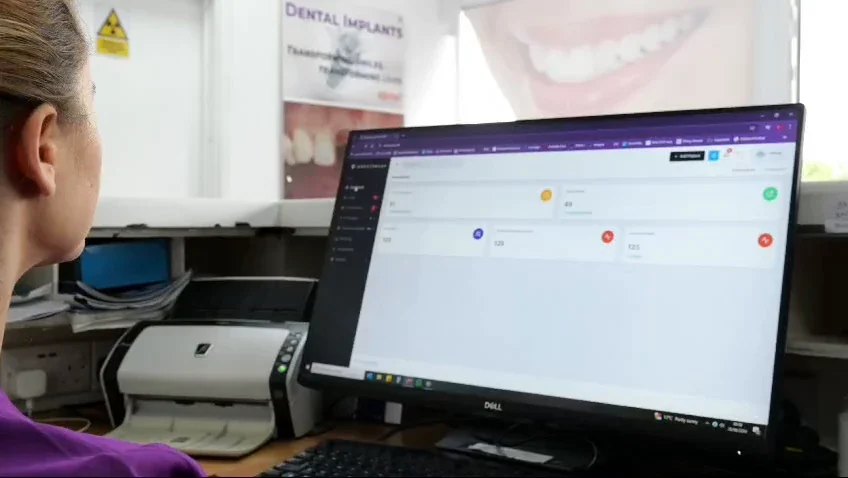
A practical, evidence-led guide to comparing dentists, specialist expertise, dental implants, Invisalign, orthodontics and cosmetic treatment.
Choose a dentist whose experience, assessment and continuing care fit the treatment you are considering. Registration and relevant qualifications matter, alongside a clear explanation of your options, costs and who will provide each stage. You do not need to arrive knowing which procedure you want: the first assessment should help establish that.
A small cosmetic change may suit conservative care, while complex orthodontics, implants or extensive reconstruction can need coordinated expertise. The useful question is what your particular findings require and when another clinician's opinion would improve the plan.
This guide is for people comparing dental care in Hatfield, Cheshunt, Hertfordshire and North London and explains how to compare care for routine dentistry, dental implants, Invisalign or orthodontics. It also describes Iconic Smiles' independent practices, clinical team, technology and patient feedback, so you can consider those features alongside the assessment and treatment proposed for you.
Find the right clinician and treatment. Not sure which treatment is right? Start with a £30 introductory conversation, where available. We can discuss your goals and whether a fuller assessment would help. Book an introductory consultation · Tell us what you would like to change. Alternatively, explore your treatment options.
Find the right clinician and treatment. Not sure which treatment is right? Start with a £30 introductory conversation, where available. We can discuss your goals and whether a fuller assessment would help. Book an introductory consultation · Tell us what you would like to change. Alternatively, explore your treatment options.
At a glance: the seven tests that matter
- Appropriate expertise. Can the proposed clinician demonstrate relevant qualifications, experience and competence, and explain when a specialist opinion would help?
- A complete assessment. Are the health of your gums, remaining teeth, bite and medical history considered before a cosmetic or surgical plan is proposed?
- Genuine treatment options. Are you offered clinically reasonable alternatives—including a simpler approach, deferring treatment or no treatment where appropriate?
- Individual planning. Does the plan respond to your teeth, face, function, priorities and likely maintenance needs rather than reproduce a standard smile?
- Clear responsibility. Do you know who will undertake each stage, how clinicians communicate and whom to contact if something concerns you?
- Transparent costs and consent. Are fees, likely additions, risks, limitations and expected follow-up explained before you commit?
- Care beyond the final photograph. Is there a realistic plan for reviews, gum care, retainers, repairs or implant maintenance?
The Competition and Markets Authority recommends comparing qualifications, availability, facilities, prices and reviews, and obtaining a written treatment plan. Those are useful foundations; more complex treatment requires a deeper conversation. [1]
1. What does “best dentist” actually mean?
There is no authoritative public league table identifying the single best dentist in Hertfordshire or London across every treatment type. Awards, patient reviews and professional credentials offer different kinds of evidence; none can substitute for individual clinical assessment.
If you want to improve mildly crowded front teeth, the right starting point may be conservative alignment. If you have tooth loss and reduced bone volume, the important questions concern diagnosis, surgical suitability, restorative planning and future maintenance. If you are considering porcelain veneers, you need a clinician who can explain preparation, tooth preservation, aesthetics, material selection and repair or replacement over time.
A useful question is: “What is this dentist especially well placed to assess and treat, and what would make them recommend someone else?” A thoughtful answer is often more informative than a broad claim to excellence.
The term specialist also has a specific meaning in UK dentistry. The General Dental Council maintains specialist lists. An experienced dentist with postgraduate training is not automatically a GDC-registered specialist; conversely, registration in one speciality does not make someone a specialist in every discipline. Check the actual GDC register and read qualifications in context. [2]
2. Check the person treating you—not only the practice brand
Ask for the name of the clinician responsible for your assessment and treatment. Check their GDC registration, their professional qualifications and their experience with your kind of treatment. If a practice offers both general and specialist-led care, ask which applies to your case.
At Iconic Smiles, the clinical leadership combines distinct disciplines:
- Mr Mayur N. Pandya, dental surgeon and clinical director for implant and reconstructive care. His background includes oral surgery and implant dentistry, with more than 1,000 implants placed according to his clinical account.
- Dr Vishal Patel, restorative and cosmetic dentist and clinical director for restorative and cosmetic care, including composite bonding, porcelain restorations and combined smile treatments.
- Dr Kishan Patel, GDC specialist orthodontist, with hospital-based specialist training, who assesses complex orthodontic and bite problems.
- Dr Bhavya Mohan, visiting specialist periodontist. King's College Hospital also lists her as a Consultant in Periodontics. Periodontics concerns the supporting structures of the teeth and the assessment and treatment of gum disease. [3]
The wider team also includes clinicians with oral-surgery experience. Confirm the relevant training and any accreditation of the person who would treat you, together with their exact role and scope. A broad team is useful when clinicians work within their competence and coordinate your care.
Questions to ask: Who is doing the procedure? Is that person on the GDC Specialist List, and in which speciality? What aspects are within their usual clinical scope? If there is a complication or an unexpected finding, who will assess it?
3. Look beyond the scan: does the examination come first?
A digital scan can make planning clearer. A CBCT scan can provide three-dimensional anatomical information where there is a justified clinical indication. Neither should displace medical history, clinical examination or professional judgement.
Before proposing major dental work, a dentist should consider, as clinically relevant, the health of the gums and supporting bone; current decay and existing restorations; remaining tooth structure; bite relationships; tooth wear; oral hygiene; medications and systemic factors; smoking; expectations; and the maintainability of any proposed result.
Periodontal health is particularly important. Uncontrolled gum disease can undermine otherwise attractive restorations and is relevant to implant planning and long-term implant health. European Federation of Periodontology guidance supports systematic assessment, staged gum disease treatment and long-term supportive care. [4]
Iconic Smiles reports using a detailed assessment checklist and internal discussions between disciplines. Your assessment should identify the tests needed for your findings. Investigation should be tailored to clinical need, and any proposed radiograph must be justified. The purpose is to answer the clinical questions that affect your care, rather than use every available test.
4. Compare dental implants by the plan—not the brand alone
A dental implant is an artificial tooth root supporting a restoration such as a crown or bridge. Successful treatment relies on more than selecting a recognisable implant manufacturer. Patient suitability, site anatomy, bone and soft tissue, placement position, restoration design, cleaning access and maintenance all matter.
Before proceeding, you should understand whether the existing tooth is genuinely beyond repair; what non-implant alternatives are available; whether grafting might be necessary; the anticipated treatment stages; the restorative options; the overall estimate; and what would happen if healing does not go to plan.
Immediate implant placement means placing an implant into an extraction socket at the same surgical visit, where appropriate. It is not inherently superior to placing an implant after healing. Timing should depend on factors such as infection, stability, bone anatomy and the restorative plan. Sometimes delayed placement is the better choice.
Iconic Smiles uses Osstem implant systems and offers assessment and treatment for selected grafting, immediate implant and full-arch cases. Mr Pandya undertakes crestal sinus elevation in appropriate situations but does not undertake lateral-window sinus lifts. More extensive or unsuitable cases should be referred to clinicians whose scope matches the requirement. Referral is a sign of sound boundaries, not diminished quality.
The price that matters is the written estimate for your complete recommended pathway, not an attractive “implant from” figure whose inclusions are unclear. Check separately whether the quoted price includes the implant surgery, abutment, definitive crown, investigations, grafting, provisional tooth, reviews and maintenance. See the current Iconic Smiles fees page for published starting fees; your written plan should clarify what applies to you.
Further reading: How to Choose a Dental Implant Dentist.
5. Invisalign is a method—not a substitute for an orthodontic diagnosis
Invisalign is a system of removable clear aligners. It can be suitable for many kinds of tooth movement, but treatment decisions should not be reduced to the convenience of the appliance or an attractive computer simulation.
Some straightforward cosmetic movements can be managed appropriately with clear aligners under an experienced dentist. More complex bite discrepancies, tooth movements, developing jaws or multidisciplinary concerns may benefit from a specialist teeth-straightening assessment. Fixed appliances may be preferable for some presentations. Individual suitability depends on the diagnosis and proposed mechanics.
At Iconic Smiles, the reported pathway is to manage suitable, relatively minor cosmetic alignment with Invisalign while directing more complex orthodontic needs to Dr Kishan Patel, the practice's specialist orthodontist. The distinction should be made on clinical features, not on a simplistic numerical threshold or the assumption that aligners are always faster.
Establish why aligners or fixed braces are recommended and whether attachments or measured enamel reduction between teeth, known as interproximal reduction, are planned. The plan should describe reviews, possible refinement stages and retention. The NHS explains that retainers are needed because teeth can move again after orthodontics. [5]
Further reading: How to Choose an Invisalign Provider and When to See a Specialist Orthodontist.
INDEPENDENT RECOGNITION · PATIENT EXPERIENCE
Our independent group has received national dental-practice awards and workplace recognition. These are reasons to explore our team and approach—not guarantees of any individual clinical outcome.
Explore our awards · Read patient reviews · Hear patient stories · Meet our clinicians
6. Natural-looking cosmetic dentistry is designed, not downloaded
A beautiful smile is not simply a set of identical white teeth. Tooth proportions, facial dynamics, lip movement, translucency, texture, gum display, alignment and the patient's preferences influence what looks natural and feels right.
Digital smile design can help communicate possibilities, but a simulation is not a guarantee. An experienced restorative dentist should assess the existing enamel, the functional bite, the amount of change needed and whether a minimally invasive approach could meet the patient's goals.
Some patients need only whitening and subtle composite bonding. Others may benefit from alignment before any bonding or porcelain work. Where veneers or crowns are appropriate, dental technicians play a critical role in morphology, shade and characterisation. An excellent external laboratory can produce highly individual restorations; simply having a ceramicist on-site does not establish better results. Ask how the dentist collaborates with their technicians, how shade is assessed and what happens if adjustments are needed.
Iconic Smiles reports working with Estetica Dental Laboratory for restorative work and uses digital smile planning. Establish the laboratory arrangements, shade review and any remake process for your case. Porcelain is not permanent: it can chip, develop stained margins, detach or eventually need replacement.
Further reading: How to Choose a Cosmetic Dentist and Bonding, Veneers or Invisalign?.
See what this could mean for you
Choosing a dentist should not mean choosing a treatment before your examination. Meet our clinical team, see real treatment results and bring your questions to a first conversation.
Explore first: Explore your treatment options · See real treatment results · Meet the treating team.
When you are ready: Arrange a consultation or send a Smile Enquiry.
7. The importance of your bite and long-term function
A crown, implant restoration or smile makeover should be evaluated within the whole mouth. A treatment can look attractive in a photograph but still require adjustment to achieve comfortable contacts and appropriate function.
Relevant considerations may include existing wear, clenching, tooth guidance, periodontal support, restoration material, missing teeth and the patient's own symptoms. Not every patient needs elaborate jaw-joint investigations; equally, a history of painful jaw symptoms or extensive tooth wear should not be ignored.
Be cautious of exaggerated lifetime claims. No dentist can promise that a complex restorative result will remain unchanged for 20 years. Maintenance, oral hygiene, changing health, bruxism and normal material ageing all matter.
For a patient needing implants and orthodontics, the order can be clinically significant: natural teeth move orthodontically, while an integrated implant does not move with braces in the same way. Coordinated planning before surgery may preserve treatment options that would be difficult to achieve afterwards.
Further reading: Choosing a Dentist for Full-Mouth Rehabilitation.
8. What good continuity and aftercare should look like
Continuity can work well in practices of different sizes. Establish who treats you, how reviews are covered and how your records and agreed plan are shared when another clinician is involved.
Who will be your treating dentist? Who will see you for planned reviews? What if your dentist is away? Can another clinician access the relevant records and treatment plan? Is there a clear way to raise a concern about a restoration or aligner fit? How are postoperative problems triaged?
Iconic Smiles states that patients keep their treating dentist for the agreed pathway, with colleagues providing cover when needed. A clear handover and access to appropriate help matter when that dentist is away. Confirm the actual arrangements rather than expect one person to be available every day.
Before any major procedure, request the actual postoperative instructions and appropriate contact details. Ask when reviews are expected and how maintenance is arranged. In the event of concerns, you should understand the practice's complaints pathway. The GDC requires dental practices to have an effective, accessible complaints procedure. [6]
9. NHS, mixed and private care: separate eligibility from quality
A practice offering NHS and private dentistry can have genuine strengths: it may provide routine care alongside advanced elective treatments and serve a broad community. Yet the presence of an NHS contract does not, by itself, establish either poor private care or superior private care.
Patients should know which treatment is available under which pathway, whether a proposed procedure is clinically necessary or elective, and what the associated costs and waiting arrangements are. For NHS treatment, availability and eligibility can differ from private care. The CMA explicitly advises patients not to feel pressured into private treatment instead of NHS care. [1]
At Iconic Smiles, ask which clinical team and site will provide your particular treatment. A referral or booking at another group practice should be explained openly. Four sites create options for access, but individual clinician schedules and services differ by location.
10. Awards, reviews and real people: what they tell you about a practice
Awards are worth celebrating when they tell you something useful about the people behind your care. Business Awards UK named Iconic Smiles Best Dental Practice in its 2024 and 2026 Dentistry Awards. The awarding organisation's 2026 commentary specifically recognised our investment in technology, systems, workplace culture and community engagement. Those are not abstract business achievements to us: they reflect the kind of organised, forward-looking practice we have worked to build. [7]
It has been a sustained journey, not one headline. Business Awards UK recognised Iconic Smiles for Digital Dentistry Innovation in 2023, before the Best Dental Practice awards in 2024 and 2026. Our awards page also records sustainability recognition, several 2025 dentistry and healthcare honours, and workplace awards. These programmes use different criteria, but taken together they illustrate a continued effort to improve the way care is delivered. [10]
Our people have been recognised, too. Great Place to Work ranked Iconic Smiles second in its UK Best Workplaces for Development 2024 list for small organisations. Our awards and recognition page also records Great Place to Work recognition and inclusion in The Sunday Times Best Places to Work programmes. Why should a patient care? Because a team that is supported to develop, share knowledge and work well together is better placed to communicate, coordinate appointments and make your experience feel joined up. Workplace awards tell you about organisational culture; the care you receive is still individual. [9]
Patient feedback makes the picture more personal. On 26 October 2026, our patient reviews page displayed 4,068 Google reviews with a 4.9/5 aggregate rating across our listed practice history, including the former Turners Hill listing. That is a substantial number of individual experiences. Our reviews page highlights recurring themes of friendly communication, clear explanations, reassurance for nervous patients and natural-looking results. These are precisely the small human details that make a dental appointment less intimidating.
When comparing practices, read several detailed accounts relevant to your intended treatment, including consultation and follow-up. Reviews describe individual experiences; they do not measure implant survival or predict your own outcome. Alongside them, named awards and employee recognition provide information about different aspects of the organisation. Use that context alongside the clinical assessment and plan.
For us, the meaning is straightforward: the people behind your care matter as much as the equipment in front of them. Browse our awards, patient reviews and patient stories as part of your own decision.
11. Consultation costs, treatment estimates and the right to decide
An initial conversation is valuable if it helps you describe your concerns, understand possibilities and decide whether a fuller clinical assessment is worthwhile.
At Iconic Smiles, the £30 introductory consultation described by the practice is an initial discussion and examination to explore goals, possible options and broad clinical measurements or advice. It does not include CBCT, dental radiographs or a complete diagnostic work-up. Availability and precise terms should be checked when booking. Further investigations may have their own fees and should be explained before they are undertaken.
Do not confuse a low-cost introduction with a full implant or teeth-straightening treatment plan. Nor should the introduction be treated as an obligation to proceed. The GDC's consent standards require discussion of options, risks, benefits and costs, and enough time to make an informed decision. [8]
For planned private treatment, obtain a written estimate showing what is included, what could change and what happens if further work is needed. Ask whether deposits and cancellation terms apply. Financial arrangements should facilitate a decision, not determine clinical suitability. Consult the current fees and finance information, and confirm every relevant figure in writing.
12. The consultation questions worth taking with you
Clinical assessment
- What diagnosis explains the problem I would like to improve?
- Have we assessed the gums, teeth, bite and medical factors relevant to this treatment?
- What further tests are necessary, and why?
Options and expertise
- What are the least invasive reasonable alternatives?
- Who will carry out treatment, and what relevant training or specialist registration do they hold?
- Is there any aspect of my case for which an independent specialist opinion would be sensible?
Planning and outcomes
- What outcome is realistic in my particular mouth, and what are the key limitations?
- What would make you alter the plan or decide against treatment?
- Can I see appropriately consented examples similar to my clinical situation?
Care and costs
- What is included in the total estimate, and what might be additional?
- Who will be responsible for treatment reviews, maintenance and emergencies?
- How will my longer-term oral health be protected?
A good dentist should welcome serious questions. You should leave understanding not only what can be done, but why, by whom, with what alternatives and what responsibilities after treatment.
Considering your own treatment? Reading about other patients can help you decide what to ask—but your plan must start with your own examination. Explore your treatment options · View genuine patient results · Book your first conversation.
Considering your own treatment? Reading about other patients can help you decide what to ask—but your plan must start with your own examination. Explore your treatment options · View genuine patient results · Book your first conversation.
Why consider Iconic Smiles?
Iconic Smiles is an independent dental group serving Hertfordshire and North London through four practices: Hilltop (Hatfield), Hatfield town centre, Cheshunt and Friern Barnet. Its team brings together restorative and surgical experience, specialist orthodontic and periodontal input and digital planning tools where appropriate.
The clinical group reports approximately 1,500 implants placed in aggregate, a figure supplied by its leadership and not presented as an audited survival or success metric. It provides selected bone grafting, immediate implants and full-arch rehabilitation; specialist teeth-straightening assessment when appropriate; and cosmetic treatments planned around existing teeth and the bite.
The value of a wider team is being able to discuss your aims with a treating dentist who can involve relevant colleagues. Independent recognition and patient feedback provide context; your own consultation should show how the findings, options and responsibilities apply to you. Expect to leave with a plan you understand and time to consider it.
A conversation is an accessible first step. Iconic Smiles offers introductory consultations from £30, subject to the applicable booking terms. This is an initial discussion and assessment—not CBCT or a full diagnostic work-up. Explore your goals, ask questions and decide whether you wish to proceed to detailed planning. Contact the team or explore the practices.
How clinical standards should affect your choice
Throughout care, you should know who is responsible, how to raise questions and when wider expertise may be needed. Those practical arrangements deserve discussion alongside the procedure and its expected appearance.
Iconic Smiles is an independent, clinician-led group serving Hertfordshire and North London, with investment in clinical training, diagnostics, planning and teamwork. At your appointment, those resources should support a clear assessment and a considered treatment choice.
Experience our approach to joined-up care. Meet the team behind the care and discuss your goals with a dentist, starting from £30 where the introductory consultation applies. Book an introductory consultation · Tell us what you would like to change. Alternatively, meet the clinicians.
Our patients can benefit from the perspectives of clinicians working in implant, restorative, orthodontic and periodontal care. Mr Mayur N. Pandya leads implant and reconstructive care; Dr Vishal Patel leads restorative and cosmetic dentistry; and Dr Kishan Patel, a GDC specialist orthodontist, assesses specialist orthodontic concerns. Dr Bhavya Mohan, a visiting specialist periodontist and Consultant in Periodontics at King's College Hospital, offers specialist periodontal expertise when appropriate. [1]
We also draw on dentists with hospital oral-surgery experience and other clinical colleagues. We do not claim that every clinician is a GDC specialist. General dentists and formally registered specialists have different training pathways and responsibilities; the patient should know whose expertise is relevant to their case.
A cosmetic concern can have a functional or biological dimension. Before recommending irreversible or surgical work, the treating dentist should identify relevant issues involving the gums, teeth, jawbone, bite, oral hygiene and medical history.
A good plan may begin with treating gum inflammation, stabilising existing dental disease, changing an old restoration or discussing simpler options. In some cases, the most appropriate recommendation is to monitor rather than intervene.
The group reports using clinical checklists, discussions between disciplines and internal audits. The audits are not published outcome statistics and do not establish comparative superiority. Their practical value is in supporting review and coordination of care.
Relevant reading: kch.nhs.uk · business-awards.uk
Your next step with Iconic Smiles
You have the information to make a more confident choice. Not sure which treatment is right? Start with a £30 introductory conversation, where available. We can discuss your goals and whether a fuller assessment would help. There is no obligation to proceed, and imaging or a comprehensive diagnostic work-up is not included in the introductory appointment.
Ready to talk? Book a consultation at your preferred practice · Send a Smile Enquiry.
Want to explore first? Explore your treatment options · Real results · Patient stories · Patient reviews · Meet our team · Awards and recognition · About Iconic Smiles · Fees.
Frequently asked questions
Is there a single best dentist in Hertfordshire?
No objective public ranking identifies one dentist as the best for every patient and procedure. Assess the clinician's relevant expertise, the proposed diagnosis, treatment alternatives, transparency and continuity of care.
Is a GDC specialist always better than a general dentist?
Specialist registration establishes formal recognition in a defined field; it does not mean every procedure requires a specialist or that every general dentist lacks relevant advanced experience. Complexity and scope should determine who is most appropriate.
Should I choose the practice with the most five-star reviews?
Reviews can help assess patient experience but cannot establish comparative treatment results. Read detailed accounts, assess patterns over time and combine them with credentials, treatment information and personal consultation.
Can I have dental implants and Invisalign at the same practice?
Often, yes. When tooth movement and replacement are both contemplated, the sequencing requires joined-up planning because an integrated dental implant does not move like a natural tooth.
Does the best cosmetic result require porcelain veneers?
No. Whitening, orthodontic alignment, bonding, porcelain or no intervention may each be suitable in different circumstances. Preserving healthy tooth structure is an important consideration.
Is an on-site ceramic laboratory essential?
No. A skilled external laboratory can provide bespoke restorations. More useful questions concern communication, shade assessment, material selection and how changes are handled.
Can a £30 consultation produce my complete implant plan?
No. Iconic Smiles describes its £30 introduction as a discussion and preliminary examination. Radiographs, CBCT and a full diagnostic work-up are excluded and may be required later if clinically indicated.
Are digital scans more important than a dentist's hands-on assessment?
No. Digital tools support diagnosis and planning, but they do not replace examination, medical history, judgement or informed consent.
Does being an NHS and private group affect the standard of private care?
The funding model alone does not establish care quality. Ask who will treat you, what services are available, how time and follow-up are allocated, and how NHS and private choices are explained.
How can I compare implant quotes fairly?
Request an itemised written treatment plan and check whether investigation, surgery, abutment, final crown, provisional restoration, grafting and reviews are included or extra.
Sources and further reading
- Competition and Markets Authority — Choosing and paying for dental care (2026)
- General Dental Council — Guidance on advertising
- King's College Hospital — Restorative dentistry consultant team
- European Federation of Periodontology — Stage I–III treatment guidelines
- NHS — Braces and orthodontics
- GDC — Clear and effective complaints procedure
- Business Awards UK — 2026 Dentistry Awards Results
- GDC — Obtain valid consent
- Great Place to Work — UK Best Workplaces for Development, 2024 results
- Business Awards UK — 2023 Digital Dentistry Innovation winner
Additional independent award evidence: Business Awards UK — Best Dental Practice 2024; Business Awards UK — Best Dental Practice 2026; Great Place to Work — UK Best Workplaces for Development 2024. Review figures: Iconic Smiles patient reviews, checked 26 October 2026.
Explore related guides
Your next step, when you’re ready
We would be pleased to welcome you for a £30 consultation at your preferred Iconic Smiles practice. Bring your questions, and we can talk through the options that may suit you.
Any additional investigations and their fees will be explained before you decide.