
Bonding, veneers and whitening
Bonding for fluorosis marks: alternatives to masking
Fluorosis is a developmental change associated with excess fluoride exposure while teeth are forming.
Discover what could suit your smile
Whether you are thinking about colour, shape or a subtle change, a £30 consultation is a welcoming place to share your ideas, ask questions and explore a personalised approach.
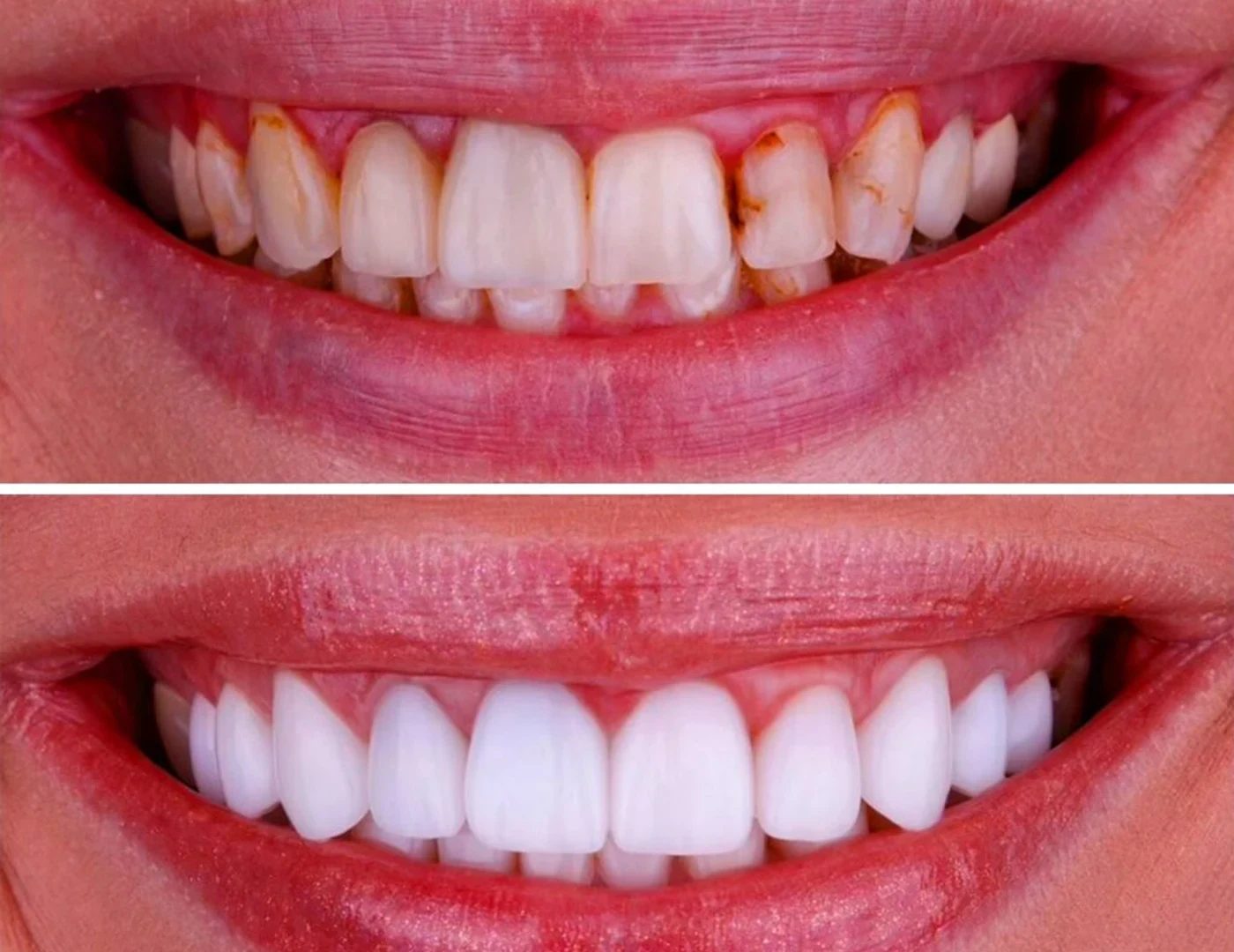
Confirm the cause of the mark before covering it
Bonding can mask some fluorosis marks, although less extensive options may also be suitable. Fluorosis develops when teeth are forming and is associated with excess fluoride exposure during that time. A newly noticed white area is not necessarily fluorosis. The dentist needs to consider the history and examine the enamel before recommending treatment. Guidance about fluoride prevention and developmental fluorosis cannot establish the diagnosis from a photograph. [1]
Bonding is one option, rather than the default first step
Whitening, microabrasion and resin infiltration have all been studied as less extensive ways to improve fluorosis marks. They work differently: lightening the colour, modifying a superficial layer of enamel or changing how light passes through a porous area. Suitability depends on the diagnosed mark and the change you want to achieve. [2]
Be careful with “best treatment” claims
The evidence can help compare options, but leaves uncertainty. A 2018 review found that each comparison rested on a single trial. A 2025 review of six trials reported better colour masking with resin infiltration for mild-to-moderate fluorosis, with low-to-moderate certainty across the outcomes. It compared minimally invasive techniques, so does not establish that infiltration is better than composite in every case or can completely remove every mark. [2][3]
Compare masking with the amount of intervention
If composite is recommended, the dentist should explain why covering the surface is preferable to a suitable less extensive option or leaving the mark alone. The discussion should cover how much tooth would be covered, any preparation, and the intended colour and contour. Microabrasion also changes enamel: an option described as conservative may still have irreversible effects. [2]
Agree an achievable appearance goal and future care
Decide whether success means making the mark less noticeable or pursuing a much broader colour change. Ask which limits remain uncertain, whether a staged approach is reasonable and what maintenance a restoration would introduce. Anterior composite can require intervention for appearance changes or fracture; masking a developmental mark should not be described as a permanent, maintenance-free cure. [4]
Research and guidance
- Chapter 9: fluoride - GOV.UK GOV.UK
- Interventions for dental fluorosis: A systematic review.
- Resin Infiltration for Dental Fluorosis: A Systematic Review and Meta-Analysis of Randomized Controlled Trials on Esthetic Masking Efficacy.
- Anterior composite restorations: A systematic review on long-term survival and reasons for failure.
Your next step, when you’re ready
We would be pleased to welcome you for a £30 consultation at your preferred Iconic Smiles practice. Bring your questions, and we can talk through the options that may suit you.
Any additional investigations and their fees will be explained before you decide.