
Bonding, veneers and whitening
Combining porcelain veneers and composite bonding in one smile
Can porcelain veneers and composite bonding work together? Explore shade matching, treatment order, maintenance and conservative smile planning.
Discover what could suit your smile
Whether you are thinking about colour, shape or a subtle change, a £30 consultation is a welcoming place to share your ideas, ask questions and explore a personalised approach.
£30 for a planned-treatment consultation. Scans, additional investigations and emergency assessments may have separate fees; please confirm when booking.
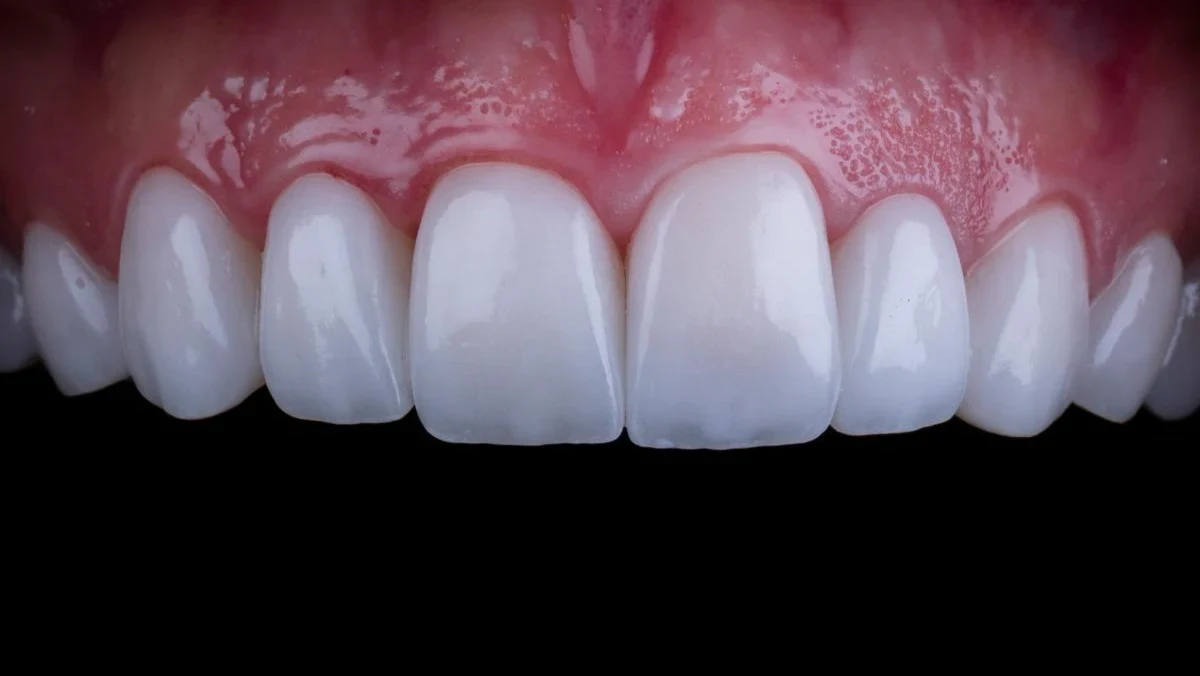
Imagine wanting to improve six front teeth, but discovering that only two need a substantial change in colour or shape. Must all six receive porcelain veneers for the result to look consistent? Not necessarily. A carefully planned smile can sometimes combine ceramic veneers, direct composite bonding and completely untreated teeth.
That flexibility is appealing because it could preserve more natural enamel. It also makes the work harder to plan. Materials respond differently to light, age differently and behave differently when they need repair. The challenge is not simply making everything look white on the day of fitting; it is creating a smile that still looks cohesive in daylight, in conversation and several years later.
Why would a dentist mix the two treatments?
Different teeth may have different needs. One central incisor might have extensive old restorations and an uneven underlying colour. Its neighbour may be structurally healthy but slightly short. A lateral incisor may be small and need a modest addition. Giving all three the same treatment by default may use more tooth preparation than necessary.
A ceramic veneer is custom made outside the mouth and bonded to the front of a prepared or, in selected circumstances, minimally prepared tooth. It can provide control over shape, shade and surface texture, although some enamel reduction may be needed. Direct composite bonding is built and shaped in the mouth. It often allows smaller additions and can be repaired, but it may stain, lose surface gloss or chip and need maintenance.
Neither material wins in every situation. What matters is the reason for treating each particular tooth. A mixed plan can be conservative when the selection is deliberate, but using several materials merely to achieve a lower headline price is not automatically sensible.
The first question: which teeth actually need treatment?
A good consultation begins with the untreated smile. Is the main concern the upper front two teeth, a gap, visible old fillings, short edges or variation in tooth colour? You may find that whitening, orthodontics or minor shaping reduces the amount of restorative work needed. Sometimes improving one tooth makes the neighbouring natural teeth look exactly as they should.
The condition of enamel is important. Bonding ceramics to sound enamel is generally desirable, while teeth with large existing fillings or exposed dentine can pose a different bonding challenge. A 2024 systematic review examined how the underlying tooth surface affects ceramic veneer survival and complications; that is a reminder that a veneer is not just a colour-and-shape choice. [1]
Gums and bite must also be assessed. Bleeding gums, untreated decay, active wear or frequent clenching can alter both the plan and the long-term maintenance. A photograph showing six beautifully aligned white teeth cannot tell you whether the foundations are appropriate.
Ask the dentist to identify, tooth by tooth, what would happen if no treatment were carried out. This helps distinguish genuinely useful changes from additions made only for symmetry.
How do you match porcelain to composite?
Matching the materials is much more subtle than choosing the same shade code. Natural teeth and restorations have different translucency, opacity, fluorescence and surface texture. A highly polished ceramic veneer may reflect light differently from composite, especially under strong lighting. A smooth, opaque, uniformly white finish can make those differences more obvious rather than disguising them.
A skilled clinician and dental technician may work with photographs, shade records, digital scans, surface characterisation and direct trial additions. Ceramic restorations can incorporate layered colour and texture. Composite can be built with different opacities and polished to create a natural finish. Yet perfect matching under every lighting condition should not be promised.
The most demanding situations are often the two central front teeth, because people look at them together and detect subtle differences readily. Mixing materials between the central incisors may still be possible, but it deserves particularly careful discussion. If both central teeth need substantial changes, the case for using the same restorative approach may be stronger.
The reason to mix materials should therefore survive a simple test: does it improve the treatment plan enough to justify the extra shade-matching and maintenance complexity?
What happens when whitening is part of the plan?
Natural teeth can be lightened by whitening; porcelain and existing composite restorations cannot be bleached in the same way. [2] If you plan to brighten your untreated teeth, shade selection for new work is usually discussed after whitening and an appropriate settling period. Otherwise new restorations may be matched to teeth that later become lighter, leaving an obvious mismatch.
You do not have to whiten just because you are considering veneers. Some people are happiest with a soft, natural colour and small shape changes. Others have a darker foundation and need to consider whether a thin ceramic veneer would adequately mask it without overbuilding or excessive preparation.
If composite is added to a tooth today and the rest of the smile is whitened later, that bonding may need polishing, repair or replacement to match. It is often less disruptive to plan the entire colour story first. The dentist should explain this sequence before asking you to choose a final shade from a chart.
Could the result look uneven as the years pass?
It could. Composite may acquire stains at the margins and its polished surface may lose some lustre. Ceramic typically resists staining well, but veneers can still chip, debond or have marginal issues. The natural teeth also continue to age. Whitening may need refreshing, composite may need polishing and any restoration might eventually require repair or replacement.
Long-term reviews of ceramic laminate veneers show encouraging survival in selected circumstances, while also documenting complications. A systematic review of veneer materials found that survival and complication profiles differed between ceramic types and studies; its figures should not be treated as a personal guarantee. [3]
There is no single trustworthy ‘lifetime’ that can be assigned to a mixed smile. The health of the supporting tooth, bite, tooth preparation, bonding surfaces, oral hygiene and habits all matter. A mixed case is therefore not simply the cost of ceramic plus the cost of composite on day one. Ask for a realistic view of the likely maintenance of each element.
One advantage of composite is that some localised defects can be repaired rather than replacing an entire restoration. But repeated repairs can alter the appearance of the tooth and eventually become more extensive. The possibility of easy repair is a benefit, not proof that future maintenance will be free.
What if you have two different front teeth to begin with?
An old root-filled or heavily restored front tooth may have a colour challenge that its healthy neighbour does not. A veneer might help mask an underlying shade in a suitably selected tooth, while a small composite addition on the neighbouring tooth could improve proportion. However, there may be other appropriate options, depending on the tooth's remaining structure and the need for full coverage.
Conversely, if one tooth only needs a small corner repaired, placing a veneer on it solely to match a veneer next door may be unnecessarily invasive. That is exactly why a tooth-specific plan matters. Conserving sound enamel is a meaningful long-term consideration, particularly for younger adults who may need restoration maintenance over several decades.
Sometimes the most natural result is not identical treatment across the smile. It may be a single carefully made veneer, two small composite edges and several teeth left alone. The limitation is that this can be technically demanding. Your dentist should be comfortable explaining how the different parts will work together.
A practical way to assess the proposed combination
Ask for an annotated plan showing precisely which teeth receive which treatment. For each veneer, ask whether enamel needs to be reduced, how much is anticipated, and why bonding alone is unlikely to meet the goal. For each composite addition, ask what shape or space it will change and whether it could interfere with the bite.
Request a discussion of the final colour in natural light, the look of tooth edges when you smile and how the restorations will be polished or textured. If a trial smile is appropriate, it can help assess tooth proportions, although no preview is a guarantee of the final appearance.
Also ask the dentist to describe an alternative plan using only composite, only ceramics on the teeth needing treatment, or simply leaving some areas untreated. Comparing meaningful alternatives often reveals whether the mixed approach is the best fit or simply one attractive possibility.
Costs should be itemised. Know what is included in the ceramic laboratory fee, what composite repairs might be charged for later and whether follow-up adjustments are included. Written estimates make mixed treatment much easier to understand. Government guidance advises patients to obtain clear price and treatment information before private dental care. [4]
Frequently asked questions
Can composite bonding be made to match a porcelain veneer? It can often be matched closely by a skilled team, but the materials behave differently under light and with ageing. Expect a careful aesthetic assessment, not a promise of invisible matching forever.
Is mixing materials a cheaper smile makeover? Sometimes the initial cost is lower because fewer teeth require laboratory-made restorations. But the plan should be judged on tooth preservation, appearance and long-term maintenance, not the first invoice alone.
Can you put porcelain on two teeth and composite on four? This is one possible arrangement, not a formula. Treatment should be selected tooth by tooth according to structure, colour and the changes you actually want.
Will the composite stain faster? Composite may be more susceptible to surface staining and loss of polish than ceramic, although the degree varies with the materials, habits and maintenance. Ask what upkeep is expected.
Would Invisalign or whitening be better first? If tooth position or general shade is the principal concern, aligners or supervised whitening might reduce the number of restorations you need. Suitability requires an individual assessment.
The result should feel like one smile, not a collection of materials
A mixed-material makeover can be an intelligent, enamel-conscious option when different teeth need different changes. Its success depends on a coherent design, realistic matching, functional assessment and a maintenance plan. It is not automatically a shortcut or an inferior compromise.
At Iconic Smiles, a £30 consultation offers a starting point to discuss your goals, assess the teeth and explore whether bonding, veneers, whitening, orthodontics — or a combination — would make sense. Please confirm the current consultation fee when booking.
You should leave understanding not only how your smile might look when treatment ends, but which parts remain natural, which parts may need attention later and why each tooth has been treated at all.
Clinical sources and further reading
- Clinical survival and complications of ceramic veneers on different underlying tooth surfaces: systematic review.
- NHS. Teeth whitening: natural teeth and existing restorations.
- Survival and complications of ceramic laminate veneer materials: systematic review and meta-analysis.
- GOV.UK. Choosing and paying for dental care.
Your next step, when you’re ready
We would be pleased to welcome you for a £30 consultation at your preferred Iconic Smiles practice. Bring your questions, and we can talk through the options that may suit you.
£30 for a planned-treatment consultation. Scans, additional investigations and emergency assessments may have separate fees; please confirm when booking.