
Bonding, veneers and whitening
Do Porcelain Veneers Mean Filing Teeth into Pegs?
Porcelain veneer preparation is not equivalent to preparing teeth for full crowns.
Discover what could suit your smile
Whether you are thinking about colour, shape or a subtle change, a £30 consultation is a welcoming place to share your ideas, ask questions and explore a personalised approach.
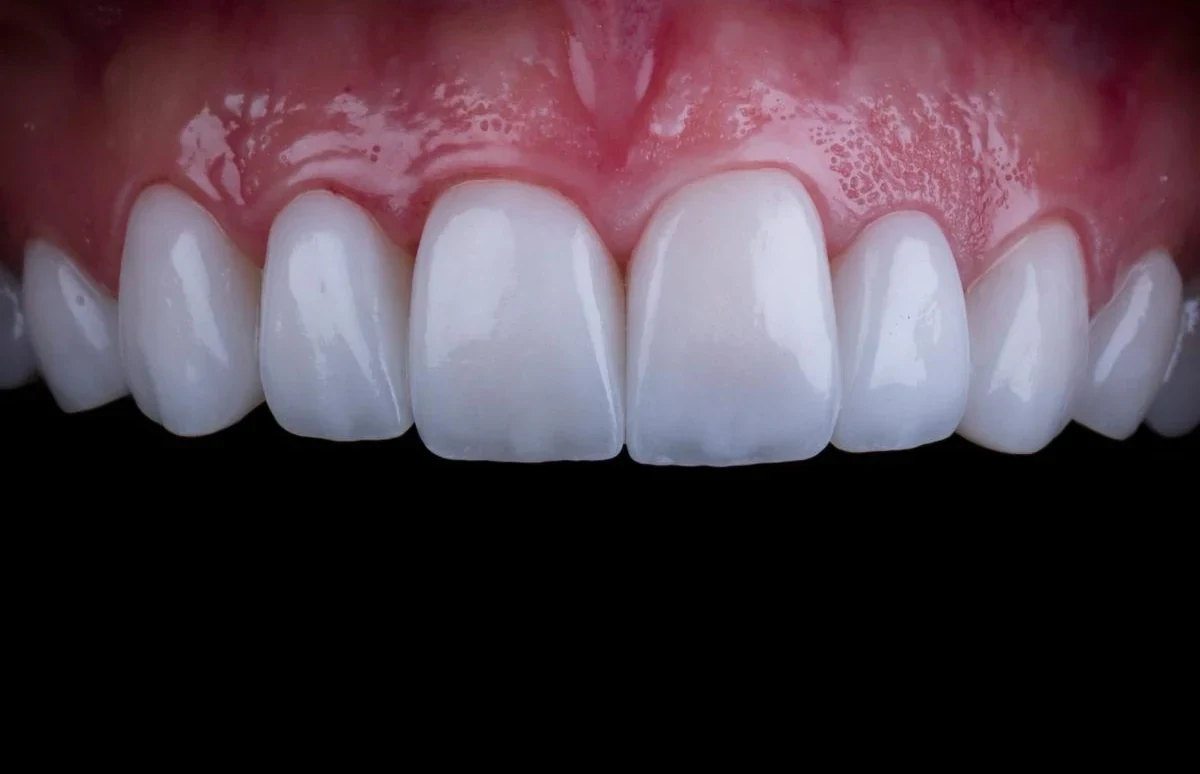
Porcelain veneers do not usually require the full-crown preparation shown in photographs of teeth reduced to narrow pegs. A veneer generally covers part of the visible tooth. Some cases need minimal reduction and others more, so the amount of enamel involved and the alternatives should be explained for each tooth before treatment.
The disturbing internet image is usually the wrong reference
A full crown surrounds much more of a tooth than a veneer, which explains why dramatic crown-preparation images can be misleading when comparing treatment. Veneers are still not automatically preparation-free or reversible. Any enamel removed is a permanent change that needs justification. The required amount depends on starting position, existing fillings, the desired colour change and ceramic thickness. Your own proposed design is the useful basis for that discussion.
Why shape and bite matter more than a marketing label
A tooth that already projects outwards may need space created for porcelain; simply adding a veneer could make it too prominent. A tooth set back in the arch might sometimes be restored more additively. The lower teeth must also have room to move without putting excessive load on a new veneer edge. Gum levels, available enamel and whether teeth are heavily filled influence bonding reliability. A clinician should show you a tooth-by-tooth plan, not promise “no drilling” before examining your mouth.
Trial smiles can clarify expectations
Digital mock-ups or physical trial restorations can help you assess proportions, lip support and the way teeth look during speech. They are planning tools, not guarantees of the final optical result. Tooth preparation should be discussed after assessing the mock-up against your bite and smile. Ask the clinician to distinguish changes in the proposed shape from changes in tooth structure. A transparent consultation separates reversible preview stages from irreversible steps, and explains why a particular ceramic or alternative material is being selected.
What to ask before you consent
Request written information about the planned preparation, whether any dentine may be exposed, alternatives such as whitening, orthodontics or composite bonding, and what would happen if a veneer later fractured or debonded. Ask to see representative—not selectively idealised—examples with relevant follow-up. The dentist should explain possible sensitivity, ongoing maintenance, the need to replace restorations eventually and the limits of colour matching. Patients should never feel that wanting straighter or brighter teeth requires the removal of healthy enamel without a reasoned discussion of options.
The difference between a veneer and a crown
An indirect veneer is generally an aesthetic facing, most often on a front tooth; a full crown has a different set of structural indications, such as rebuilding a heavily damaged or root-treated tooth when sufficient conservation is not possible. Some teeth are not suitable veneer candidates and may need restorative treatment of a different type. The goal should be an appropriate restoration for the tooth’s condition, not fitting every smile into one product. Balanced advertising must distinguish material possibilities from patient-specific clinical recommendations.
Why “reversible” deserves careful explanation
Composite can often be repaired more easily than laboratory ceramic, but removing resin or adhesive still cannot guarantee an untouched original surface. A porcelain veneer may bond mainly to enamel and yet require further intervention when replaced. Before treatment, consider what healthy tissue would remain after removal and which restoration might be needed next. Baseline records help explain how repeated treatment can gradually use more of the tooth.
A thoughtful alternative to unnecessary reduction
If teeth are crowded or tilted, alignment first can sometimes create more favourable space for conservative cosmetic work. Where the main problem is colour rather than shape, supervised whitening may reduce the extent of ceramic required, although existing crowns or fillings do not whiten with natural enamel. Small edge defects may be repairable directly. These alternatives do not mean veneers are inappropriate; they ensure the permanent step is justified by a clear goal. High-quality cosmetic dentistry starts with a restraint question: what can be achieved without removing sound tooth tissue?
Photographs have limits
Photographs of the teeth, smile, lips and face provide useful context, alongside bite records. They cannot establish enamel thickness, decay, root health or gum support on their own. A digital prediction begins the design discussion; the examined tooth and clinical findings determine whether that design is appropriate before any irreversible work.
Sources and professional guidance
Applying the information:
Your next step, when you’re ready
We would be pleased to welcome you for a £30 consultation at your preferred Iconic Smiles practice. Bring your questions, and we can talk through the options that may suit you.
Any additional investigations and their fees will be explained before you decide.