
Bonding, veneers and whitening
Composite or Ceramic for Heavily Restored Front Teeth?
A front tooth that already contains a large filling deserves a different cosmetic conversation from a completely untouched tooth.
Discover what could suit your smile
Whether you are thinking about colour, shape or a subtle change, a £30 consultation is a welcoming place to share your ideas, ask questions and explore a personalised approach.
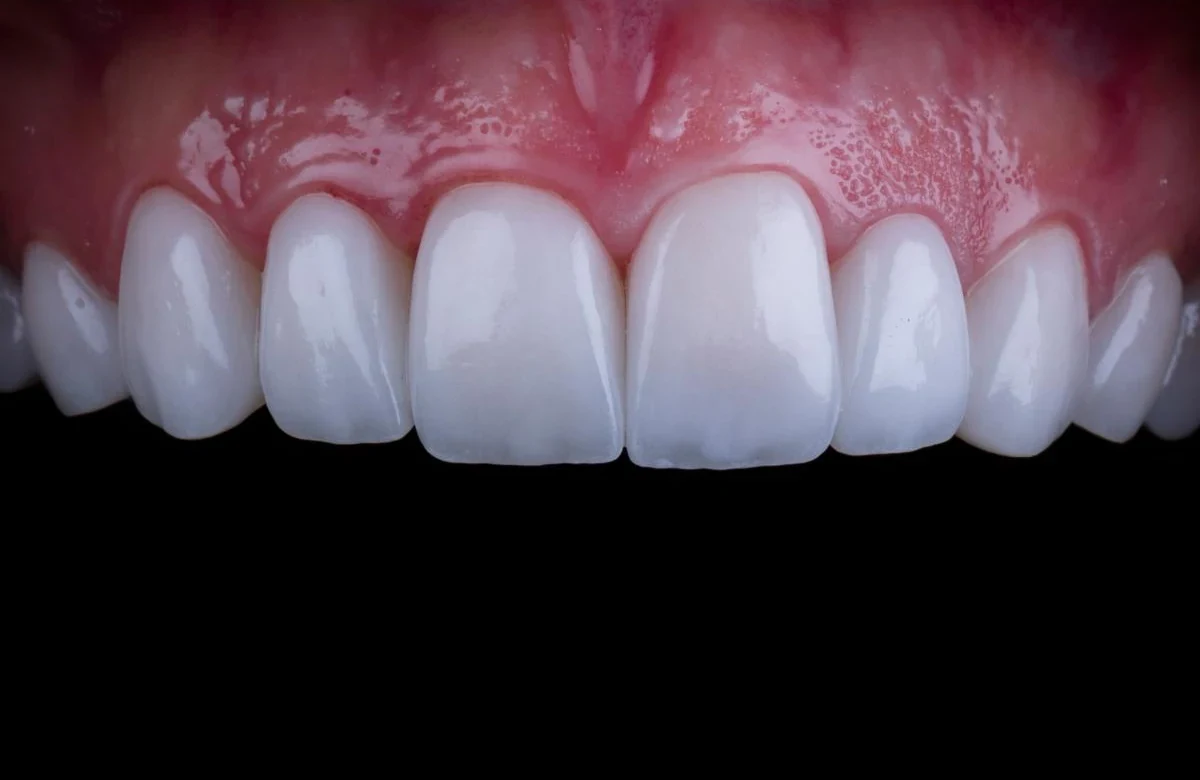
Composite, a veneer or a crown may be suitable for a heavily restored front tooth, depending on the sound enamel and dentine that remain. A large filling creates a different foundation from an untouched tooth. Before choosing by colour or material, the dentist assesses what can be preserved, what needs rebuilding and how the restoration would be supported.
Start by mapping the old restoration
A dentist should examine the size and depth of the existing filling, whether it crosses the biting edge and whether the tooth has had root-canal treatment. A filling on one corner may be replaced conservatively. A restoration covering most of the visible face and both side contacts leaves less unaltered enamel for a bonded ceramic shell. Photographs alone can hide the join between an old filling and natural tooth. The clinician may use transillumination, appropriate radiographs and careful inspection to assess cracks, margins or new decay before designing the cosmetic work.
When direct composite is the conservative choice
Composite can be placed directly in the surgery, sculpted and polished to mimic neighbouring enamel. It usually allows useful preservation of tooth structure, especially when the intended improvement is mainly contour or replacement of an old resin restoration. A layered technique can reproduce an opaque body and a more translucent edge; an overly opaque single shade can appear flat. Composite is repairable, though it may stain, wear or require re-polishing. If a tooth already has a large sound filling, replacing every surface solely to achieve a new shade may remove more tissue than the aesthetic change justifies.
Ceramic veneers need a suitable bonding foundation
Porcelain can offer stable surface colour and precisely controlled shape, but a veneer is not automatically less invasive than composite. The amount of preparation varies with tooth position, colour and the ceramic selected. Bonding to enamel is generally more predictable than relying heavily on exposed dentine or an extensive existing resin build-up. If the tooth is dark, creating enough ceramic thickness to mask it may require additional preparation. A thin veneer marketed as 'no preparation' can sometimes create an over-contoured tooth when placed over prominent enamel. The design should be judged in profile, not only from the front.
A crown may be justified by the structure, not the makeover
A full crown surrounds more of the tooth than a veneer and generally involves more preparation, so it is not the default choice for healthy front teeth. It can be reasonable when extensive restorations, cracks, loss of support or an existing crown leave insufficient reliable tooth structure for a veneer. The dentist should explain whether a crown is being proposed for strength, to replace an unsatisfactory old crown or mainly to alter colour. Those objectives should not be blurred. Some heavily filled teeth may still be suitable for a carefully planned partial restoration rather than complete coverage.
Shade matching is a team process
A single central incisor is particularly difficult to match. Natural teeth vary in brightness at the neck, centre and edge, and surface texture changes light reflection. The underlying colour of a tooth also affects thin ceramics. Photographs with a calibrated shade reference, close collaboration with a technician and, where needed, a trial restoration can improve communication. Composite can be modified directly, whereas a ceramic restoration may need a laboratory remake if the initial shape or colour is unacceptable. Ask how any try-in and adjustment appointments are arranged.
The practical comparison to request
The estimate should explain preparation, existing material to be removed, any temporary work, maintenance and the options if further tooth treatment is needed. Compare a complete direct-composite plan with the full laboratory and fitting stages for ceramic. Where several teeth are involved, each material choice should have a reason; a mixed plan may preserve more sound enamel while providing a coordinated appearance.
References and further reading
Book an assessment
The practices are in Hatfield and Cheshunt in Hertfordshire, and Friern Barnet in North London. For travel from Bedfordshire, Buckinghamshire or Essex, confirm the actual practice and any sites involved in later stages.
Editorially updated: 27 October 2026.
Your next step, when you’re ready
We would be pleased to welcome you for a £30 consultation at your preferred Iconic Smiles practice. Bring your questions, and we can talk through the options that may suit you.
Any additional investigations and their fees will be explained before you decide.