
Bonding, veneers and whitening
Veneer and Crown Margins: Healthy Gums
Veneers and crowns are judged by their colour and shape, but the boundary where a restoration meets natural tooth tissue can influence comfort, cleaning and gum health.
Discover what could suit your smile
Whether you are thinking about colour, shape or a subtle change, a £30 consultation is a welcoming place to share your ideas, ask questions and explore a personalised approach.
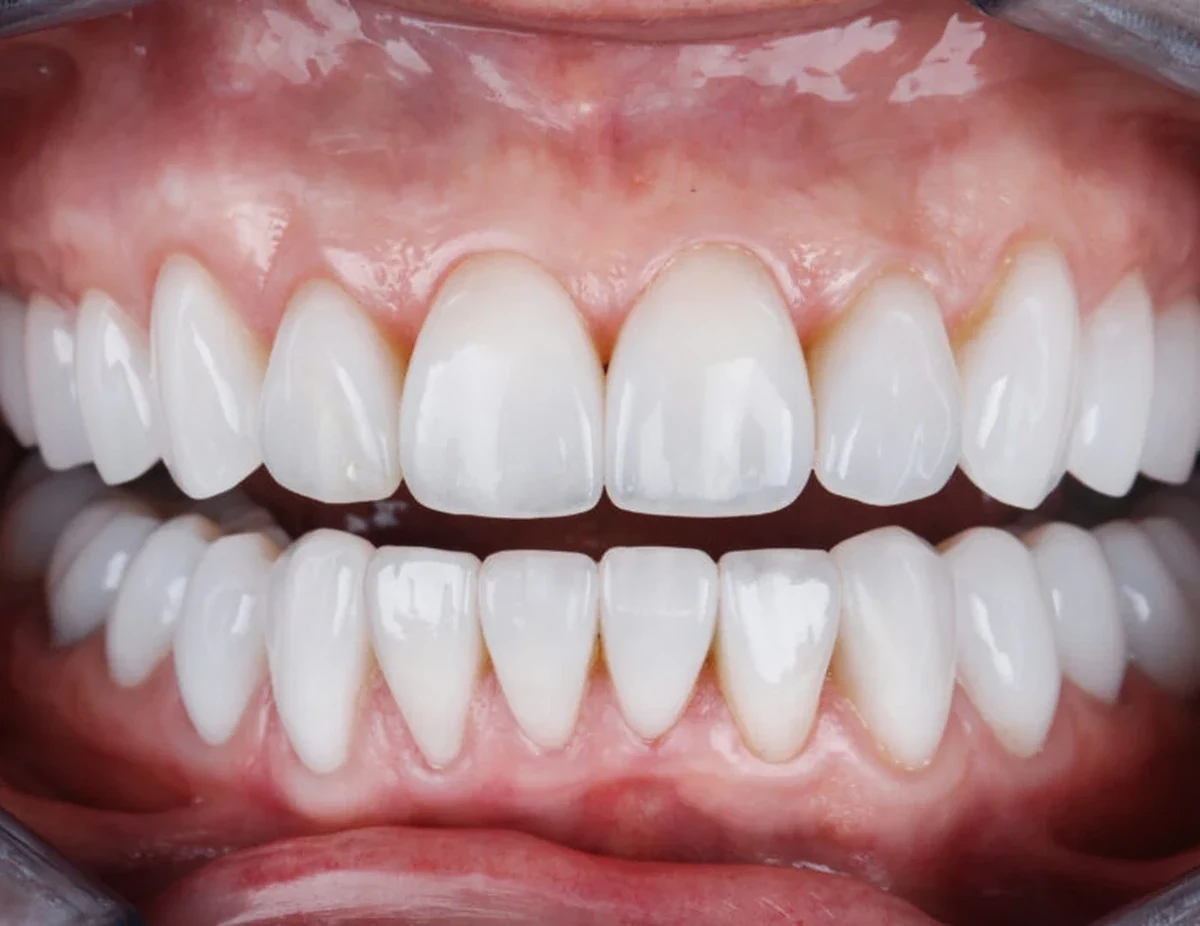
The margin is the edge where a crown or veneer meets your tooth. Its position, fit and contour affect cleaning and gum health as well as appearance. A ledge can trap plaque, and polished ceramic cannot address untreated gum inflammation. Planning should consider the gums and the restoration edges together.
Locate the intended finish line
Some restorations can have margins positioned in a readily accessible area, while others may require more complex management for caries, cracks or aesthetic reasons. The clinician should explain where preparation and bonding will occur and whether the planned margin is compatible with maintaining healthy soft tissues. Subgingival margins can be harder to examine and clean; they should not be assumed necessary merely because a crown will be visible in a smile.
Why existing restorations need investigation
An older crown can look serviceable from the front while a margin traps plaque, has recurrent caries or sits against inflamed gum. Examination, periodontal measurements and radiographs when indicated help distinguish these problems. Replacing every crown is not automatically the first solution; some inflammation improves when cleaning access or oral hygiene is corrected. The proposed treatment should address the diagnosed reason, not only a dark line or aesthetic complaint.
Material is not the only variable
Ceramic, composite and metal-based restorations have different surfaces and polishing needs, but fit and contour also matter. Extra bulk used to hide a dark tooth or a gum triangle can make cleaning harder. The technician needs records of gum levels, the shape emerging through them and tooth contacts, alongside the space you need for cleaning aids. The design should suit the mouth's anatomy and your daily routine.
Gum treatment may need to come first
If bleeding and pocketing indicate inflammation, the patient may need preventive or gum disease treatment before elective veneer preparation. Gum levels can change as swelling settles, so definitive margin placement and aesthetic impressions may need to wait. In a complex case, multidisciplinary planning can identify whether soft-tissue treatment, orthodontics or a different restorative approach gives a better outcome. Cosmetic urgency should not override the need for a stable foundation.
Ask to see the maintenance route
Before committing, ask where you will floss or use interdental brushes, whether the restoration will alter access and how the gumline will be monitored. Discuss whether a small repair or improved hygiene could avoid replacing an otherwise sound restoration. The most successful cosmetic plan should look natural and remain practical to clean, not merely have a polished surface on fitting day.
Two patients with the same veneer shade but different gum needs
For example, stable gums without bleeding allow veneer edges to be planned against a more settled contour. Bleeding between front teeth, uneven gum levels and inflammation around an old crown need a different assessment. New ceramic fitted before the cause is addressed could be surrounded by redness and difficult cleaning, with gum height changing as it heals. A smile photograph alone cannot distinguish these needs.
The dentist checks gum measurements, tooth position and existing restoration contours, with a specific reason for any edge near or below the gum. Hiding a margin deeply does not automatically create a better seamless appearance. Establish how much preparation stays in enamel, where each edge will sit and how cleaning aids will pass. Where gum care and restorative treatment involve different clinicians, the plan should identify who confirms stability before final impressions.
Plan the gumline and ceramic margin together
Imagine two patients who both request a brighter upper smile. One has stable gums and mostly intact enamel; the other has an inflamed gumline around old crowns. A photograph may suggest that both need identical veneers, yet the second patient may benefit from periodontal care and reassessment before any new preparation. As inflammation resolves, the visible gum level and the amount of exposed tooth can change. Preparing a definitive ceramic margin too early may make the final contour difficult to clean or less symmetrical. Ask whether the proposed restoration margin will be above, level with or below the gum, why that position is needed and how it will be maintained. A veneer or crown should not be used to disguise active gum disease. The cosmetic plan is stronger when gum health and tooth preservation are documented before the laboratory design is finalised.
Your next step, when you’re ready
We would be pleased to welcome you for a £30 consultation at your preferred Iconic Smiles practice. Bring your questions, and we can talk through the options that may suit you.
Any additional investigations and their fees will be explained before you decide.