
Bonding, veneers and whitening
Gum Contouring Before Veneers: Is Crown Lengthening Needed?
Learn how a dentist assesses short-looking teeth and gum levels before deciding whether gum contouring or crown lengthening is appropriate.
Discover what could suit your smile
Whether you are thinking about colour, shape or a subtle change, a £30 consultation is a welcoming place to share your ideas, ask questions and explore a personalised approach.
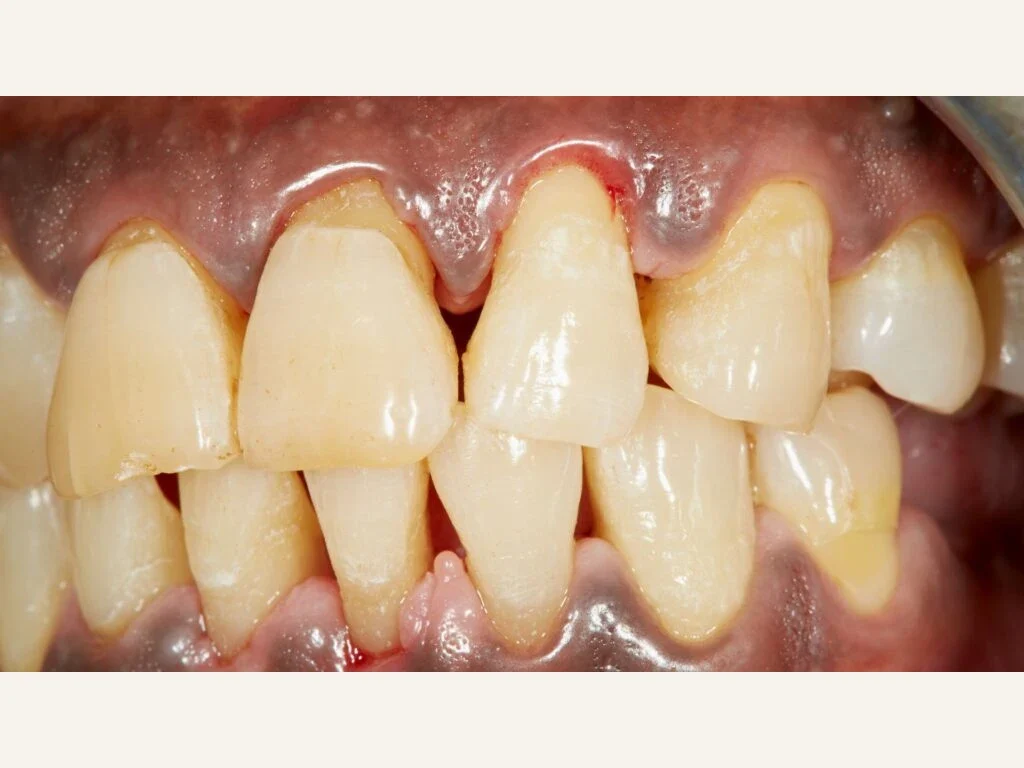
Gum contouring or crown lengthening is not a routine requirement before veneers. It may help when healthy natural tooth is partly concealed by gum, but short-looking teeth can also reflect wear, size, position or the lip line. The cause determines whether gum treatment, restoration, orthodontics or leaving the anatomy unchanged is appropriate.
First identify why the teeth look short
A clinician may consider tooth wear, altered passive eruption, tooth position, gum enlargement and the movement of the upper lip when you smile. They can create similar photographs but require different treatments. If tooth edges have worn away, adding restorative material might be the main solution. If healthy anatomical crowns are partly concealed by gum, periodontal reshaping may merit discussion. An uneven gumline may also reflect differences in tooth eruption or position that could respond to orthodontics. Accurate diagnosis helps avoid permanently changing healthy gum tissue when a less invasive route would work.
The gum and the bone must be assessed together
The gum margin and supporting attachment sit in a relationship with the bone beneath them. Crown lengthening needs to respect that attachment for healthy tissues. Some cases involve gum alone; others need bone recontouring too. Removing tissue without assessing these dimensions can leave an inflamed or unstable margin. Clinical measurements and justified X-rays, where useful, guide the decision.
Why the veneer design may change after gum treatment
The apparent width-to-height ratio of a front tooth changes when more natural crown becomes visible. A tooth that seemed to require a substantial veneer extension may need much less restorative addition after the gumline is corrected. Conversely, uncovering enamel may reveal colour or contour characteristics that affect the material and shade plan. For a patient with otherwise healthy teeth, gum reshaping alone might produce enough aesthetic improvement that veneers become unnecessary. A good cosmetic dentist should be willing to say so, even if the original enquiry was for a full set of ceramic restorations.
Healing affects the final appointment sequence
Gum margins can change as tissues heal, and the timing of final impressions or scanning should allow appropriate stabilisation. The interval depends on the procedure, tissue characteristics and location; a clinician should explain the expected stages rather than guarantee a universal number of weeks. Temporary or mock-up restorations may help patients preview the desired shape while planning proceeds. If veneers are bonded too early against a changing gumline, their margins or visible proportions may be harder to predict. Coordination between periodontal and restorative planning helps prevent that mismatch.
Not every gummy smile requires surgery
A high lip line, lip movement or vertical jaw relationship can increase visible gum without disease. Reshaping the teeth will not necessarily change those features. Orthodontics or accepting a natural difference may be more proportionate. Reviews describe several gummy-smile approaches but limited evidence for some newer interventions, which needs discussion before elective surgery.
Make the planned change measurable
Compare the current and proposed gum levels, the natural enamel that would become visible and any preparation still needed for veneers. Include cleaning, recovery, sensitivity and possible later gum changes. In selected cases, reassessing the proportions after appropriate gum treatment may show that fewer or no restorations are needed.
Evidence and further reading
Reviewing proportions before restorations
Seeing the intended gumline and exposed tooth shape helps separate the benefit of contouring from any further benefit of veneers. Allow for healing and reassessment before judging the final proportions.
Iconic Smiles practices are in Hatfield and Cheshunt in Hertfordshire, and Friern Barnet in North London. If travelling from Bedfordshire, Buckinghamshire or Essex, confirm the actual practice for each appointment.
Your next step, when you’re ready
We would be pleased to welcome you for a £30 consultation at your preferred Iconic Smiles practice. Bring your questions, and we can talk through the options that may suit you.
Any additional investigations and their fees will be explained before you decide.