
Bonding, veneers and whitening
Matching a Single Front Veneer to Natural Teeth
Explore the challenges of matching a single front veneer, including shade, shape, surface texture and its relationship with neighbouring teeth.
Discover what could suit your smile
Whether you are thinking about colour, shape or a subtle change, a £30 consultation is a welcoming place to share your ideas, ask questions and explore a personalised approach.
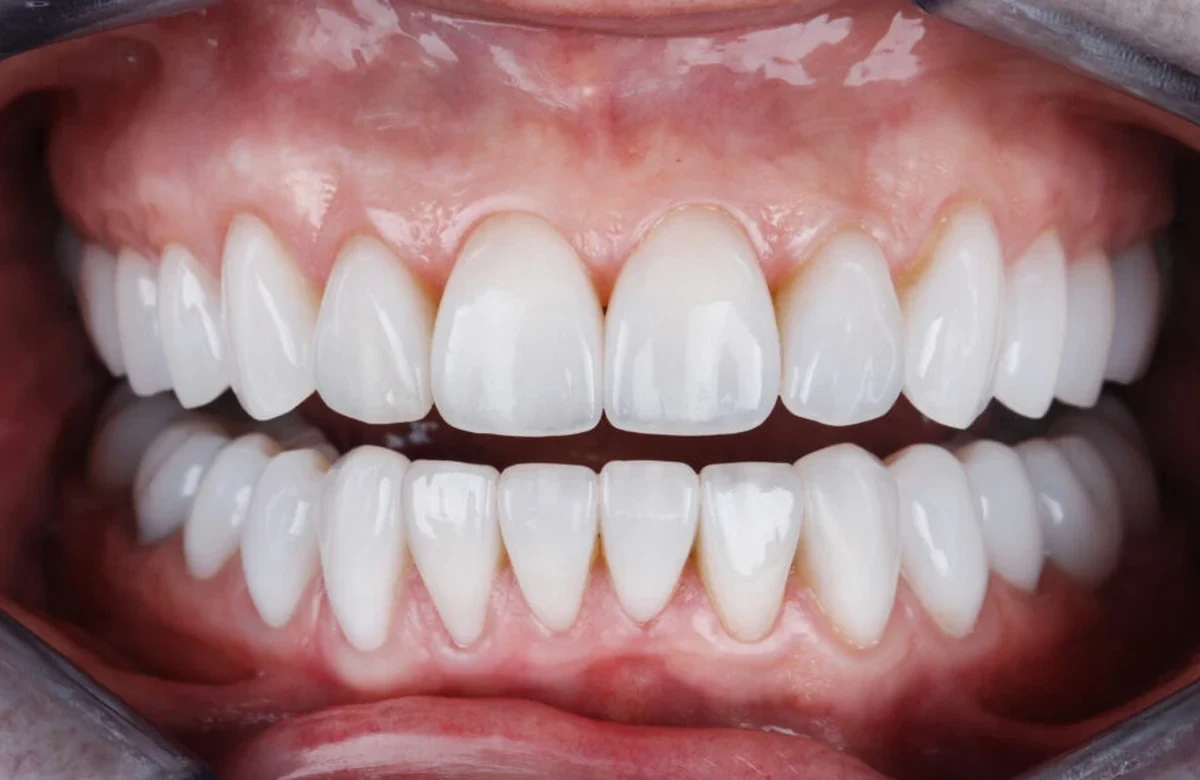
A single front veneer can be matched to natural neighbours, but it needs more than a shade choice. Colour, transparency, shape and texture all have to blend with teeth left untouched. That can be more demanding than designing several restorations together. The aim is a tooth that fits your smile, rather than the whitest available ceramic.
Why a shade number is insufficient
Natural enamel reflects and transmits light differently across the neck, middle and incisal edge of a tooth. A shade tab can approximate a base colour, but it does not capture the degree of translucency, internal mottling, fine surface ridges or edge characteristics. The laboratory may need photographs taken under controlled conditions, cross-polarised views or a technician's direct shade appointment. Tooth dehydration during treatment can temporarily lighten the apparent shade, so timing matters.
The underlying tooth influences the ceramic
A very dark, root-treated or heavily restored tooth may require a different restorative strategy from a healthy tooth with a small shape discrepancy. Extremely translucent ceramic over a dark substrate can show the unwanted shade through the finished veneer. More masking may require a change in ceramic opacity or thickness, which then affects how light passes through the restoration. These trade-offs should be explained before any enamel is prepared.
Shape is about more than width
The front edge, contact point, surface angles and shape at the gum all affect apparent width. Moving the highlights on the surface can change how wide a tooth looks without adding the same amount of physical width. The dentist compares the opposite front tooth and watches the lips and teeth during speech. A mock-up lets you judge these proportions before the final ceramic is made.
Preserving enamel strengthens the design
Whenever possible, the clinician aims to retain an appropriate enamel substrate for bonding. Evidence from systematic reviews suggests that ceramic veneers bonded predominantly to enamel generally have favourable survival and fewer complications compared with extensive dentine involvement. This does not mean every tooth can be restored without preparation; it means the starting condition of the tooth should guide material choice and the consent discussion.
Why a conservative alternative may work
For a healthy tooth with a small chip or a narrow outline, composite bonding may offer a repairable option with limited preparation. Alignment or whitening of surrounding teeth may also reduce the difference. A crown covers more of the tooth and involves a different level of treatment; a difficult shade match alone does not make it necessary.
Judging the trial and the final result
A sensible assessment considers the tooth in daylight-like illumination as well as the surgery environment, both with relaxed lips and in a full smile. The patient should understand that ceramics have different optical properties from living enamel and that an absolutely invisible match cannot be guaranteed in every light. Ask how the laboratory will receive shade information and how the dentist will review the shape, surface and gingival contour before definitive bonding.
A single-incisor matching scenario
Imagine replacing a veneer on one upper central incisor while leaving its neighbour untouched. The natural tooth has a slightly translucent edge, faint white characterisation near the incisal third and a rounded line angle that catches the light differently from a flat surface. Choosing 'B1' from a shade tab is not enough. The dentist might take controlled photographs, record the underlying tooth shade and discuss with the laboratory whether layered ceramic or another option offers the best match. If the existing tooth is dark, more opacity may be needed and that choice could influence the final thickness. The patient can judge a provisional shape before the final ceramic is made, but must also accept that different light sources may reveal subtle differences between living enamel and porcelain. This is a case where conserving an intact neighbouring central incisor may matter more than chasing artificial symmetry by restoring both teeth.
Matching One Porcelain Veneer to Natural Front Teeth
A single central incisor is harder to disguise than a matched pair because translucency, texture and chroma must agree with its neighbour.
For example, one upper central incisor may have an old discoloured restoration while the neighbouring tooth remains intact.
With one front tooth, small details matter: colour near the gum, the brighter rim at the front edge and fine surface texture. The shade of the prepared tooth can show through thin ceramic. Photographs with a neutral colour reference and a trial paste can help assess the proposed veneer before it is bonded permanently.
The shade record should include photographs, the underlying prepared-tooth colour and where the front edge is translucent. A laboratory trial gives more information than a shade-tab number alone.
Your next step, when you’re ready
We would be pleased to welcome you for a £30 consultation at your preferred Iconic Smiles practice. Bring your questions, and we can talk through the options that may suit you.
Any additional investigations and their fees will be explained before you decide.