
Bonding, veneers and whitening
Matching a Single Front Crown: Shape, Texture and Natural Symmetry
Matching one upper front crown to a natural neighbouring incisor can be harder than making several new crowns the same shade.
Discover what could suit your smile
Whether you are thinking about colour, shape or a subtle change, a £30 consultation is a welcoming place to share your ideas, ask questions and explore a personalised approach.
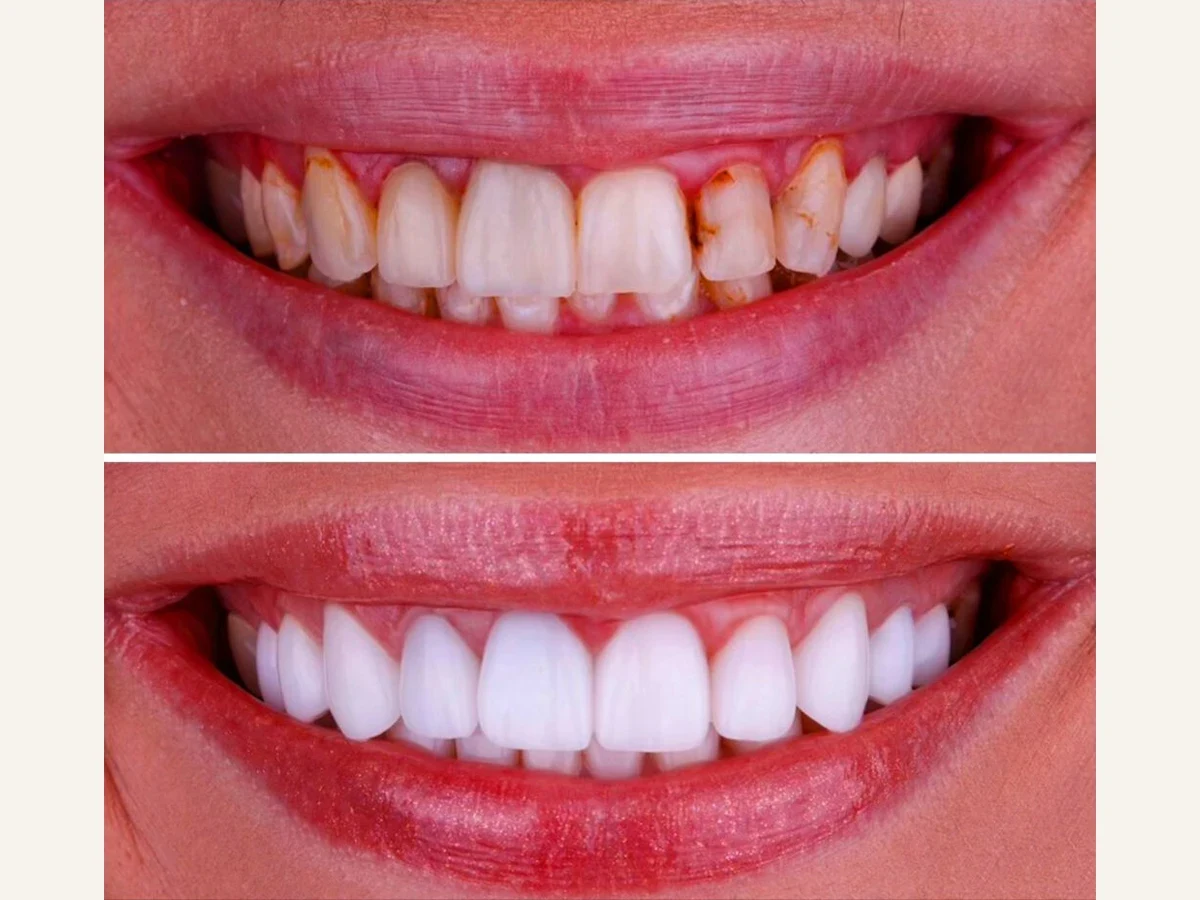
Matching a single front crown involves shape, texture, gum level and light reflection as well as colour. The natural neighbouring incisor provides a close reference, making small differences noticeable. The plan needs records of that tooth, the prepared foundation and the features you want preserved. A brighter or more expensive ceramic cannot establish the match on its own.
The two central incisors are similar but rarely identical
A dentist may measure the visible width and length of both incisors and compare their corners, curvature and incisal edges. A small natural asymmetry can look more convincing than laboratory-perfect mirrors. Photographs from the front, at a slight angle and with the lips relaxed show different features. The clinician should identify which characteristics the patient wants preserved, such as a slightly rounded corner or a translucent edge. Trying to standardise every feature can make the replacement tooth look more artificial than the one it replaces.
Surface texture controls light reflection
A natural incisor is not perfectly flat. Fine vertical and horizontal surface features, rounded line angles and subtle transitions alter how its colour appears. A crown manufactured to the correct shade but with an overly smooth, convex front may reflect a bright band of light that makes it conspicuous. Skilled laboratory finishing can modify how the surface reflects light, although the ceramic must also be appropriately polished after adjustment. Ask to judge the crown under more than one lighting condition where possible, and not only under the strong illumination of the dental surgery.
The underlying tooth can affect the result
If the prepared tooth is dark, thin translucent ceramic may allow that colour to influence the appearance. A more opaque ceramic or substructure may be required, but opacity itself can flatten the visual depth. Lithium disilicate and zirconia have different optical properties, and selection involves both masking needs and the functional demands of the tooth. The dentist may record the shade of the prepared stump as well as the natural neighbouring tooth. That information is important because the same ceramic can look different over two different underlying colours.
Gum level and crown emergence matter
A crown does not begin at the visible tip. Its contour near the gum should be compatible with the surrounding tissues and allow cleaning. If one gum margin sits higher than the other, a crown can change the apparent tooth length only within anatomical limits. Trying to hide every discrepancy by adding bulk at the neck risks a less natural profile and can make plaque control more difficult. The clinician may discuss whether the gum contour should be addressed separately or whether retaining a small difference is a sensible compromise.
Bite and edge length must still work
The incisal edge should not be designed solely to align in a smile photograph. Its length influences contact with the lower teeth and can change the sounds made during speech. The dental team should check forward and side movements, existing wear and any parafunctional habits. A trial or temporary crown can help the patient become familiar with the outline before the definitive restoration is fixed. If a new crown repeatedly feels too long in function, reducing it after final cementation can alter carefully created surface character and may not be the best route.
A sensible try-in is part of quality control
Before treatment, establish how photographs and shade records will be shared with the laboratory, with your consent. You should know when you can assess a try-in and how an unsatisfactory appearance would be adjusted or remade before final cementation. Include temporary work, laboratory stages and reviews in the estimate. The aim is a crown that fits clinically and looks appropriate in ordinary life.
References and further reading
Book an assessment
The practices are in Hatfield and Cheshunt in Hertfordshire, and Friern Barnet in North London. For travel from Bedfordshire, Buckinghamshire or Essex, confirm the actual practice and any sites involved in later stages.
Editorially updated: 27 October 2026.
Further questions to consider before treatment
- Translucency matters for a front crown alongside shape, texture, gum contours and the neighbouring tooth.
- Appropriate shade photographs and digital records help the dentist and laboratory plan the match.
Your next step, when you’re ready
We would be pleased to welcome you for a £30 consultation at your preferred Iconic Smiles practice. Bring your questions, and we can talk through the options that may suit you.
Any additional investigations and their fees will be explained before you decide.