
Bonding, veneers and whitening
Refreshing several old front fillings conservatively
Explore repairing, polishing or replacing several old front fillings and understand when a conservative approach may avoid more extensive cosmetic work.
Discover what could suit your smile
Whether you are thinking about colour, shape or a subtle change, a £30 consultation is a welcoming place to share your ideas, ask questions and explore a personalised approach.
£30 for a planned-treatment consultation. Scans, additional investigations and emergency assessments may have separate fees; please confirm when booking.
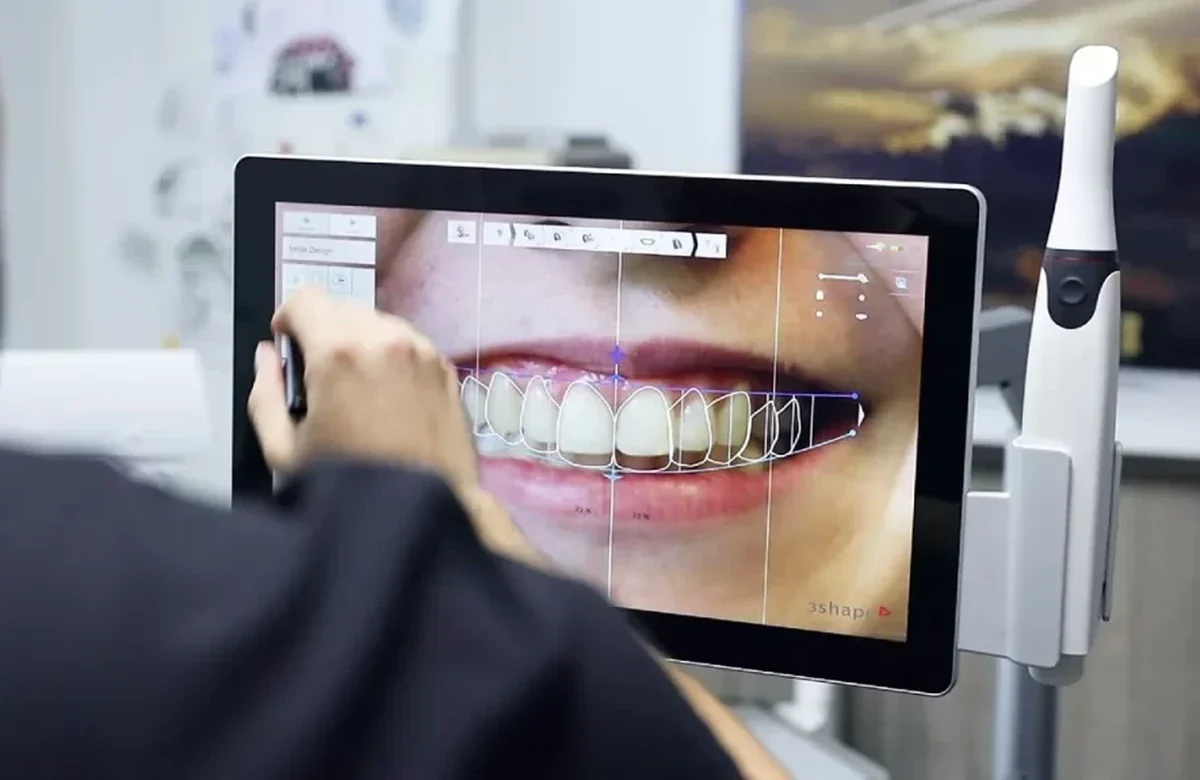
Sometimes the thing you dislike about your smile is not your natural teeth at all. It is a collection of old repairs: a front filling that has darkened at the edge, a small bonded corner that no longer matches, and another restoration that catches the light differently. When several of these are visible together, you may think you need a complete set of veneers.
You might not. The first question is whether the existing restorations are healthy and functional. The second is how much aesthetic improvement you could achieve by cleaning, polishing, repairing or replacing parts of them, rather than starting again with every tooth.
This is a useful decision point because repeated full replacements can gradually remove more natural tooth structure. A careful assessment can distinguish an unattractive finish from a restoration that has genuinely failed.
Not every dark margin means decay
Composite fillings can acquire surface stains, and the transition between tooth and filling may become visible with time. Colour can also change because of staining within the material, surface wear or changes to the tooth around it. A dark line alone does not reliably establish that decay has returned.
The clinician will examine the restoration, look at its edges and check for other signs of breakdown. Depending on the tooth and concern, radiographs may be relevant, but they are not automatically necessary for every discoloured front filling. The decision should be based on the clinical findings.
Conversely, a smooth-looking filling is not proof that everything beneath it is sound. Decay, cracks, gum conditions and bite issues require their own assessment. Cosmetic polish cannot be used as a substitute for treating disease.
The useful question to ask is: 'Is this a surface appearance issue, a small local defect or a restoration that truly needs replacement?' Each answer suggests a different intervention.
Four levels of treatment — from least to most extensive
Monitoring. If a restoration is sound and the mismatch is mild, you may prefer no treatment. Regular examinations allow the dentist to identify meaningful changes rather than replacing work solely because it is old.
Refurbishment. Polishing or adjusting a rough or stained surface may restore some gloss and improve the visible margin. This does not solve every internal colour mismatch, but it can sometimes provide a satisfying improvement without additional filling material.
Local repair. A small chip, defect or margin may be repairable with new composite after appropriate preparation. The technique depends on the existing material, tooth surface and location. Repair can preserve more of the original restoration and natural tooth than wholesale replacement.
Replacement or a different restoration. If the existing filling is defective over a large area, has decay beneath it or cannot be made satisfactory by conservative measures, replacement may be necessary. In selected cases with extensive loss of structure, a more comprehensive restoration may be appropriate.
FDI guidance advises that repair feasibility and the cause of deterioration should be considered before deciding on total replacement. [1] That principle is particularly relevant when several old front fillings are the main aesthetic concern.
What does the research say about repairing fillings?
A systematic review and meta-analysis compared repair with replacement of defective direct restorations. It did not find a statistically clear difference in failure risk, although the certainty of evidence was very low and the studies had limitations. [2] That does not mean every old filling should be repaired. It means repair is a legitimate treatment option where the defect and clinical conditions make it appropriate.
The repair must be placed on a sound foundation. If there is extensive recurrent decay or significant structural breakdown, covering over the problem can delay necessary treatment. Likewise, a heavily discoloured restoration might be technically repairable but still cosmetically unsatisfactory if too much mismatched material remains.
A good clinician weighs the size of the defect, the tooth's remaining tissue, the bite, oral hygiene and aesthetic expectations. The aim is to keep a sound tooth sound for as long as practical, not to avoid replacement at any price.
Long-term research on anterior composite restorations shows that fractures and aesthetic changes can contribute to failure or re-intervention. [3] Maintenance is part of the lifecycle, rather than evidence that the initial treatment was necessarily poor.
Why replacing everything at once can be tempting
A full set of restorations can produce a visually consistent starting point. If several fillings are old and different shades, replacing all of them with one contemporary material may sound simpler. Sometimes that is justified — for example, where multiple restorations are genuinely failing or a major change in tooth design is agreed.
But there is an important cost. Every replacement has the potential to enlarge the prepared area, expose more underlying tissue or change the way the tooth is supported. Where repeated replacements have already occurred, this issue becomes more significant.
Ask the dentist to mark which fillings have a clinical reason for replacement and which are being changed only to improve appearance. You may still elect cosmetic replacement after understanding the trade-off, but the decision should be informed rather than automatic.
The number of teeth involved does not determine the need for veneers. A smile with five old front fillings might be improved through selective polishing and two targeted repairs, or it might require more involved restorative work. The condition of the individual teeth determines the answer.
Can whitening help before repairing old fillings?
Whitening may lighten surrounding natural tooth tissue, but it will not make the old composite change shade in the same way. [4] This can improve the overall smile yet make a few restorations stand out more. A coordinated plan usually considers the desired final tooth colour before selecting shades for replacement composite.
If the fillings are healthy, it may be sensible to discuss whether whitening alone would meet your goal, whether the contrast afterwards would be acceptable, and how long to allow the natural colour to settle before making new restorations. Timing and suitability should be decided by the dentist rather than improvised at home.
You may also prefer to avoid whitening and have small repairs matched to your existing natural shade. There is no rule that every cosmetic refresh needs the palest possible colour.
The key is to choose a sequence that avoids having to redo sound work simply because the colour plan was decided too late.
How to make new repairs look less obvious
Direct composite repair requires more than applying a shade-labelled material. The existing tooth may show several colours and degrees of translucency. The clinician may need to match the opacity, shape and surface texture while preserving a clean transition between the old and new material.
A front tooth can look well matched from straight ahead but reveal a visible edge under different lighting. Polishing, contouring and the design of the interface all contribute. If the existing restoration has a very different opacity or deep staining, there may be a limit to how invisibly it can be repaired.
Ask whether the aim is to remove an obvious margin, improve the contour, correct a colour mismatch or achieve a broader change. If the dentist explains that a repair will still be discernible at very close range, you can decide whether that is acceptable. A natural-looking improvement need not mean a perfectly undetectable repair under every photograph flash.
When a veneer might actually be a reasonable choice
A veneer may be appropriate if the front tooth has a more extensive aesthetic or structural problem and a direct repair is unlikely to meet the agreed result. The underlying enamel and existing composite can affect bonding, and the preparation needed should be discussed carefully.
However, a veneer is not simply a luxurious type of filling. It changes the long-term restoration pathway and may require enamel reduction. Ceramic veneers have good survival in selected clinical studies, but complications and replacement needs remain possible. [5]
Ask why a veneer is being proposed for the particular tooth. Is the existing restoration extensive? Is the underlying discolouration difficult to manage? Are there significant shape changes? What would happen if you opted for a smaller repair instead?
A professional answer can explain both the attraction of porcelain and the reasons a less extensive alternative might be preferable.
Plan a refresh tooth by tooth
A practical appointment could involve a simple chart of your six upper front teeth. For each tooth, record whether it has a restoration, whether the restoration is clinically sound, the specific visible issue and the possible conservative treatment. This makes the problem manageable rather than allowing the appearance of 'a lot of old fillings' to drive a wholesale makeover.
Ask which improvements can be carried out in one visit and which require assessment after polishing or whitening. If the dentist expects the shade to change, agree when the final shade decision will be made. Where there is a functional issue, such as heavy contact on a chipped corner, understand how that affects the repair plan.
Request a written estimate separating essential repairs from optional aesthetic changes. GOV.UK advises that patients should understand treatment choices, alternatives and prices before agreeing to private dental care. [6]
You may choose to refresh only the teeth that show most when smiling. That is not necessarily an inferior compromise; it can be an efficient way to address the concern you actually have.
Frequently asked questions
Does a dark line around a filling mean it needs replacing? Not necessarily. Staining and other causes exist, although the dentist must check for decay or defects.
Can old composite be polished to look new? Surface refurbishment may improve some restorations, but deep staining or structural problems may require more.
Is bonding repair as good as a new filling? It can be suitable in selected cases. Evidence supports considering repair, while acknowledging important limitations and uncertainty.
Do I need veneers because several front teeth have fillings? No. The individual tooth condition and your desired change determine which treatments are appropriate.
Will whitening make my old fillings white? No. The restoration shade may remain unchanged and become more noticeable next to lighter natural teeth. [4]
A more conservative way to feel pleased with your smile
At Iconic Smiles, a £30 consultation offers a chance to have visible old restorations examined and discuss which could be polished, repaired, replaced or simply left alone. Check the fee and treatment availability when booking.
A cosmetic refresh should not automatically become a full reconstruction. Sometimes careful attention to three small details is enough to make a familiar smile feel like itself again — only tidier, fresher and easier to enjoy.
Clinical sources and further reading
- FDI World Dental Federation. Repair of restorations: policy statement.
- Repair versus replacement of defective restorations: systematic review and meta-analysis.
- Anterior composite restorations: survival and failure systematic review.
- NHS. Teeth whitening: what changes colour.
- Ceramic veneers bonded to different tooth substrates: systematic review.
- GOV.UK. Choosing and paying for dental care.
Your next step, when you’re ready
We would be pleased to welcome you for a £30 consultation at your preferred Iconic Smiles practice. Bring your questions, and we can talk through the options that may suit you.
£30 for a planned-treatment consultation. Scans, additional investigations and emergency assessments may have separate fees; please confirm when booking.