
Bonding, veneers and whitening
Veneers for Uneven Front-Tooth Edges: When Is Porcelain Justified?
Uneven front-tooth edges can make a smile look irregular even when the teeth are generally straight.
Discover what could suit your smile
Whether you are thinking about colour, shape or a subtle change, a £30 consultation is a welcoming place to share your ideas, ask questions and explore a personalised approach.
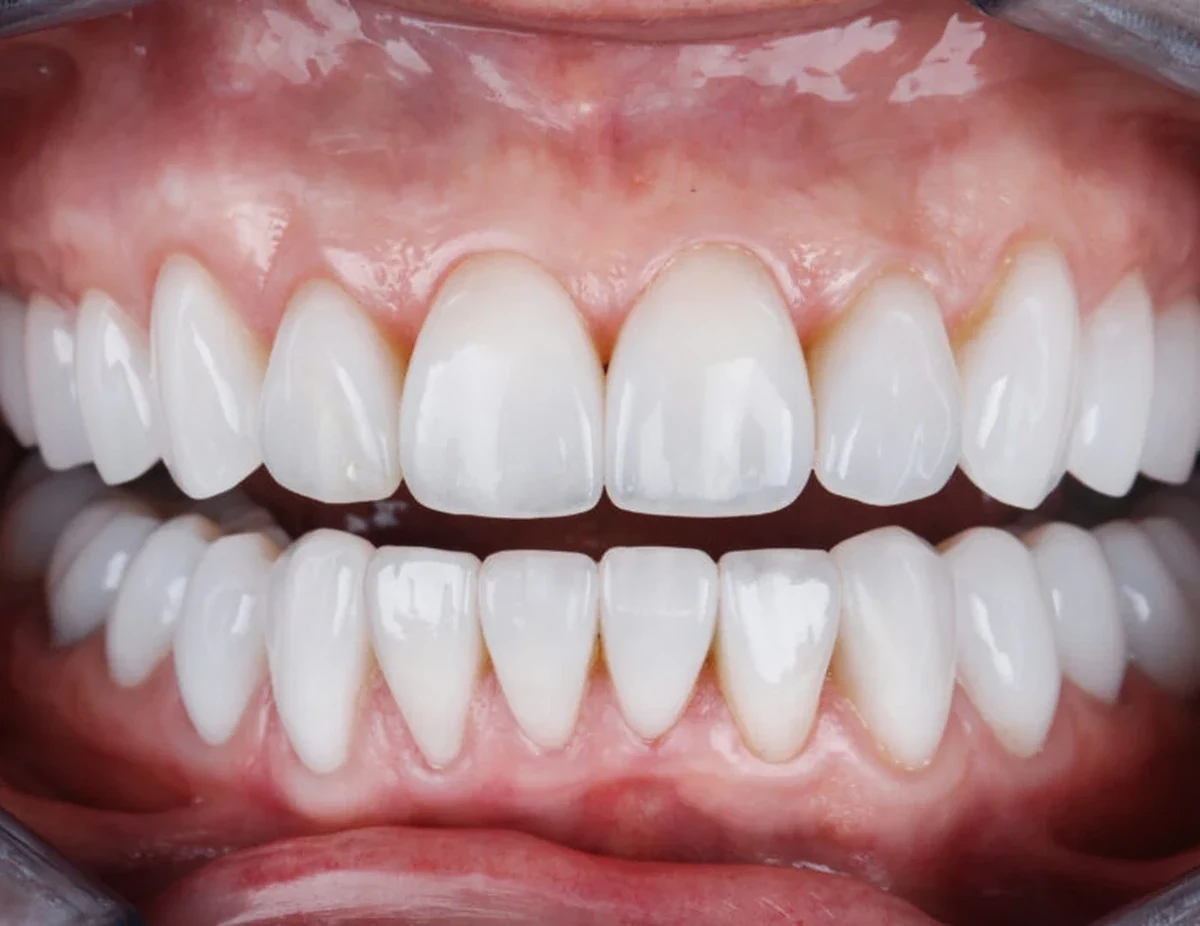
Porcelain may be justified for uneven edges when a wider change in colour, contour or surface is needed, but a small irregularity may suit less extensive care. Unevenness can be natural or follow wear, chips or different tooth heights. The assessment should establish the cause and compare the tissue preparation needed with options such as limited contouring, bonding or alignment.
Establish why the edges look different
A dentist should compare the upper central incisors, lateral incisors and canines at rest, during speech and in a broad smile. A tooth may look shorter because its incisal edge has worn, because the gum margin is lower, or because it has erupted into a different position. Those situations are not interchangeable. Simply building every edge to the same line can create an unnatural smile or alter chewing contacts. Digital photographs and a scan can help document shape; a functional bite examination explains which changes are feasible.
Start with the least invasive useful option
Very slight enamel irregularities may be polished or conservatively contoured. Missing corners may be restored using direct composite, which can often be added without extensive preparation. Orthodontic alignment may be more appropriate when the edge discrepancy is largely positional. Porcelain becomes more compelling when the patient also wants a meaningful, coordinated change in colour, contour or surface character across several teeth, or when existing restorations make smaller interventions less predictable. The assessment should compare the likely preparation and maintenance burden of every option rather than assuming ceramics are inherently superior.
Why ceramic requires space even when it is thin
Porcelain veneers need an appropriate path of insertion, marginal outline and material thickness. If a tooth already projects forward, adding a facing to its front surface can make it look bulky unless sufficient room is created. Where an edge is short or recessed, an additive ceramic design may be more realistic. The dentist should explain whether any enamel will be reduced, whether the veneer finishes near the gum, and how much of the biting edge is covered. A proposed 'minimal-preparation' approach is meaningful only when applied to the patient's actual starting tooth position.
How the new edges would meet the lower teeth
Upper front teeth contact lower teeth in certain jaw movements. An edge that looks ideal in a still image may be struck heavily when biting into food or moving the jaw forwards. The clinician should assess overbite, wear, grinding and any existing cracks before committing to extra length. A mock-up can help visualise the planned shape and test speech, while the dentist assesses the proposed bite contacts. For some patients a shorter, carefully finished edge is a more durable choice than a dramatic extension.
Matching adjacent teeth takes more than a bright shade
Ceramic can reproduce texture, translucency and internal detail, with the final effect influenced by the prepared tooth and bonding cement. One or two veneers need a close match to nearby teeth. For several, tooth widths and edge heights should form a proportionate progression rather than identical shapes. If whitening is suitable, plan it before final matching so natural teeth and ceramic are considered together.
Agree on the final endpoint and future maintenance
The plan should identify which edges would be shortened or extended and why each proposed veneer is preferable to composite. Include temporary work, laboratory trials, care afterwards and eventual replacement. Veneers do not prevent natural movement or remove the need for gum and bite maintenance. The chosen extent should give worthwhile improvement while preserving healthy tooth.
References and further reading
Book an assessment
The practices are in Hatfield and Cheshunt in Hertfordshire, and Friern Barnet in North London. For travel from Bedfordshire, Buckinghamshire or Essex, confirm the actual practice and any sites involved in later stages.
Editorially updated: 27 October 2026.
Your next step, when you’re ready
We would be pleased to welcome you for a £30 consultation at your preferred Iconic Smiles practice. Bring your questions, and we can talk through the options that may suit you.
Any additional investigations and their fees will be explained before you decide.