
Bonding, veneers and whitening
Veneer design and lips at rest: how much tooth should show?
Learn why veneer planning considers relaxed lips and everyday tooth display, alongside smiling, speaking, facial proportions and your preferences.
Discover what could suit your smile
Whether you are thinking about colour, shape or a subtle change, a £30 consultation is a welcoming place to share your ideas, ask questions and explore a personalised approach.
£30 for a planned-treatment consultation. Scans, additional investigations and emergency assessments may have separate fees; please confirm when booking.
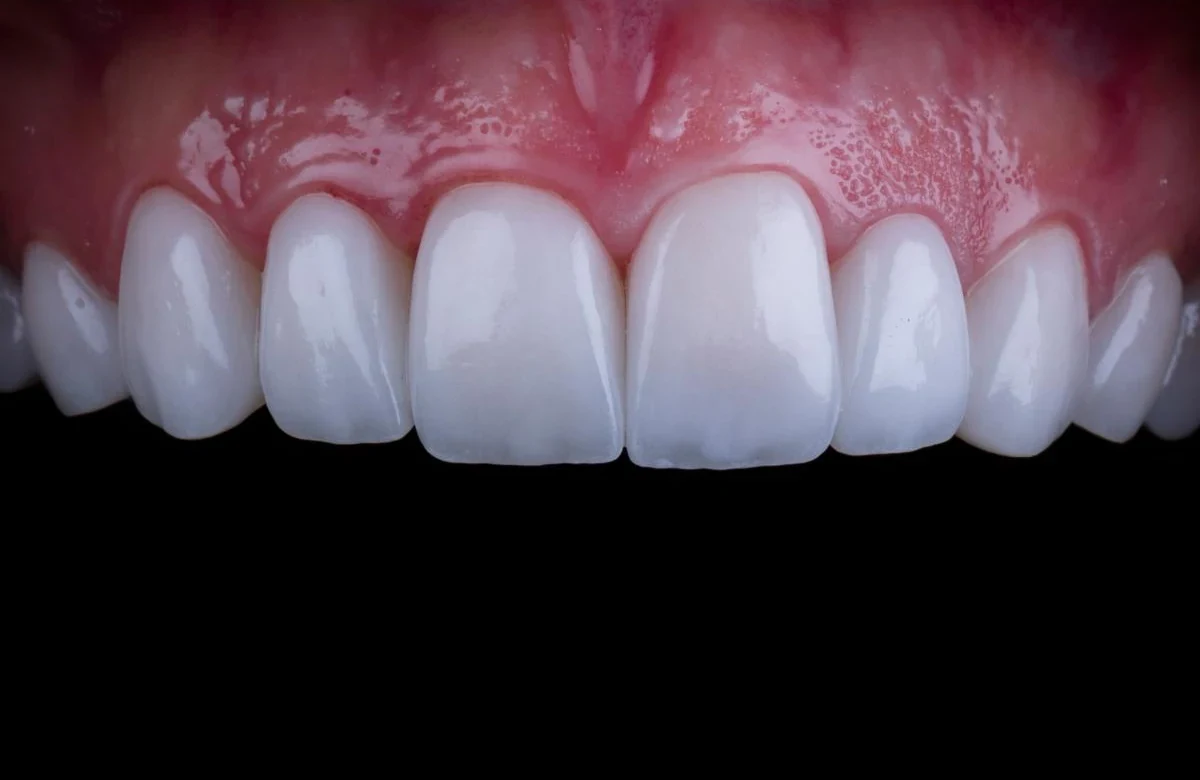
Most cosmetic dentistry photographs show a broad smile. It is an understandable starting point: patients want to see attractive front teeth, a balanced curve and a confident expression. Yet you spend much of the day doing things other than smiling for photographs. You listen, speak, laugh briefly, look thoughtful and rest your lips between conversations. If veneers are designed only around one posed expression, the teeth may look different from what you expected in ordinary life.
A sophisticated smile design considers the relationship between the teeth and the lips across several natural positions. Some upper front teeth show when the lips are relaxed; others are largely covered. Some people display lower teeth more prominently during speech, while others show a wider arc of upper teeth. These features influence how a change in tooth length or shape will look and feel. The purpose is not to make every feature symmetrical, but to create a result that belongs to your face.
Why a wide smile is only part of the picture
A still photograph captures one instant, often with the muscles of the mouth deliberately exaggerated. It may reveal the number of teeth visible at the sides and the symmetry of the smile, but it tells little about how the front edges appear during relaxed conversation. A veneer that looks proportionate in a full smile might look overly long when only the tips of the upper front teeth show beneath resting lips.
Equally, a design that looks subtle in a photograph with the mouth wide open may produce too little visible change for someone whose lips normally cover most of their upper teeth. The dentist should understand which expressions matter to you. Do you feel your smile looks aged because the upper incisors are barely visible at rest? Do your teeth look too long when you speak? Are you concerned about the corners of the mouth rather than the two central teeth?
These questions shape the desired contours. They also help avoid a result based entirely on a fashionable photograph instead of your natural facial movement.
Resting tooth display changes between people
There is no universal number of millimetres of upper incisor display that defines an attractive adult smile. Tooth wear, tooth position, lip length and individual facial movement contribute to how much tooth is visible at rest. Age-related changes can also alter the relationship between lips and teeth, but they do not affect everyone in the same way.
The dentist may assess your mouth while you speak naturally, gently separate the lips, smile casually and laugh. With your agreement, photographs or short videos may help the laboratory understand how the teeth appear during normal movement. These records should be used for diagnosis and design, with consent and appropriate privacy safeguards, not to impose a rigid numerical ideal.
Ask which features the clinician considers distinctive and worth preserving. You may have a slightly uneven smile line or a central incisor with a characteristic shape that suits your face. A premium result can retain individuality rather than erase it.
Tooth length is not an isolated cosmetic decision
Lengthening a front tooth changes the visible edge, but it can also alter how that edge contacts the lower teeth and the lower lip. Excessive length may create a tooth that looks dramatic in a photograph yet feels cumbersome in speech or biting. A subtle reduction or rounding of a sharp corner might produce a more natural appearance without a major change in overall length.
Before veneers are prepared, ask whether the shape can be tested through models or a clinically appropriate mock-up. A physical trial may give useful information about how a proposed length feels against the tongue and lips, although a mock-up is not a perfect representation of final ceramic. A digital smile preview can suggest proportions, but it cannot fully demonstrate sensation or function.
The correct design must fit the existing bite. Teeth that already meet edge-to-edge or in a deep overbite may have less freedom for adding length than teeth with generous functional space. If a patient wants a dramatic change, orthodontic assessment may sometimes be a more conservative starting point than placing thicker ceramic on healthy teeth.
Why speech can reveal design problems
The front teeth contribute to the way certain sounds are formed. The tongue, lips and incisor edges interact during normal speech, and a change in tooth length or thickness can feel unfamiliar. Some adaptation may occur, but persistent difficulty can indicate that a contour needs review. This is particularly relevant for patients who sing, teach, broadcast or speak for long periods.
During a trial, read aloud and use the sounds you find most sensitive rather than only smiling into a mirror. Tell the clinician if the upper front teeth feel too long or if the lower lip catches differently. Small adjustments may improve comfort without sacrificing the desired appearance. If the proposed design repeatedly interferes with speech, it should be reconsidered rather than dismissed as an unavoidable price of beauty.
Natural movement is often a better test than an artificially wide smile. The best design works when you are not thinking about it. This is one reason a thoughtful planning process may require more than choosing a shade and number of veneers.
How the curve of the front teeth relates to the lower lip
Cosmetic dentists may discuss the 'smile arc', describing how the edges of the upper teeth relate to the curve of the lower lip in a smile. A harmonious relationship can make teeth look integrated with the face, but it should not become a rigid template. The shape of the lips and the amount of gum displayed vary enormously between individuals.
The central incisors may be slightly longer than the lateral incisors; the canines often create a different line and contour. A perfectly flat row can sometimes make a smile look unnatural or overly uniform. Conversely, an exaggerated curve may look artificial or interfere with the bite. Your dentist should consider the proportions of your actual teeth, existing restorations and where the lips fall during genuine smiling.
Ask for examples of different tooth-edge arrangements, then describe what you prefer. Some people value a softer rounded smile; others want sharper definition. The discussion should remain compatible with enamel preservation and functional limits.
The tooth surfaces you do not see in photographs
A veneer can alter the front surface of a tooth while leaving much of its natural structure intact, depending on the design. If too much bulk is added, the lips may appear supported differently or the teeth may seem prominent when speaking. If more aggressive preparation is used to achieve a very flat appearance, additional healthy tooth may be removed. Neither outcome is automatically preferable.
The dentist should compare the planned ceramic thickness with the natural tooth position. Where a tooth is already prominent, orthodontic movement may sometimes reduce the need for preparation. Where a tooth is small or sits behind its neighbours, an additive approach may be possible. The NHS explains that veneer preparation varies and may involve removing some tooth surface [1].
This is why the best smile makeover sometimes includes fewer veneers than expected. If a single tooth changes the resting appearance significantly, treating several untouched neighbouring teeth may add little benefit. A well-planned, restrained design can feel more personal and require less lifelong maintenance.
Facial expression, ageing and natural appearance
A face changes over time: lip movement, tooth display and skin support do not remain fixed indefinitely. Veneers cannot stop that process or guarantee a permanently youthful appearance. A result that relies on excessive tooth length or an unnaturally uniform shape may become less attractive as personal preferences and facial relationships change.
The better aim is timeless proportion rather than a fleeting trend. Subtle character in the teeth, appropriate translucency and a natural transition between front teeth and canines can make the restoration feel part of the existing smile. The colour should also be chosen in relation to untreated teeth, gums and the patient's preference; brilliant white is not automatically the most flattering shade.
You might consider viewing trial designs in several lighting conditions and from conversational distances. These observations can reveal whether you are drawn to a particular shape for genuine personal reasons or mainly because it looks striking in a close-up photograph.
How does a dentist work with the dental laboratory?
The dental technician needs more than a shade code to create a veneer that harmonises with facial movement. Photographs of relaxed lips, smiles, tooth edges and neighbouring textures may be helpful. A carefully written prescription describes desired length, line angles, translucency and the relationship with untreated teeth. The specific records depend on the case and the practice's workflow.
A digital design or physical mock-up can facilitate discussion between patient, dentist and technician. Neither is a guarantee that the final appearance will be identical. Ceramic properties, tooth preparation, lighting and the clinical fit all influence the result. The dentist should explain when you will have the opportunity to comment and which adjustments remain possible.
It is worth asking who ultimately approves the tooth shape before the veneers are definitively attached. The goal is a shared understanding of 'natural' in the context of your face, not a surprise when the teeth are finished.
The bite may set limits to the aesthetic plan
Before veneers are placed, the clinician should inspect how your upper and lower teeth meet and what happens during jaw movement. A proposed longer edge may strike the opposing tooth in an unfavourable way. A patient with substantial bruxism or previously fractured bonding may need a different shape or an alternative treatment sequence. The NHS describes bruxism as a possible contributor to worn and broken teeth [2].
You should hear the functional trade-offs in plain language. If a design cannot safely achieve the tooth length you want, the clinician should explain why and discuss alternatives. Orthodontics, more limited bonding, contouring or doing nothing may be reasonable in selected cases. High-end care is not defined by saying yes to every cosmetic request.
Discuss aftercare as well. Porcelain veneers can perform well over years but remain susceptible to technical complications and require healthy gums and regular reviews. A systematic review of veneer clinical studies supports generally good survival in selected populations while recording real fractures and debonding [3].
How to make a smile trial genuinely useful
Try to assess the trial at conversational distance. Smile gently, speak, relax the lips and look from several angles. Instead of simply asking 'Do I like it?', consider whether the front edges show more naturally, whether the teeth feel too dominant and whether your expression still seems like you. The dentist can translate those observations into practical adjustments.
Avoid giving feedback only in vague terms such as 'Hollywood'. Explain what you want to be subtler or more noticeable. Perhaps the two central incisors should be a little softer at the corners, or perhaps the smile arc should look less flat. These are concrete directions that a clinician and technician can consider.
You should also be comfortable with imperfection. Teeth do not have to be identical or perfectly mirrored to look convincing. A natural-looking smile may preserve minor differences that suit the person far better than a uniform set of ceramic shapes.
Questions to ask at your consultation
Should veneers be designed around my resting lips? Resting tooth display is useful information, but it should be assessed alongside normal smiling, speech, the bite and tooth health rather than replacing those considerations.
Will longer front veneers change how I talk? They can influence tongue and lip contact, particularly when changes are substantial. A trial and appropriate adjustments may help, but responses vary.
Can digital previews show how the veneers will feel? No. They can illustrate appearance and planning intent, not physical sensation, bite comfort or guaranteed final results.
Does everyone need the same smile arc? No. Facial proportions and lip movement differ, and a natural result should respect those variations.
Can I ask to make the veneers less white or less uniform? Yes. Discuss shade, texture and individual tooth character before final manufacture. There may be limits once definitive ceramics are made.
Design for the person who lives with the smile
At an Iconic Smiles cosmetic consultation, ask to discuss how teeth look when you are speaking and resting as well as when you smile. Confirm the £30 introductory consultation and the charges for any detailed smile design or trial work before booking. The most satisfying result is likely to be one you recognise as your own in daily life—not just a carefully lit photograph of your teeth.
Clinical sources and further reading
- NHS — Dental veneers and preparation
- NHS — Teeth grinding
- Systematic review — Long-term survival and complications of porcelain laminate veneers
- Review — Enamel preservation and veneer outcomes
General information only. Aesthetic preferences, bite limitations, tooth preparation and the final design require an individual assessment.
Your next step, when you’re ready
We would be pleased to welcome you for a £30 consultation at your preferred Iconic Smiles practice. Bring your questions, and we can talk through the options that may suit you.
£30 for a planned-treatment consultation. Scans, additional investigations and emergency assessments may have separate fees; please confirm when booking.