
Bonding, veneers and whitening
Veneers on the upper teeth only: will the lower teeth still look right?
Upper-only veneers can look beautifully natural when the lower teeth and the bite are considered from the outset. The two arches do not need to be an identical shade, but the contrast needs planning
Discover what could suit your smile
Whether you are thinking about colour, shape or a subtle change, a £30 consultation is a welcoming place to share your ideas, ask questions and explore a personalised approach.
Please confirm the £30 planned-treatment consultation fee when booking. Scans, additional investigations and emergency assessments may have separate fees.
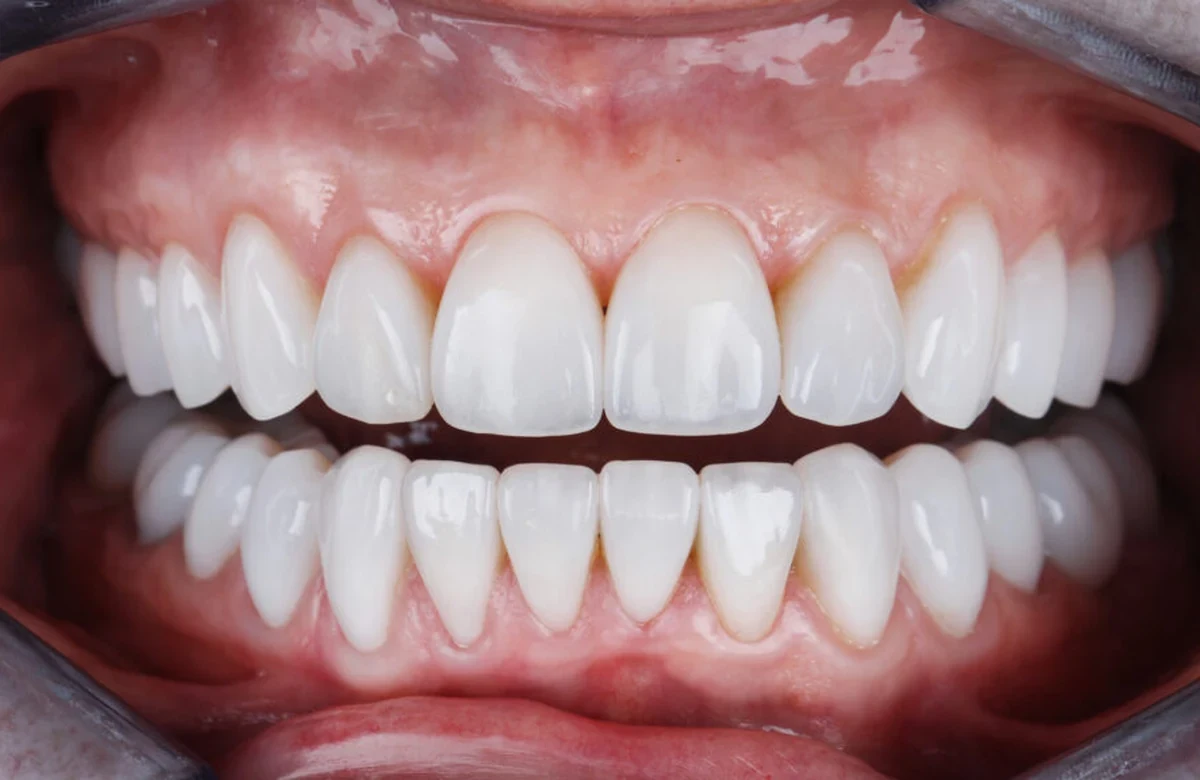
The short answer: Upper-only veneers can look beautifully natural when the lower teeth and the bite are considered from the outset. The two arches do not need to be an identical shade, but the contrast needs planning.
There is a particular worry that comes up when people think about upper veneers: 'If my top teeth look brighter and more even, will the bottom teeth suddenly look yellow or uneven?' It is a good question, and it is one that can often be answered without committing to more dentistry.
The upper teeth tend to be more prominent when many people smile. That makes upper veneers a natural focus for cosmetic planning. But your smile is not a row of teeth photographed in isolation. The lower incisors may show when you speak, laugh or look down, and their colour and position contribute to the overall impression.
Upper-only veneers can be a very good choice. A balanced result depends on examining both arches even if only one is being restored.
Do upper and lower teeth need to be exactly the same colour?
Not necessarily. Natural teeth vary in shade and light reflection. Upper and lower teeth may never look perfectly identical, and that is not a flaw that automatically needs correcting. The aim is usually an overall appearance that feels harmonious rather than a laboratory-perfect colour match.
Problems tend to arise when a very bright, opaque upper shade is chosen without considering the lower teeth that remain visible. The contrast can make natural lower teeth appear darker than they did before. A more nuanced porcelain shade, thoughtful translucency or planned whitening may avoid this.
Ask to discuss shade in ordinary lighting and in the context of your face and lips. Choosing a shade from a small sample alone may not communicate how six or eight teeth will look together.
How much of the lower arch actually shows?
That differs from person to person. Some people show very little lower tooth when smiling but more when speaking. Others show their lower teeth readily when laughing. Lip position, tooth length, age-related changes and facial movement all contribute.
A good assessment may include relaxed photographs and natural speech, not just a broad posed smile. The result may be that you hardly show the lower teeth and need no additional treatment. Or it may be that the lower front edges are prominent enough for their shape and colour to be part of the design discussion.
This is not an invitation to sell unnecessary lower-arch dentistry. It is a way of ensuring you know how the proposed upper result will look in real life.
Should you whiten both arches before choosing upper veneers?
Sometimes this is an excellent conservative approach. If your natural teeth are healthy and you would like them lighter, professional whitening can change the shade of the lower teeth and the untreated upper teeth before the veneers are made. The veneers can then be designed to blend with the settled tooth colour.
Porcelain does not whiten once fitted, so the sequence matters. If you place very bright veneers first and whiten later, the natural teeth may respond differently from what you expected. Your clinician should explain the likely effect of whitening, possible sensitivity and the time needed for the shade to settle before final matching.
Not all patients need or want whitening. A comfortable natural shade can be very attractive, particularly when the porcelain is designed with appropriate translucency rather than an artificially uniform finish.
Could the lower teeth be straightened instead of covered?
If your lower incisors are crowded or overlapping, whitening alone will not change their position. In selected cases, orthodontic treatment can improve their alignment without placing veneers on healthy lower teeth. That may also make brushing and interdental cleaning easier.
However, orthodontic movement requires an assessment of the bite and gum support. It should not be offered merely as a cosmetic add-on. If the lower teeth are already worn or meet the upper teeth heavily, changing their position may be relevant to protecting the upper veneers, and the clinician should explain that clearly.
A useful question is whether the lower arch is a visual concern, a functional concern or neither. The answer determines whether any additional treatment is justified.
How the lower teeth affect the lifespan of upper veneers
The way the teeth meet can be more important than the way their shades match. Upper porcelain restorations may be exposed to substantial forces if the lower front teeth bite strongly against them, particularly when someone has a deep bite, an edge-to-edge bite or grinding habits.
Before fitting veneers, a clinician should check where the contacts will fall on the finished restorations. A veneer that looks beautiful from the front but is struck repeatedly in an unfavourable position could be more vulnerable to damage. This does not mean porcelain veneers cannot be considered in these circumstances. It means the design and sometimes the order of treatment need careful thought.
A protective appliance may be recommended in selected cases, and some people may benefit from orthodontic alignment before cosmetic restoration. If you are quoted for veneers without anyone examining your bite, ask how that decision has been assessed.
Would lower veneers create a more consistent smile?
In some situations, lower veneers may be considered, but they should not be treated as a routine partner to upper veneers. Lower front teeth are relatively small, and their enamel thickness, contacts and bite forces can make preparation more consequential. A plan that sounds symmetrical on paper can involve unnecessary removal of healthy tooth structure.
If your lower teeth are healthy, attractive and reasonably aligned, the best plan may be to leave them alone. If there is a genuine issue with chipped lower edges or old restorations, a small repair, bonding or alignment might be more conservative than full veneer coverage.
Any recommendation for lower veneers should have its own clinical rationale, not simply 'to complete the set'.
How many upper veneers would you need?
Some people need only one or two restorations to resolve a genuine mismatch. Others may consider four, six or eight upper veneers because several visible teeth differ in shade or shape. The number should be based on what shows in your natural smile and how the porcelain can transition into untreated teeth.
At Iconic Smiles, crowns and veneers are listed from £650 per tooth. At the advertised starting rate, four veneers would start at £2,600, six at £3,900 and eight at £5,200, before considering case-specific complexity or separate care. These are illustrations, not bundled quotations.
The decision about whether to touch lower teeth is separate. Do not feel that choosing six veneers above means you need six below.
Can a single upper crown be matched with veneers?
Potentially, although an existing crown can make shade planning more involved. A natural tooth, a porcelain veneer and a full crown may transmit light differently. If an old crown is dark, opaque or the wrong shape, the clinician may discuss replacing it as part of a coordinated smile plan. But if it is healthy, well fitting and blends satisfactorily, replacing it may offer no worthwhile advantage.
Ask how the dental laboratory will receive colour and texture information. Consistency is about more than buying all restorations from the same material.
The value of seeing the smile before treatment
Photographs, scans and, where suitable, a mock-up can help show how the planned upper veneer edges will sit against the lower teeth. They may also show that the proposed bright shade feels too dramatic or that a slightly less even edge line looks more natural for your face.
These are aids to informed discussion, not guarantees of a specific finished appearance. You should have time to express your preferences and understand the limitations before irreversible preparation begins.
An appointment that settles the question
If you are considering upper-only veneers, you can arrive at the consultation with two aims: explain what you want to change above, and ask whether anything below genuinely needs attention. A thoughtful assessment will consider the bite, tooth colour, visible smile, dental health and conservative alternatives.
Iconic Smiles advertises a £30 planned-treatment consultation as an initial opportunity to explore cosmetic treatment. Any additional records, planning stages or procedures should be priced separately before you decide.
Questions patients often ask
Will my lower teeth look darker after upper veneers? They can look relatively darker if you choose a much brighter upper shade. Whitening or more natural shade selection may help, depending on suitability.
Can I whiten lower teeth after veneers? Natural lower teeth can potentially be whitened if clinically suitable, but planning whitening before final upper shade selection is often easier.
Will upper veneers change the way I bite? They can affect tooth contacts because their shape and thickness alter the tooth surface. Bite planning and checking are essential.
Do I need lower veneers to complete a smile makeover? No. Many attractive, coherent smiles involve treatment on upper teeth alone and preservation of healthy lower teeth.
Planning a natural-looking upper smile
Discuss the shade you want before choosing restorations. You can read about porcelain veneers and professional whitening to see how the sequence may affect a natural-looking result.
Independent patient information: NHS: dental veneers and preparation · NHS: why whitening will not change restorations. These explain general clinical considerations; a personal recommendation requires assessment.
Your next step, when you’re ready
We would be pleased to welcome you for a £30 consultation at your preferred Iconic Smiles practice. Bring your questions, and we can talk through the options that may suit you.
Please confirm the £30 planned-treatment consultation fee when booking. Scans, additional investigations and emergency assessments may have separate fees.