
Bonding, veneers and whitening
Matching upper and lower tooth shades in a smile makeover
Plan a smile makeover when upper and lower teeth differ in shade. Understand whitening, material choices and how to avoid an unnecessary mismatch.
Discover what could suit your smile
Whether you are thinking about colour, shape or a subtle change, a £30 consultation is a welcoming place to share your ideas, ask questions and explore a personalised approach.
£30 for a planned-treatment consultation. Scans, additional investigations and emergency assessments may have separate fees; please confirm when booking.
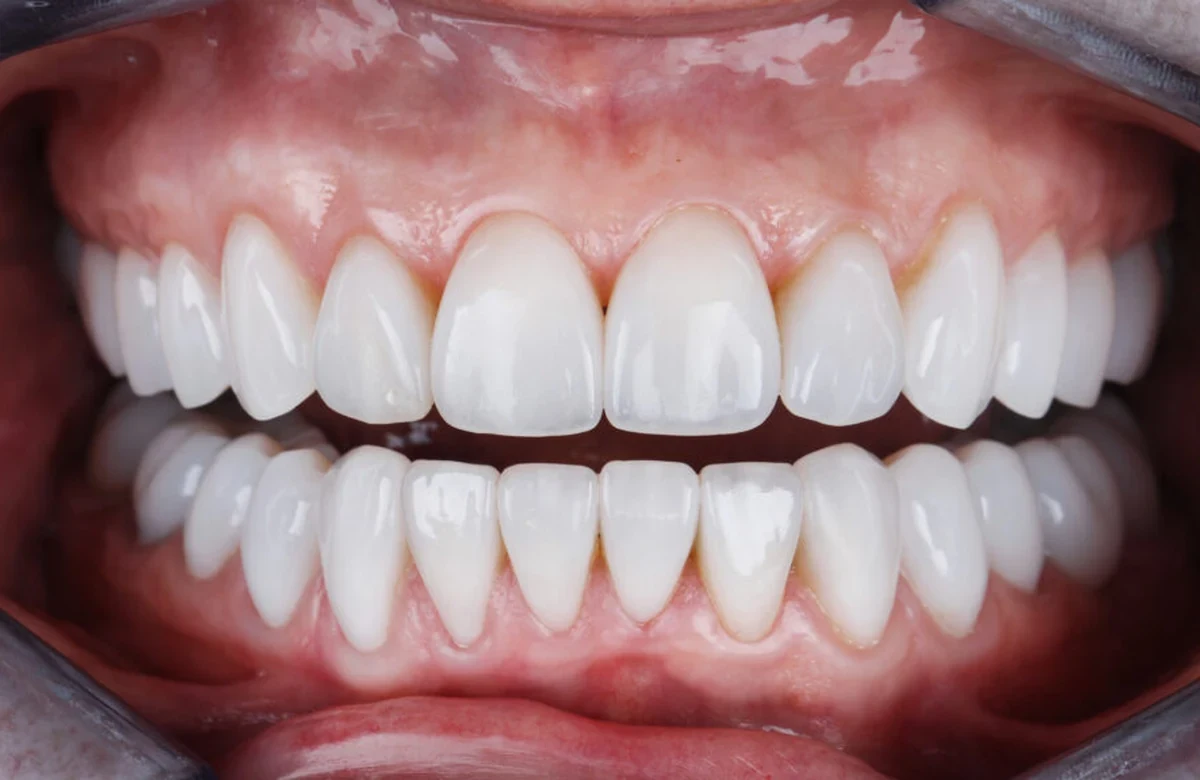
You may love how your upper teeth look after whitening, then notice your lower teeth are a slightly different colour. Or perhaps your upper front teeth have crowns that no longer match the natural lower teeth. It is tempting to assume both arches should be brought to the same shade, but that can lead to more treatment than you wanted or needed.
A smile makeover is seen through a moving frame of lips. Some people display nearly all their upper teeth and hardly any lower teeth. Others show their lower incisors while speaking, laughing or smiling. Before choosing a colour, it helps to understand which surfaces you actually see and why the difference bothers you.
Is it normal for upper and lower teeth to differ in colour?
Yes. Natural teeth are not manufactured in sets of perfectly identical shades. Upper and lower teeth can vary because of differences in enamel thickness, lighting, wear, pigmentation and age-related changes. The individual teeth within one arch also differ; canines often appear warmer than central incisors, for example.
A colour difference may be obvious in a dental photograph with the lips pulled back but virtually invisible during everyday conversation. Equally, someone who shows a lot of lower tooth when speaking may reasonably care about a mismatch that others might overlook.
This is why a tooth-by-tooth shade comparison is only one part of the assessment. Your dentist should also see you talk, smile and relax your face. Decisions made from a single retracted image can overstate the importance of making every tooth the same colour.
The goal is harmony where it matters to you, not necessarily identical upper and lower shade codes.
Find out which teeth are natural and which are restored
Whitening works on natural teeth, not on porcelain veneers, crowns, composite restorations or implants. [1] If your upper teeth have multiple restorations, a whitening course may lighten the natural lower arch while the upper work stays the same. Conversely, whitening upper natural teeth can reveal older composite edges that looked well matched before treatment.
A simple restorative map makes the planning much clearer. Which visible teeth are natural? Which have large fillings or bonding? Do any crowns sit at the front? Are there implant crowns, which cannot be bleached? What is the condition of the gum margins around these restorations?
It is important because colour matching has different costs and biological implications depending on the answer. Whitening an untreated lower arch is not the same commitment as replacing a sound upper crown. Before changing any existing restoration, ask whether its shade is genuinely a problem and whether replacement would involve unnecessary risk to the tooth.
Sometimes the sensible option is accepting a slight mismatch rather than disturbing a functioning restoration.
Why do your lower teeth look darker in photographs?
The lower incisors often sit behind the upper teeth and may be partly shaded by the lips. They are usually smaller and can reflect light differently. Tooth angle and the wetness of the surfaces also affect appearance. Camera flashes and phone processing can brighten the front surfaces of upper teeth while making the lower arch appear comparatively dark.
If you have noticed the difference only in photographs, inspect it under several types of ordinary lighting before deciding treatment is needed. A dentist can help determine whether there is a real shade discrepancy, a surface-stain issue or simply a lighting effect.
Professional cleaning may improve external staining, especially on lower front teeth where deposits can accumulate. Cleaning does not bleach internal tooth colour. The NHS distinguishes between dental hygiene and whitening; professionally supervised whitening may lighten natural teeth but should begin with a health assessment. [1]
A good consultation can identify which part of the problem can be solved without cosmetic restorations.
Should both arches be whitened together?
Sometimes whitening both arches is straightforward and appropriate, but it is not mandatory. The method, suitability, expected sensitivity and existing restorations should be considered for each arch. Your dentist may recommend treating both simultaneously, treating one and reviewing, or avoiding whitening if there is a clinical reason to do so.
Treating only one arch can be a deliberate choice if the other already looks the way you like. Yet it can also create a mismatch, especially when the baseline shades are close. A dentist should explain what is likely to change and whether you might prefer to keep the colour relationship approximately as it is.
If the teeth have patchy or intrinsic discolouration, response may vary. Sensitivity and gum irritation are recognised possible side effects. [1] Whitening should never be assumed harmless simply because it is cosmetic or because one arch is being treated rather than two.
The right question is: which teeth actually need a colour change, and how will we judge the result once the shade has settled?
What about choosing a shade for new veneers or crowns?
If upper front veneers are planned, the lower teeth can provide a useful reference — but not a compulsory colour target. Some patients prefer upper teeth that are modestly brighter because they are the most visible. Others want a closer match, particularly if the lower teeth show during speech.
A clinician should discuss the desired appearance in natural light and check how the materials interact with neighbouring natural teeth. Ceramic translucency, underlying tooth colour and restoration thickness matter as much as the shade selected. Very bright, opaque upper veneers may create a visually harsh contrast with healthy lower incisors; on another face, a similar difference may be barely noticeable.
If upper and lower restorative work is contemplated, it becomes especially important to consider the bite. Upper and lower front teeth meet during certain movements. Altering length or contour merely for shade harmony can change contacts and create problems. Colour should never drive unnecessary changes to functional tooth surfaces.
You should also know which existing restorations are being preserved. A plan that replaces several sound crowns solely to make them one shade lighter deserves particularly careful scrutiny.
Is it better to make the lower teeth very white as well?
Not automatically. A very pale shade can look attractive to some people, while others prefer a warmer, subtler result. What matters is how the arches look together and the maintenance the chosen shade implies.
The lower teeth may also show more surface staining over time because of their position, saliva contacts and individual habits. That does not mean they are intrinsically inferior teeth; it means cleaning and colour maintenance may differ. If restorations are added, they may have their own staining and polishing needs.
Try thinking in terms of acceptable contrast rather than exact identity. Would you notice the difference when speaking to somebody across a table? Is it mainly visible when you lift your lips and inspect a mirror closely? Could a small adjustment to one or two visible teeth achieve the desired balance?
This way of deciding can avoid an extensive lower smile makeover when the patient is already satisfied with their lower teeth in ordinary life.
The order of treatment can prevent expensive mistakes
If you want whitening and new tooth-coloured restorations, sequence matters. Natural teeth may be whitened first, their final shade allowed to settle, then restorations matched to that chosen foundation where clinically appropriate. Placing a new crown or composite restoration before deciding whether to whiten can result in a colour difference later.
But there are exceptions. A tooth that needs treatment for decay, fracture or another health reason should not be left untreated purely to follow a cosmetic schedule. Gum health and the stability of existing dental work also take priority. A dentist may recommend managing those matters first and postponing elective shade decisions.
Write down the proposed order before starting. Which appointments involve health treatment? Which are optional whitening or aesthetics? What can be assessed only once an earlier stage is complete? A staged plan is not indecisive; it allows the next choice to use information from the previous one.
The government recommends obtaining clear written treatment details and costs and being informed if a private plan changes. [2] That becomes especially useful when work involves two arches and several materials.
A practical example: upper veneers and natural lower teeth
Consider someone who has four upper front veneers and healthy but slightly darker lower incisors. The upper veneers cannot be whitened. One option may be to leave the lower teeth alone because the difference is hardly visible. Another may be supervised whitening of the natural lower teeth after an assessment. Replacing the upper veneers to achieve a new shade is a much bigger intervention and may not be justified.
Now reverse the situation: the upper natural teeth are darker than a set of older lower composite restorations. Whitening might improve the balance, but the response needs assessing and there could still be a mismatch. The clinician should explain whether polishing or selectively replacing composite is reasonable.
These are hypothetical examples, not prescriptions. They show why a plan based on the actual tooth materials is more accurate than automatically recommending whitening or veneers for both arches.
What to ask at the shade-planning appointment
Ask which parts of the upper and lower arches will be visible during your usual expressions. Request a list of any existing restorations that will not change colour. Clarify whether the dentist recommends whitening one arch, both arches or neither, and why.
If new restorations are proposed, ask what shade would be selected and whether a restrained alternative could be trialled. Enquire about how the appearance may change in different lighting, what maintenance might be needed and whether polishing, cleaning or whitening touch-ups are expected.
Most importantly, say clearly whether you want an even, bright smile or a more natural difference between the arches. Neither preference should be assumed. The patient experience is better when the dentist helps you articulate the result before the shade is chosen.
Frequently asked questions
Should my upper and lower teeth match perfectly? No. Minor natural differences are common. Whether a mismatch matters depends on how much tooth you show and your personal preference.
Can whitening one arch leave it too bright? It can change the colour relationship with the untreated arch. Your dentist should discuss the likely effect before treatment.
Will whitening change porcelain crowns on the opposite arch? No. Existing crowns and veneers keep their shade, which may influence the treatment order. [1]
Could professional cleaning be enough? If surface deposits contribute to the mismatch, cleaning may help. It will not change the intrinsic shade of natural teeth.
Is treating lower front teeth more complicated? Their size, bite contacts and available space can make restorative treatment different from upper front work. It requires specific planning.
Match the smile you actually show
At Iconic Smiles, a £30 consultation is a reasonable place to discuss your colour goals and see whether the upper and lower arches need the same attention. Please confirm the fee and treatment availability when making an appointment.
A coordinated smile need not be monochrome. With good planning, you can aim for a pleasing relationship between natural teeth and restorations while avoiding the unnecessary replacement of healthy, functional dental work.
Clinical sources and further reading
Your next step, when you’re ready
We would be pleased to welcome you for a £30 consultation at your preferred Iconic Smiles practice. Bring your questions, and we can talk through the options that may suit you.
£30 for a planned-treatment consultation. Scans, additional investigations and emergency assessments may have separate fees; please confirm when booking.