
Bonding, veneers and whitening
Smile symmetry: when natural asymmetry looks right
Explore balanced smile design without demanding identical sides. Understand facial context, natural asymmetry and how to discuss the result you want.
Discover what could suit your smile
Whether you are thinking about colour, shape or a subtle change, a £30 consultation is a welcoming place to share your ideas, ask questions and explore a personalised approach.
£30 for a planned-treatment consultation. Scans, additional investigations and emergency assessments may have separate fees; please confirm when booking.
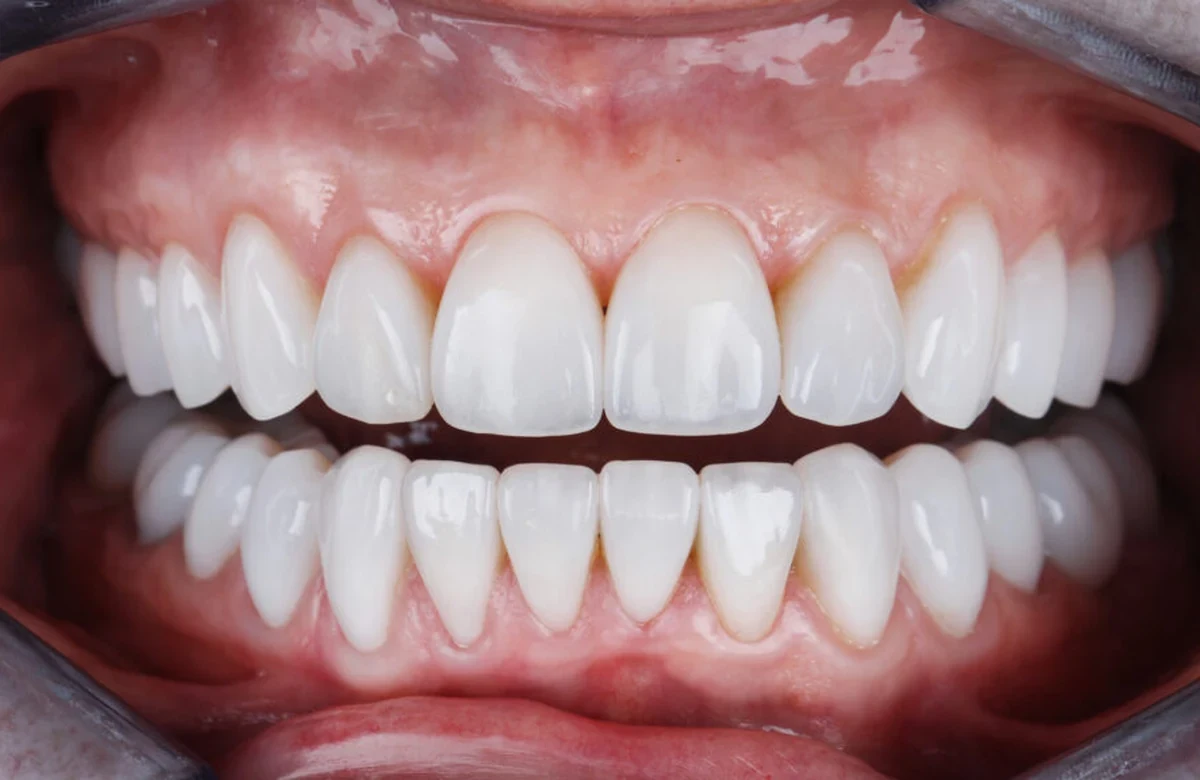
Look closely at a photograph of almost any smiling face and you will find differences between the right and left sides. The lips do not always rise evenly. One eye may narrow more than the other. The dental midline may not sit exactly beneath the centre of the nose. None of these details necessarily makes the smile less attractive.
The difficult part of cosmetic dentistry is deciding which differences are worth changing and which ones belong to the natural character of a face. Perfect symmetry can sound like an objective standard. In reality, the degree, location and visibility of a difference all matter, as do your personal priorities.
If you are considering bonding, veneers or tooth straightening to create a more balanced smile, this guide explains how to move beyond simply demanding that every measurement match.
What does dental symmetry actually mean?
Dentists may assess the relationship between the upper front teeth, the apparent midline, gum heights, tooth lengths, contact points and the inclination of the teeth. They can also compare the dental midline with facial reference points. These are useful ways to describe what you are seeing, but the measurements do not automatically identify a defect that requires treatment.
There is a difference between dental symmetry, where the teeth resemble one another, and facial symmetry, which involves the lips, jaws and other structures. Someone may have beautifully aligned teeth but show more gum on one side because of how their lip moves. Another person may have a relatively even lip frame but one central incisor that appears shorter because of a chipped edge.
A dentist can change certain tooth shapes and positions. Cosmetic restorations cannot reliably correct every difference in facial muscles or jaw structure. The treatment should target the source of the concern, not just its appearance in a photograph.
Why a tiny difference can feel enormous in a selfie
Close-up images change how you judge your face. The lens angle, head rotation, distance and direction of light can exaggerate differences. If you study the picture repeatedly, a subtle irregularity may begin to feel like the only thing you can see.
Before making a treatment decision, ask whether the difference is noticeable at normal conversation distance and when you are moving. A front-facing photograph taken from a fixed position is useful for measurements, but it is not the whole experience of a smile.
A short recording of natural conversation can reveal whether an apparent slant follows tooth position or lip movement. Try looking at photographs taken on different days as well. The objective is not to dismiss your preference; it is to make sure the proposed treatment addresses a genuine, consistently visible feature rather than an artefact of a single image.
No one should pressure you to treat a variation that you have never noticed outside a heavily zoomed-in picture.
Your two central incisors deserve particular attention
The upper central incisors are often the visual centre of a smile. A noticeable difference in their edge heights, widths or shapes may draw attention more than a comparable difference further back. That does not mean the central teeth must be mathematically identical; it means small changes here can carry more visual weight.
If one incisor has a chipped corner and the other is intact, a localised composite repair may restore balance without touching the healthy neighbour. If one tooth is rotated, aligner or brace treatment may offer an alternative to adding a thick restoration on its visible face. If the gum edges differ because of periodontal or eruption-related factors, tooth reshaping alone may not address the issue.
Ask the dentist to explain why the teeth appear different. Is it actual length, position, gum exposure, surface shape or lighting? Once that is clear, the least invasive worthwhile correction becomes easier to identify.
Midlines: does the centre line have to match your nose?
The dental midline is the line between the two front central incisors. Some people worry when it does not line up perfectly with the centre of their face. Yet faces are naturally asymmetric, and the ideal reference is not always self-evident. The dental midline may also be visually less noticeable than an obvious tilt in the line between the front teeth.
If the deviation is slight, the dentist may advise leaving it alone, especially if correcting it would involve extensive tooth movement or preparation. A more prominent midline difference may form part of an orthodontic assessment. The reasons for choosing one approach over another should be explained clearly.
Be wary of any promise to correct a dental midline by making one tooth wider and the other narrower without discussing how that would affect overall proportions. Such camouflage may sometimes be appropriate, but it can also produce odd shapes if used beyond its limits.
The question is how the centre of the smile relates to your face in motion, not merely whether two software lines overlap.
Gum symmetry matters, but not every gumline must match
A gumline that is high on one tooth and lower on another can change the apparent tooth lengths even when the biting edges are level. Healthy gum anatomy varies, and many differences are harmless. Before considering reshaping, the clinician should assess whether the gums are healthy, whether the tooth position is responsible and whether a procedure would provide a meaningful benefit.
A dynamic smile study involving dental professionals and lay participants found that the amount of visible gum can affect aesthetic ratings, but it does not establish one ideal amount for every face. [1] More importantly, gingival differences may appear much smaller when someone smiles naturally than they do in a fully retracted dental photograph.
Gum surgery or other interventions should not be proposed casually to satisfy a graphic overlay. The biological tissues must be evaluated, including periodontal support and tooth proportions. If no clinically sound improvement is likely, leaving the gumline as it is may be the wisest decision.
Can bonding or veneers create symmetry without over-treating?
Sometimes, yes. Composite bonding can adjust a small corner, alter the visible width of a tooth or soften a shape discrepancy. A veneer may be relevant where a more substantial change is justified and a sound long-term restorative plan has been agreed.
The important limit is that restorations add or alter structure. Making one tooth longer or wider can create a new bite contact, a cleaning difficulty or an unnatural appearance. If tooth position is the underlying problem, orthodontics may be the more appropriate discussion. If the difference is largely created by lip movement, tooth treatment may offer little change.
A careful plan might involve one small adjustment and no treatment at all for several neighbouring teeth. That may require more judgement than simply applying matching veneers to six teeth. But it can preserve enamel and maintain the individual features that make your smile recognisable.
Ceramic veneers have documented longevity in selected circumstances, yet they can experience complications and may require replacement. [2] They should be used when the expected benefit justifies that commitment.
Why ‘perfect’ measurements can be misleading
A proposed makeover might aim to make all visible tooth edges follow a single straight line. But the natural incisal curve, the movement of the lower lip and the proportions of different tooth types contribute to the appearance. A completely flat edge may look less attractive on some faces.
Likewise, matching tooth widths is not necessarily the same as matching their visible proportions. A slightly rotated tooth appears narrower from the front than an equally sized tooth facing forward. Adjusting its width with restorative material may be less sensible than correcting its orientation.
Aesthetic rules and digital guides can help clinicians communicate, but they should not override clinical feasibility or individual preference. Ask to see the proposed changes described in real anatomical terms. What surface will be altered? How much? Does the change affect the bite? Is there a less invasive option?
The strongest treatment plans use symmetry as one design consideration, not as a demand that the human face behave like mirrored artwork.
Deciding whether the difference bothers you enough
A useful exercise is to identify the one feature you would change if you could change only one. Perhaps it is the tilt of the two front edges, not the gumline. Perhaps it is the visible rotation of a lateral incisor, not the dental midline. This forces the conversation towards a concrete goal.
Next ask what the smallest feasible intervention would be. Would polishing an uneven composite margin help? Could one edge be repaired? Is a period of tooth straightening justified? Or do the risks of intervention outweigh the possible improvement?
You do not have to be indifferent to appearance to prefer a conservative result. Nor must you accept an imperfection that genuinely affects your confidence. The choice belongs to you, supported by an examination and an honest description of what is possible.
The Care Quality Commission emphasises that valid dental consent requires enough information on risks, benefits, alternatives and costs, without pressure. [3] That principle is especially important where treatment is purely aesthetic.
A practical way to talk through photographs
Bring a photograph where you like your smile and another where the difference troubles you. Ask the dentist to assess them alongside your teeth in person. A still image may highlight a genuine dental issue, but the clinician should also check whether the change is consistent across views and expressions.
If a preview is offered, ask to see a restrained adjustment as well as a fully symmetrical design. Small changes can sometimes produce a large improvement in perceived balance. You may discover that you prefer a result that preserves a little natural variation.
Finally, ask for the clinician's view on which imperfections should remain untouched. A practitioner who can explain why a particular correction is unnecessary is often helping you protect options for the future.
Frequently asked questions
Does my dental midline have to be perfectly centred? No. Slight differences may be ordinary and not noticeable. The significance depends on the whole face and any associated bite issue.
Could one longer front tooth be corrected with bonding? Depending on the reason for the difference, a small repair, reshaping or orthodontics may be more appropriate. An examination is needed.
Can veneers correct an uneven gumline? Veneers change the visible tooth surface, not the position of the gums. Gum anatomy and health need separate assessment.
Will symmetrical veneers look more natural? Not automatically. Uniform shapes can look artificial if they ignore natural variation and the way your lips frame the teeth.
What if I want a subtle result rather than absolute symmetry? Say so explicitly. The plan can be designed around visual balance rather than perfect numerical matching.
Balance without erasing character
At Iconic Smiles, a £30 consultation can help you identify which details actually bother you and whether there is a conservative way to improve them. Check the current fee and treatment availability when booking.
A beautiful smile can be balanced without being mirrored. The aim should be to make a difference you genuinely value, while respecting the teeth and features that already work well.
Clinical sources and further reading
- Dynamic smile appearance and gingival display research.
- Ceramic laminate veneer survival and complications: systematic review.
- Care Quality Commission. Consent to dental treatment.
- FDI World Dental Federation. Tooth wear and preserving sound tooth structure.
Your next step, when you’re ready
We would be pleased to welcome you for a £30 consultation at your preferred Iconic Smiles practice. Bring your questions, and we can talk through the options that may suit you.
£30 for a planned-treatment consultation. Scans, additional investigations and emergency assessments may have separate fees; please confirm when booking.