
Bonding, veneers and whitening
Why Do My Teeth Look Too Short? Wear, Gumline and Lip Position
Patients often describe their teeth as 'too short' without knowing whether tooth tissue has been lost.
Discover what could suit your smile
Whether you are thinking about colour, shape or a subtle change, a £30 consultation is a welcoming place to share your ideas, ask questions and explore a personalised approach.
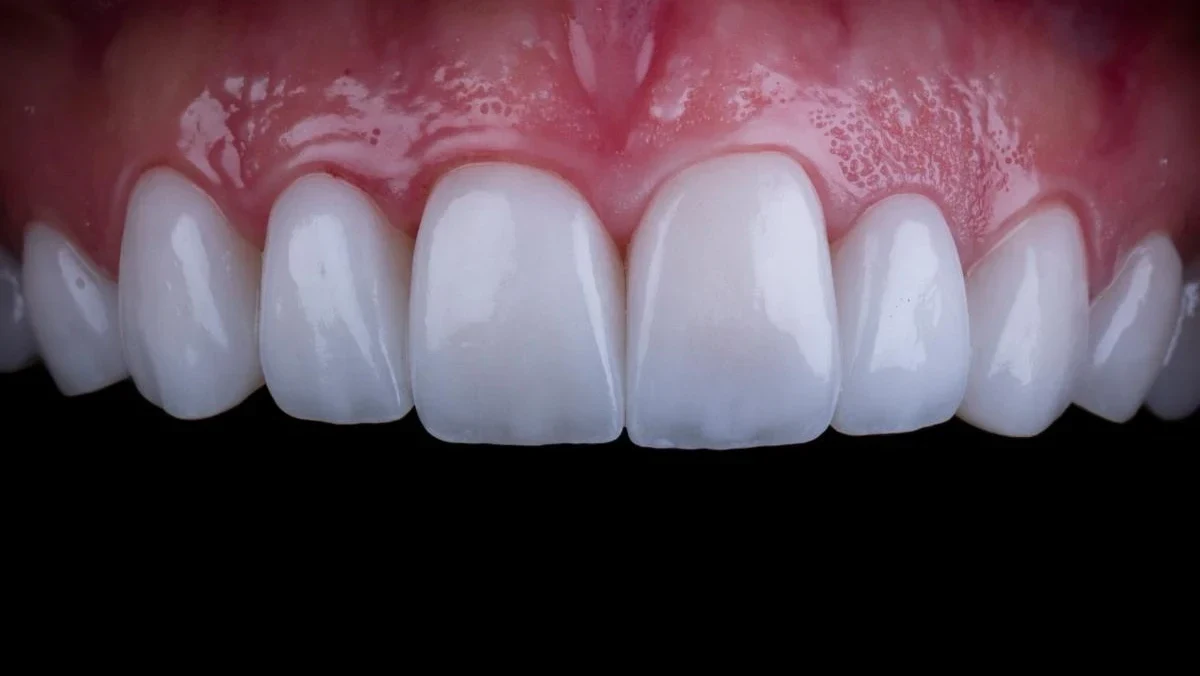
Teeth can look short because the edges have worn, the gums cover more of the crown or the lips reveal less of it. Each calls for a different assessment. Before considering bonding or veneers, the dentist checks the actual tooth dimensions, gumline and what shows during speech and smiling. Adding length without identifying the cause can alter healthy teeth with little benefit.
True tooth wear
Grinding, erosion and previous restorations can reduce incisal edge length. The dentist looks for flattened edges, thin enamel, exposed dentine and matching wear facets on opposing teeth. If wear is active, the bite may need assessment before material is added. In selected cases additive composite can restore part of the lost edge, but larger changes may require careful planning of available space and how the new contours contact lower teeth.
When the gums cover too much crown
Sometimes the gums have not moved to reveal the expected crown as the tooth erupted; inflammation or individual gum shape can also make a normal-length tooth look short. The dentist measures the visible crown and, where appropriate, assesses where enamel meets the root surface. Gum contouring needs suitable underlying bone and enough firmly attached gum tissue. Removing tissue simply to expose more tooth could harm support or leave an unnatural margin.
The lip's contribution
The upper lip frames how much of the upper incisors shows at rest and in a full smile. Two patients with the same crown length can have very different tooth display because of lip mobility and facial proportions. The team should assess relaxed speech and smiling, not only a retracted clinical photograph. Increasing tooth length without considering the lip may have little visible benefit—or could create an overly long appearance during conversation.
Why alignment can change apparent length
Rotated, tipped or vertically displaced incisors can look shorter than their neighbours even when their true measurements are similar. Orthodontic movement may improve symmetry without adding restoration to every tooth. If the teeth are healthy, this option deserves discussion before any plan involving substantial preparation. Limited bonding can sometimes complement alignment once the bite has settled and the final proportions are clear.
Designing a trial smile
A mock-up or diagnostic wax-up helps test whether the proposed changes improve proportions, speech and bite comfort. Photographs can compare the incisal edges with the lower lip during smiling. The dentist should also check how the new edges contact opposing teeth. A longer tooth that is repeatedly struck by the lower incisors may not be a durable design, however pleasing it appears in a still image.
Choosing the least invasive route
The assessment should separate lost tooth tissue, gum coverage, tooth position and lip display. Depending on the cause, observation, alignment, limited bonding, gum treatment or a combination may be suitable. Establishing that first makes it possible to judge whether ceramic restorations offer a further benefit and how much healthy tooth they would alter.
Separate crown length from what the lip reveals
For example, someone may show very little upper front tooth during speech despite having normally proportioned crowns. Adding 2 mm to every tooth could create troublesome lower-tooth contacts while barely changing the visible smile. Someone else may have a similar appearance because the gum extends unusually far towards the front edges. Photographs at rest, during speech and in a natural smile help distinguish these situations. A mock-up can then test the proposed change and its effect on the bite. The aim of showing more tooth does not always require making the teeth longer.
Your next step, when you’re ready
We would be pleased to welcome you for a £30 consultation at your preferred Iconic Smiles practice. Bring your questions, and we can talk through the options that may suit you.
Any additional investigations and their fees will be explained before you decide.