
Dental implants — replacing missing teeth
Bone Loss After Losing a Tooth: Why Timing Matters for Implant Planning
A tooth does more than fill a space in a smile. Its root transmits chewing forces through the periodontal ligament into the surrounding alveolar bone.
Explore your tooth replacement options
If you are considering replacing a tooth or several teeth, a £30 consultation gives you a chance to explain what matters most, ask questions and explore the options with our team.
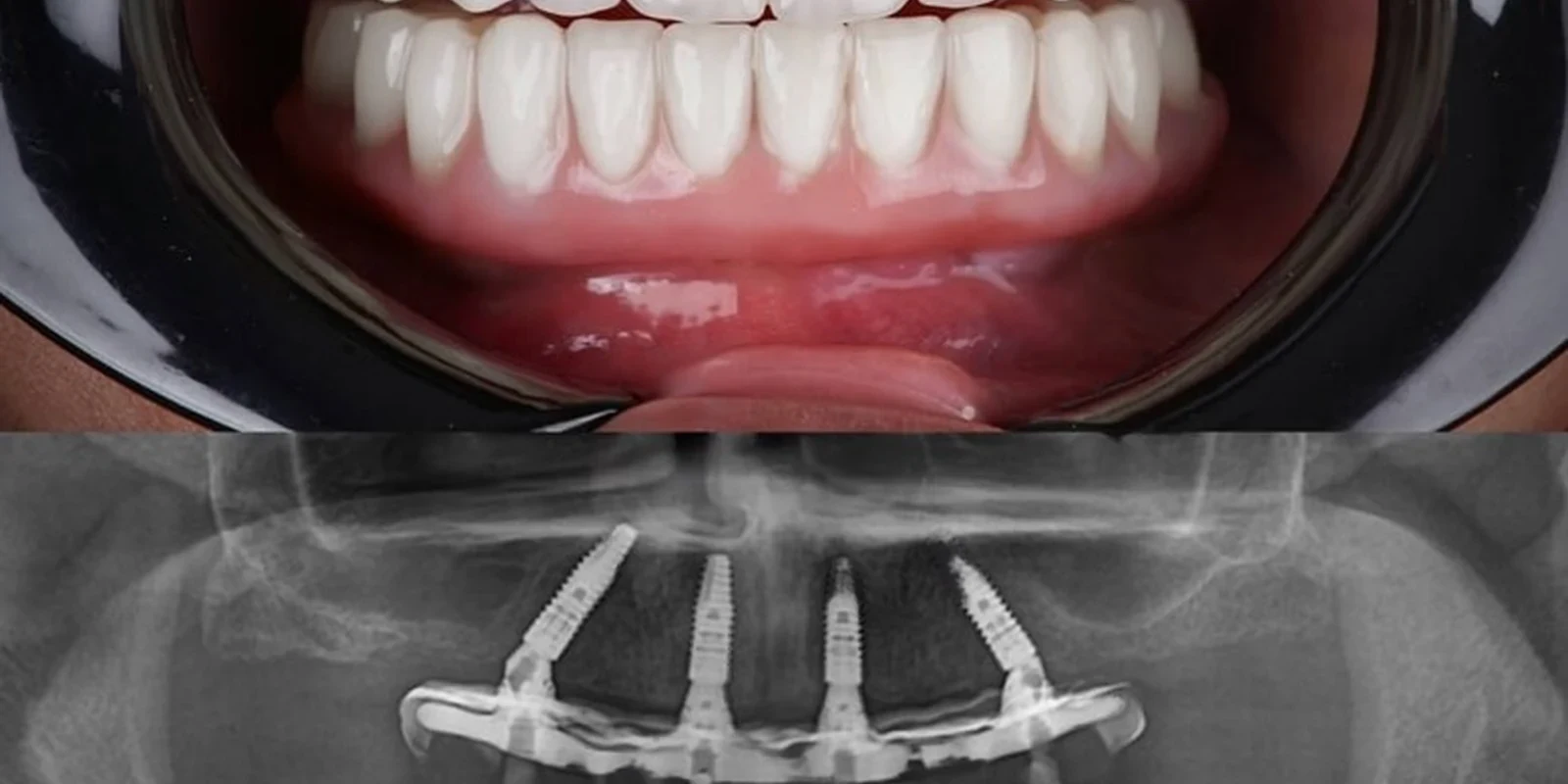
Bone and gum contours change after a tooth is lost, so replacement planning can usefully begin before extraction. The root normally transmits force through its supporting ligament and bone; that site remodels after removal. Timing matters because those changes affect the space for a comfortable, cleanable implant crown. Waiting does not automatically rule out an implant, but may alter the route needed.
What changes in the socket after extraction
The socket initially contains a blood clot, then healing tissue and eventually newly formed bone. At the same time, the facial bone wall, often especially thin around front teeth, can resorb. Width may change more noticeably than vertical height, and the eventual pattern differs between patients and sites. The visible gum can shrink or change contour as its bony support alters. A healed-looking gum surface therefore cannot confirm sufficient underlying bone. The dentist must relate the ridge profile to the position of the proposed crown and neighbouring roots. This matters particularly when a missing upper front tooth creates a visible indentation above the smile line.
Does waiting rule out an implant?
No. Many patients successfully replace teeth that have been missing for years. Delay may make planning more involved, not automatically impossible. A narrow ridge may require a modified implant size, a staged graft, or another restorative plan. For a back tooth, limited vertical bone beneath the sinus or above the lower-jaw nerve can change the surgical approach. A clinical examination is combined with appropriate imaging, sometimes CBCT where the added three-dimensional information is justified. The scan is not merely a marketing feature: it may show ridge width, angulation and relevant anatomical boundaries that affect the planned implant trajectory.
Immediate treatment versus preserving future choices
If a tooth is still present but cannot be retained, ask whether an implant can be placed at extraction, whether the socket should be preserved with grafting, or whether planned healing is preferable. Immediate placement does not prevent normal post-extraction remodelling, and it cannot compensate for every deficient socket wall. Socket preservation may help retain dimensions for a future implant but does not guarantee that no graft will be required later. The right decision depends on infection, remaining bone, gum architecture and whether initial stability can be achieved. Patients should not confuse immediate implant placement with having a definitive tooth loaded for normal chewing that same day.
Why the final tooth shape should lead the plan
An implant supports a crown, bridge or overdenture. Its optimal position is determined partly by the restoration needed above it. If the implant is placed too far towards the lip or tongue, the resulting crown may require unnatural contours or become difficult to clean. Digital planning can start with the proposed replacement tooth and work backwards to determine feasible implant dimensions and placement. The clinician must also consider the emergence profile where the crown leaves the gum and whether sufficient space exists between adjacent teeth and roots. In visible areas, bone and soft-tissue volume both influence the final appearance.
Three questions worth asking at consultation
The plan should show where the replacement tooth would emerge, the available bone and the options if the ridge is narrow. Distinguish straightforward placement from preservation, grafting or temporary stages. A bridge or removable temporary may be appropriate alternatives during healing. Compare full estimates for imaging, surgery, any graft, the crown and maintenance, rather than the fixture price alone.
What the evidence does and does not promise
Consensus guidance on implant placement and loading emphasises selecting protocols for the individual site rather than applying the fastest approach universally. It is possible to build an attractive, functional result after prolonged tooth loss, but the extent of ridge change is highly individual. The clinical goal is not to eliminate every delay; it is to position a maintainable restoration while respecting anatomy and remaining tissue. A considered assessment can establish whether straightforward placement is suitable or whether another sequence offers a more conservative route.
Evidence and further reading
- ITI 2023 implant placement/loading consensus — PMID 37750529
- NHS: dental treatment choices
- HPA: dental CBCT justification guidance
The practices are in Hatfield and Cheshunt in Hertfordshire, and Friern Barnet in North London. If travelling from Bedfordshire, Buckinghamshire or Essex, use the actual clinic address on your confirmation.
Your next step, when you’re ready
We would be pleased to welcome you for a £30 consultation at your preferred Iconic Smiles practice. Bring your questions, and we can talk through the options that may suit you.
Any additional investigations and their fees will be explained before you decide.