
Dental implants — replacing missing teeth
Implant-Retained vs Normal Dentures: A Complete Guide
If you are choosing between implant-retained and traditional dentures, day-to-day comfort, security and cleaning matter as much as the initial fee.
Explore your tooth replacement options
If you are considering replacing a tooth or several teeth, a £30 consultation gives you a chance to explain what matters most, ask questions and explore the options with our team.
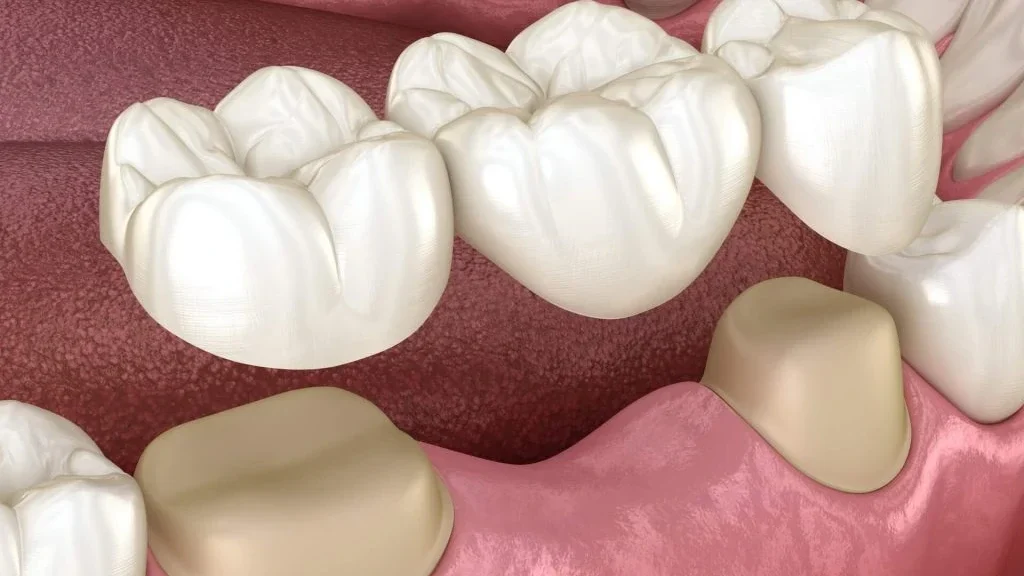
A conventional complete denture rests on the gum and ridge. An implant-retained overdenture also comes out for cleaning but connects to implant attachments for added retention. A fixed implant bridge is a separate option. The choice depends on each jaw's anatomy, cleaning ability, how you want the teeth to feel and the treatment and maintenance you are prepared to undertake.
Why upper and lower dentures behave differently
An upper complete denture may achieve retention from broad tissue coverage and a peripheral seal, while a lower denture often has less supporting area because the tongue and floor of the mouth limit its extension. As the ridges change after tooth loss, a lower denture may feel increasingly mobile despite accurate construction. Two appropriately selected implants in the lower jaw can provide anchor points for an overdenture, but the precise number and positioning depend on bone, prosthesis design and individual clinical circumstances. Upper-jaw solutions may require different planning due to bone quality and the larger load distribution.
What changes with implant attachments
The familiar removable denture body remains, but a bar, stud or low-profile attachment can help control movement. That often makes conversation and meals feel more predictable. It does not mean the denture becomes impossible to move or that every food can be chewed without adaptation. Attachments wear and require replacement of components over time. The denture base may still need relining as tissue changes. When planning the design, the clinician should assess the space available for attachments and acrylic, because squeezing everything into an inadequate vertical dimension can weaken the prosthesis.
What research says about patient experience
Systematic reviews of lower implant-retained overdentures report improvements in satisfaction and several aspects of daily life compared with conventional dentures. One found better overall comfort and stability, with no uniform advantage in every outcome. This supports considering implants for suitable people who struggle with dentures, rather than assuming all wearers need them or guaranteeing an experience. Fit, bite, tissue health and hand control still need assessment.
Your ability to remove and clean the teeth matters
Some people specifically like being able to take out the denture to clean it thoroughly. Others dislike the removable feel and prefer to explore fixed teeth. Both preferences are legitimate, but attachments and implants need regular hygiene. Patients with reduced hand strength, tremor or difficulty reaching the back of the mouth should test whether they can insert, remove and clean the proposed prosthesis. A very retentive attachment that the patient cannot manage independently may be a poor real-world design despite appearing effective in a laboratory.
How the cost comparison should be built
A meaningful estimate separates any extractions, implant placement, healing components, attachment system and the denture itself. It should also describe expected replacement of attachment inserts, professional monitoring and possible relines. Compare that with a well-made conventional denture, where costs and maintenance are different but not necessarily zero. If the main concern is an unstable existing denture, the clinician should first determine whether the denture can be adjusted, relined or remade before presenting surgery as the only option.
Choosing between removable and fixed solutions
A fixed bridge involves a different construction, cleaning routine and set of surgical and restorative requirements from an overdenture. Discuss how the teeth would appear with or without a gum-coloured base, possible speech adaptation and daily cleaning. For patients from Hertfordshire or nearby counties, an assessment of the dentures and bone helps compare designs before choosing an implant number.
Evidence and further reading
Matching support to daily use
The proposed denture should have a clear support and cleaning plan. Consider how easily you could remove it, care for the attachments and manage future adjustments alongside the expected improvement in retention.
Iconic Smiles practices are in Hatfield and Cheshunt in Hertfordshire, and Friern Barnet in North London. If travelling from Bedfordshire, Buckinghamshire or Essex, confirm the actual practice for each appointment.
How denture shape affects everyday comfort
- New denture design considers tooth positions alongside the movements of your tongue and cheeks.
Further clinical details: Loose Dentures: Could Dental Implants Help?
Implants may improve denture retention in suitable cases, but a loose denture first needs assessment of its fit and the supporting tissues. Changes in the ridge, wear, uneven contacts or inadequate extension can make it rock. Dry mouth, fragile tissue and muscle control also affect comfort. Adjustment, treatment of sore or inflamed tissues, relining or a new impression may be a more appropriate first step than surgery.
What implants can and cannot change
Implant attachments may improve the retention of some removable dentures, particularly the lower denture, but the denture still needs appropriate design and maintenance. An implant-supported fixed bridge is a different reconstruction, with different cleaning access and cost. The choice depends on bone, oral hygiene, hand dexterity, medical factors and whether the patient wants something removable.
Compare the whole cost of each route
A reline or replacement denture may be lower in upfront cost, although repeated maintenance can be needed. An implant-retained denture involves surgery, attachments, the denture itself and periodic component replacement. Ask for separate estimates covering scans, implants, attachments, any new denture and continuing maintenance. A tempting price for the implant fixtures alone is not a comparable total.
Bring your current denture to the appointment
Do not discard an existing denture: it reveals your current bite, lip support, cleaning habits and areas of discomfort. Explain whether it loosens when eating, speaking or smiling, and whether adhesive is being used. A Friern Barnet assessment can clarify whether a conventional prosthetic adjustment is sufficient or whether implant treatment warrants further investigation.
A loose denture is not automatically an implant problem
The examination checks the fitting surface, borders, tooth positions and bite, alongside sores, inflammation, ulcers and any remaining teeth. It should consider how you eat, speak and clean the denture. Relining or replacing it may help some people. If saliva or muscle control is the main difficulty, implant attachments will not necessarily resolve every aspect of it.
Removable implant dentures and fixed bridges are different experiences
An implant-retained overdenture clips to attachments and remains removable for daily cleaning. It can make a particular difference to some lower dentures, where retention is often difficult. A fixed implant-supported bridge stays in place for routine use but still demands access for cleaning around the underlying structure. More implants are not necessarily a better choice if maintenance becomes awkward or bone support is limited. The position of the implants and prosthesis design should follow what the patient needs from comfort, speech and lip support.
Consider space, bone and the existing bite
A person who has worn dentures for years may have less bone and a different jaw relationship from when teeth were first lost. Imaging may be needed to examine relevant anatomical limits, but the external shape of the face and current denture also guide design. In some cases, attachment components need vertical room within a denture; an excessively thin base can fracture around them. Where bone volume is restricted, grafting or an alternative implant arrangement may be discussed. The decision has to account for hygiene access and the patient’s ability to handle and clean small connectors.
Judge value by daily function and future repairs
Compare the likely improvement in retention with changes in chewing, comfort and appearance, as they are different outcomes. Attachments wear, dentures can need rebasing and fixed bridges may require repairs, all with ongoing costs. Your current denture helps show tooth display, bite height and the concerns you want addressed. A Friern Barnet assessment can explore a reline, a new denture or implant treatment before you decide about surgery.
Why upper and lower dentures need different discussions
The upper denture often gains some retention from broad contact with the palate, while the lower denture has less supporting surface and must accommodate movement from the tongue and cheeks. That difference is one reason implants may make a particularly noticeable retention difference for selected lower-denture wearers. However, a patient's anatomy, denture design and preferences may change the balance. An upper fixed bridge or a palate-free prosthesis can be appealing, but needs careful examination of available bone and the way speech and lip support would be maintained. The comparison should include how easy each option is to remove, clean and repair.
Compare cleaning and maintenance before deciding
- Compare removable dentures and implant retention together with their daily cleaning and future maintenance needs.
Your next step, when you’re ready
We would be pleased to welcome you for a £30 consultation at your preferred Iconic Smiles practice. Bring your questions, and we can talk through the options that may suit you.
Any additional investigations and their fees will be explained before you decide.