
Dental implants — replacing missing teeth
Can Dental Implants Work with an Existing Partial Denture?
Someone who already wears a partial denture may wish to replace one missing tooth with an implant or make the existing appliance more stable.
Explore your tooth replacement options
If you are considering replacing a tooth or several teeth, a £30 consultation gives you a chance to explain what matters most, ask questions and explore the options with our team.
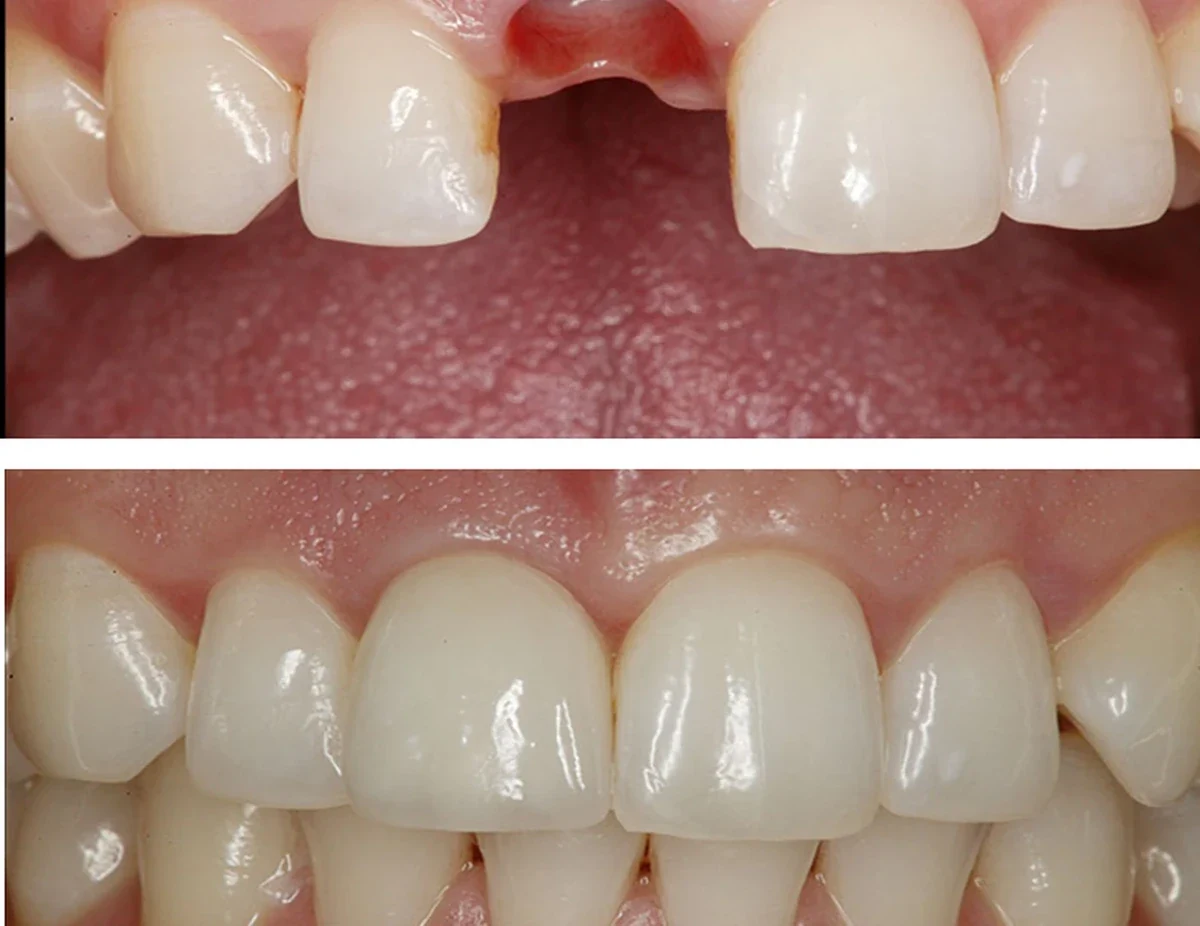
An implant may replace a selected missing tooth or help stabilise a removable partial denture without replacing every remaining tooth. The suitable design depends on how the denture is supported, the health of your natural teeth and the bite. Sometimes selective implant care and adaptation of the existing appliance offer a staged route.
Establish what the current denture is doing
A partial denture may replace one or several teeth and gain support from natural teeth, the gum-covered ridge or both. Clasps, rests and connectors determine how it stays in place. If it feels unstable, the clinician should identify whether the cause is tissue change, wear, bite relationships or a design limitation. An implant cannot automatically correct every defect in a poorly fitting appliance. The examination should include the remaining teeth, periodontal support, bite and areas of pressure beneath the denture before recommending an additional procedure.
Consider replacing individual gaps one at a time
An implant-supported crown may allow a particular denture tooth to be eliminated while the rest of the appliance continues to replace other gaps. Whether the denture can be altered depends on its framework, attachment method and the positions of the remaining teeth. A cast-metal design may be difficult to modify without affecting structural integrity. Patients should ask whether a new temporary or definitive denture would be needed during implant healing. The sequence needs to avoid losing necessary chewing function while a planned replacement is being made.
Implants can also help retain removable prostheses
In selected cases implants are used with attachments to improve denture retention rather than supporting fixed crowns for every missing tooth. The approach varies between upper and lower arches and depends on anatomy, bone distribution and restorative design. It may reduce movement during speaking and chewing, but a removable implant-retained denture still requires cleaning, component maintenance and sometimes relining. The number of implants is not chosen solely from a headline package. It follows the intended type of prosthesis, expected loads and the patient's ability to maintain the components.
Preserve healthy natural teeth when reasonable
A person with several missing teeth may encounter advertising for full-arch implants. That does not mean healthy remaining teeth should automatically be extracted to fit a standard bridge design. The dental team should assess which teeth can be maintained, whether their positions help or hinder the proposed prosthesis and how future treatment may be staged. Sometimes a well-designed partial denture plus selective implant replacement offers an appropriate balance. Other patients may choose a different route after informed comparison. The value of natural tooth preservation deserves specific attention before any irreversible plan.
Maintenance differs from a conventional denture
Implant attachment components, crowns and the soft tissue around fixtures need professional review. Removable appliances should be cleaned as instructed, while natural teeth and implant-supported areas need suitable daily plaque control. Attachments may wear and require replacement, and the denture base may still need adjustment as underlying tissues change. A dentist should explain which repairs are routine maintenance and which might require a new appliance. Convenience during meals and social situations is a legitimate benefit, but it should not be confused with having no future upkeep.
A consultation should compare completed pathways
Bring the denture and earlier plans so the team can compare how each option would change it. Establish which teeth can remain, whether temporary replacement is needed and what implants would support. The estimate should separate surgery, attachments, crowns, denture changes and reviews, alongside non-implant choices. You should understand both the improvement expected and the maintenance system involved.
Decide what the implant actually needs to support
Supporting a fixed tooth and retaining a removable denture are different implant goals, with different surgical, design and maintenance needs. The assessment checks reliable remaining teeth, forces from clasps and whether the appliance is suitable to adapt. Adjusting a good denture may be more conservative than reconstruction. If implant assistance is appropriate, a drawing can show which parts stay removable and which components may need replacement.
References and further reading
Book an assessment
The practices are in Hatfield and Cheshunt in Hertfordshire, and Friern Barnet in North London. For travel from Bedfordshire, Buckinghamshire or Essex, confirm the actual practice and any sites involved in later stages.
Pandya (GDC 114822).Content updated: 26 October 2026.
Your next step, when you’re ready
We would be pleased to welcome you for a £30 consultation at your preferred Iconic Smiles practice. Bring your questions, and we can talk through the options that may suit you.
Any additional investigations and their fees will be explained before you decide.