
Dental implants — replacing missing teeth
Dental Bone Graft Materials Explained: What Is Being Placed and Why?
A patient considering their first dental implant may hear that they need a bone graft but receive little explanation beyond the word graft.
Explore your tooth replacement options
If you are considering replacing a tooth or several teeth, a £30 consultation gives you a chance to explain what matters most, ask questions and explore the options with our team.
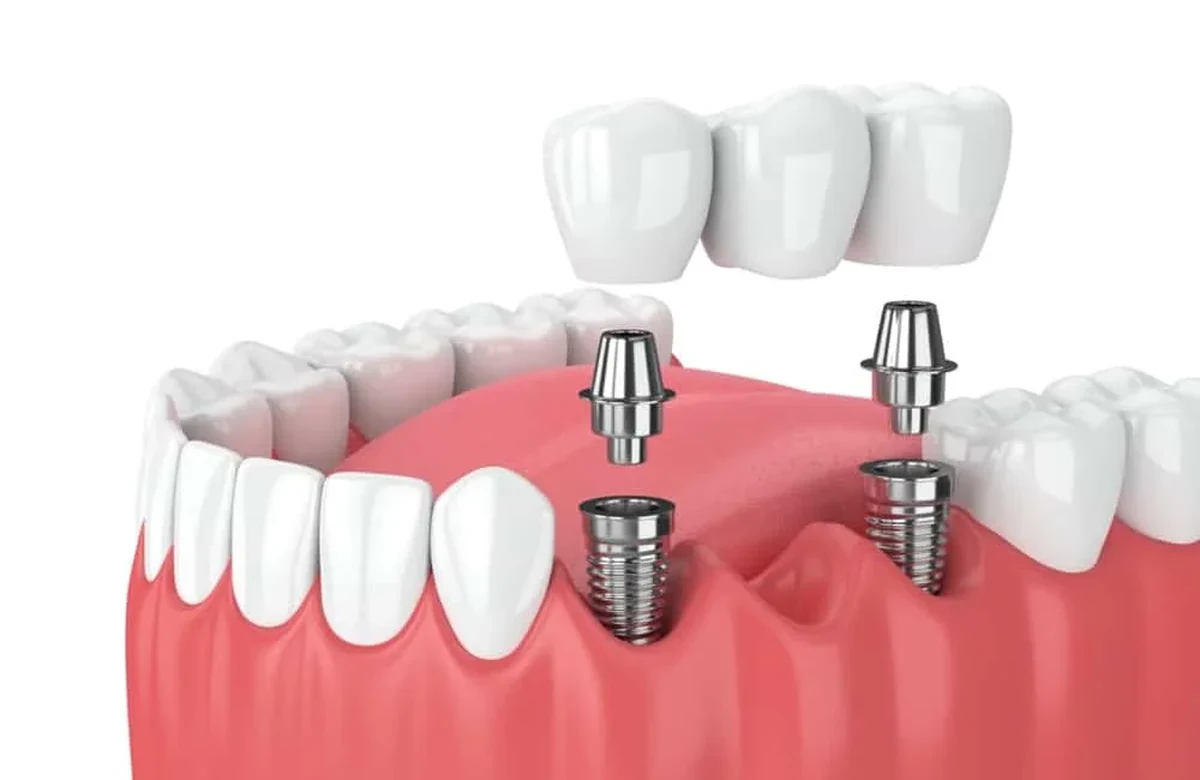
Dental bone grafts can use your own bone, processed donor bone, animal-derived material or synthetic substitutes, according to the site and aim of treatment. They may help preserve an extraction ridge or develop bone for an implant. Before agreeing, understand what is proposed, its source, the expected healing and how it supports the replacement tooth, including any ethical or religious preferences.
What the surgeon wants to change
The ridge may be too narrow, lack a facial wall or have inadequate vertical dimension for the planned fixture. Some techniques place material in an extraction socket to help preserve its shape; others expand a deficient area before or during implant surgery. A graft may create a scaffold for bone formation, but it does not simply turn into fully living bone overnight. The surgeon should identify whether the desired change is volume, containment, sinus elevation or soft-tissue support around a future crown. The endpoint is a feasible implant and restoration position, not maximum graft quantity for its own sake.
Autograft, donor material and substitutes
Autogenous bone is taken from the same patient, for example from an intraoral donor area in suitable cases. Allografts are processed donor human bone; xenografts may come from another species, often bovine or porcine sources; and alloplasts use manufactured materials such as certain calcium-phosphate ceramics. These categories describe origin rather than guaranteed performance. Products differ in particle size, processing, how rapidly they remodel and their capacity to maintain volume. Many grafts are combined with membranes or other materials. Patients should be able to ask for the precise product and information about its source before agreeing to treatment.
A membrane may be part of the operation
A barrier membrane may separate the area intended for bone formation from faster-growing soft tissues. Some dissolve over time; others need removal. The graft needs stability and containment, sometimes with fixation or a staged approach. The surgeon also checks whether gum can cover it without excessive tension. These site conditions help determine the technique alongside the planned implant position.
Timing is individual
Some implants can be placed with a simultaneous graft; other sites need graft healing before fixture placement. A visible gap may be supported by a suitable temporary tooth while the site matures. The overall timeline should therefore account for both surgery and restorative stages, with possibilities explained before the first procedure. The clinician will consider smoking, periodontal status, general health and the condition of neighbouring teeth. No material makes all grafts succeed, and a staged decision can sometimes preserve more options than forcing the implant and graft into one visit.
What belongs in the consent discussion?
The consent discussion should identify the exact graft source, any membrane or fixation, the imaging findings and the alternatives without grafting. Include your ethical, religious or medical preferences. The estimate should separate extraction, graft, membrane, implant and final crown, with reviews and reasons the plan might change made clear.
Grafting is a means to a restorative end
A graft should have a specific purpose in providing the intended tooth position. Implant guidance supports selecting protocols for the individual site. You should understand why it is recommended, what it contains, the effect on timing and whether a bridge or another replacement could avoid the extra surgery.
Evidence and further reading
- ITI 2023 implant placement/loading consensus — PMID 37750529
- NHS: dental treatment choices
- HPA: dental CBCT justification guidance
The practices are in Hatfield and Cheshunt in Hertfordshire, and Friern Barnet in North London. If travelling from Bedfordshire, Buckinghamshire or Essex, use the actual clinic address on your confirmation.
Your next step, when you’re ready
We would be pleased to welcome you for a £30 consultation at your preferred Iconic Smiles practice. Bring your questions, and we can talk through the options that may suit you.
Any additional investigations and their fees will be explained before you decide.