
Dental implants — replacing missing teeth
Can you have a dental implant next to crowns, veneers or bonded teeth?
An implant can often be placed beside a crown, veneer or bonded tooth, but the dentist needs to plan how the teeth will meet and match—not just whether an implant will fit in the gap
Explore your tooth replacement options
If you are considering replacing a tooth or several teeth, a £30 consultation gives you a chance to explain what matters most, ask questions and explore the options with our team.
Please confirm the £30 planned-treatment consultation fee when booking. Scans, additional investigations and emergency assessments may have separate fees.
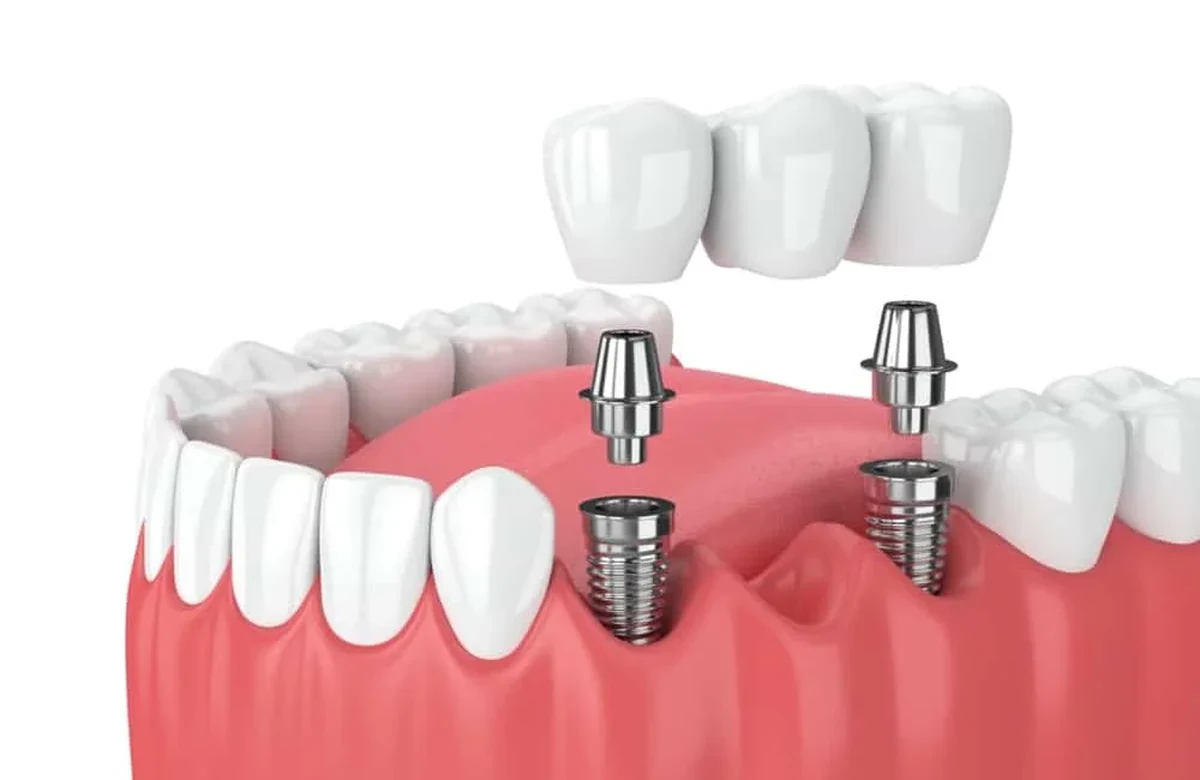
The short answer: An implant can often be placed beside a crown, veneer or bonded tooth, but the dentist needs to plan how the teeth will meet and match—not just whether an implant will fit in the gap.
One of the questions patients ask when considering a dental implant is surprisingly straightforward: 'If the teeth beside the gap have already been treated, can I still have an implant?'
In many circumstances, yes. Having a crown on the next tooth, veneers on your front teeth or composite bonding elsewhere in your smile does not automatically rule out an implant. But those existing restorations matter to the planning. They affect what can be seen, what needs protecting and sometimes how the final implant crown should be shaped and matched.
It helps to think of the treatment as replacing a tooth within an existing smile, rather than placing an implant in isolation.
The first question is what the neighbouring teeth are like underneath
A crown can look perfectly sound on the outside, while its long-term outlook depends on the tooth beneath it, its root and the health of the surrounding gum. Equally, a tooth with an old crown may be entirely healthy and not need any attention.
Before planning an implant, your clinician should examine the adjacent teeth and review any available X-rays. Are the crowns stable? Is there decay at an edge? Has a neighbouring tooth had root canal treatment? Are its roots close to the proposed implant space? Would any existing bridgework need to be altered?
A crown next door does not itself take away the bone needed for an implant. However, the spacing between natural roots, the height and shape of bone, and the health of the gums are important. A narrow gap that looks big enough for a replacement tooth may not provide enough room at the root level for a safe and maintainable implant.
You should be told if more imaging is needed before anyone can confirm suitability.
What if the next tooth has a crown?
The implant is placed in the jawbone at the missing-tooth site, not through the crown next door. In a suitable case, a neighbouring crown can remain exactly where it is. An implant-supported replacement does not usually require the adjacent teeth to be cut down to support it, which is one of the reasons people consider this option.
Still, crowns affect the way the dentist assesses the space. The shape of the existing crown might not reflect the ideal width or contact point for the missing tooth. If the crown is bulky, worn or poorly positioned, the final implant crown may have to work around that limitation — or the team may suggest improving the neighbouring crown as part of the overall plan.
That should be a discussion, not an automatic extra procedure. Ask whether your existing crown can be kept, what compromises that creates and what difference replacing it would make. The goal is a healthy, comfortable bite and a result you can clean, not simply two restorations that look matched in a photograph.
What if you have veneers or bonding on your front teeth?
The challenge is often colour and proportion rather than implant eligibility. Composite bonding, porcelain veneers and an implant crown can all reflect light differently. Teeth beneath translucent veneers may also contribute to their final appearance.
If a front gap sits beside veneers, the new crown needs to be planned around the actual shade and contours you have, not an assumed shade from a digital chart. Your dentist may assess the existing restorations in daylight or use clinical photographs and shade information for the dental laboratory. A very white veneer next to a more natural-looking implant crown can look inconsistent, but making every tooth uniformly opaque is not necessarily the answer.
If you are thinking about having your bonding or veneers replaced anyway, talk about the order of treatment before starting. It may be easier to agree on the overall appearance of the finished smile first, then decide which restorations really need changing. In other cases, the existing veneers can be left alone and a careful single crown made to blend in.
Will the implant crown match the other teeth perfectly?
Your dentist should aim for a harmonious result, but no honest clinician can guarantee an invisible match in every light or from every angle. Matching a single front tooth is particularly challenging. Natural teeth have depth, translucency and subtle colour variation; a crown needs to imitate these while also meeting the gums and neighbouring teeth correctly.
The shape of the gum is just as important as the shade. After a tooth has been lost, gum and bone contours may change. In some patients, the implant crown can emerge very naturally from healthy tissue. In others, there may be a visible difference in gum height or a small space between teeth. Gum or bone grafting may be discussed where it could help, but those procedures have their own limitations and risks.
Ask to see how the dentist plans the whole tooth, including the point where it meets the gum. The visible crown should be part of the plan before implant placement, not a detail left until the end.
What if you have several crowns and only one missing tooth?
When multiple restorations are already present, the clinician will want to understand whether your bite is stable and whether the teeth are wearing evenly. An implant is less forgiving of certain bite forces than a natural tooth because it lacks the same periodontal ligament. Its crown needs carefully planned contacts, especially if you grind or clench.
That does not mean everyone with several crowns needs their whole bite rebuilt. It means the dentist should decide whether a straightforward one-tooth replacement will work within the existing arrangement, or whether a more coordinated plan would be prudent.
If someone proposes replacing sound crowns solely because you want one implant, ask for an explanation of the benefit, alternatives and long-term maintenance implications. More extensive dentistry should have a clear clinical justification.
Could orthodontics make the implant plan easier?
Sometimes. Neighbouring teeth can lean into a gap, particularly when a tooth has been absent for years. The visible space may look adequate even though the roots have moved closer together underneath. In selected cases, orthodontic treatment can create a better position for the neighbouring teeth and their roots before an implant is placed.
This takes longer than simply filling the gap, but it can be a more responsible approach if the alternative would be placing an implant at an unsuitable angle or compromising neighbouring structures. Orthodontics may also improve how the future crown will meet the opposing teeth.
Not every gap needs tooth movement. The dentist should explain what they see clinically and on the relevant imaging, and why any additional stage is being recommended.
Does professional whitening change the plan?
It can affect the sequence, especially if the implant is in the visible part of your smile. Whitening lightens natural teeth but does not whiten existing crowns, veneers, bonding or the future implant crown. If you want a lighter overall colour, it is sensible to decide that before the final crown shade is selected.
Your dentist can advise whether whitening is appropriate and how long to allow the colour to settle before matching new restorations. If you already have many front crowns or veneers, whitening the remaining natural teeth may not create a uniform appearance. You might prefer to keep the current colour rather than replace sound work for cosmetic reasons.
The key is making the colour decision once, at the right point in the plan.
Is an implant always better than a bridge if adjacent teeth have crowns?
No. If the neighbouring teeth are healthy and untouched, an implant may appeal because it does not depend on preparing them for a conventional bridge. But if one or both neighbouring teeth already have crowns that genuinely need replacing, a bridge can sometimes be a sensible and less surgical option.
Other factors matter too: available bone, the position of the gap, gum health, your medical history, how you feel about surgery, expected maintenance and cost. For some posterior gaps, leaving the space may be an informed choice after discussing the bite and possible movement of teeth.
A thoughtful consultation compares the realistic options for your mouth. It should not begin from the assumption that implants must be the answer whenever a tooth is missing.
What might make an implant unsuitable or delay treatment?
The dentist needs to review the health of the gums, the amount and position of bone, infection at the site, your general medical history and factors that influence healing. Smoking, a history of periodontal disease and certain medical conditions or medicines may affect risk and planning. A history of dental work does not itself equal a contraindication.
Sometimes treatment begins with gum care, stabilising a neighbouring tooth or extracting a tooth that cannot reasonably be saved. Sometimes a scan shows that grafting would be necessary. And sometimes a bridge, denture or other option is simply more appropriate.
Implants can fail, become inflamed around the gum and bone, or develop mechanical problems. They also need careful daily cleaning and ongoing professional maintenance. Be wary of any plan that discusses the new crown's appearance but says little about how you will care for it years later.
How do you work out the full cost?
Iconic Smiles publishes dental implants from £1,600. That starting figure does not establish the total price of a completed replacement in your circumstances. The proposed implant, connecting component, crown, planning scans and any additional bone or gum procedures should be identified clearly in an itemised estimate. Some of those may or may not be included in a particular fee.
If changing an existing crown or veneer is suggested, ask for its cost as a separate decision. That makes it easier to distinguish the work needed to replace the missing tooth from optional changes you may choose for the appearance of the wider smile.
You should also understand whether a temporary tooth is needed, how many stages are likely and what routine maintenance might involve.
A sensible first step
Bring any previous treatment plan and tell the dentist which existing work you are happy with. You may want to preserve your veneers exactly as they are. You may be worried that a new implant crown will stand out next to a crown fitted years ago. Both are useful things to say at the start.
Iconic Smiles advertises a £30 planned-treatment consultation. It offers an opportunity to assess the gap, discuss alternatives and decide what records would be needed before a final plan can be agreed. Additional imaging and treatment may carry separate fees, which should be explained before they are arranged.
Your existing dentistry represents decisions and investment made over time. A good implant plan should respect that, changing only what is necessary and giving you an honest picture of what can be achieved.
Questions patients often ask
Will the dentist have to remove the crown next door? Not routinely. A sound neighbouring crown can often stay in place, but its condition and the available space must be checked.
Can an implant be placed between two crowned teeth? Sometimes, provided the roots, bone, gums and bite allow a safe, maintainable position. The crown shapes alone do not determine suitability.
Will a new implant crown match my porcelain veneers? It may be possible to obtain a good match, though differences in materials, gum contours and lighting can make single-tooth matching demanding.
Do I need to replace all my bonding before getting an implant? Usually not solely because of the implant. Consider changes only where there is a clinical or aesthetic reason you understand.
Should I straighten tilted teeth before an implant? Sometimes orthodontic movement helps create appropriate space and root positions. It is not necessary in every case.
The existing dentistry deserves the same attention as the gap
Matching a new tooth to several different materials is a design problem as well as a surgical one. Explore implant replacement and combined smile planning before making a decision about adjoining restorations.
Independent patient information: British Society of Periodontology: implant risks and maintenance · NHS: crowns, bridges, veneers and implants. These explain general clinical considerations; a personal recommendation requires assessment.
Your next step, when you’re ready
We would be pleased to welcome you for a £30 consultation at your preferred Iconic Smiles practice. Bring your questions, and we can talk through the options that may suit you.
Please confirm the £30 planned-treatment consultation fee when booking. Scans, additional investigations and emergency assessments may have separate fees.