
Dental implants — replacing missing teeth
Save the Tooth or Have an Implant? Making an Informed Clinical Decision
A natural tooth and an implant are different treatment pathways. Before extraction is agreed, ask for the diagnosis and the realistic prognosis of retaining the tooth.
Explore your tooth replacement options
If you are considering replacing a tooth or several teeth, a £30 consultation gives you a chance to explain what matters most, ask questions and explore the options with our team.
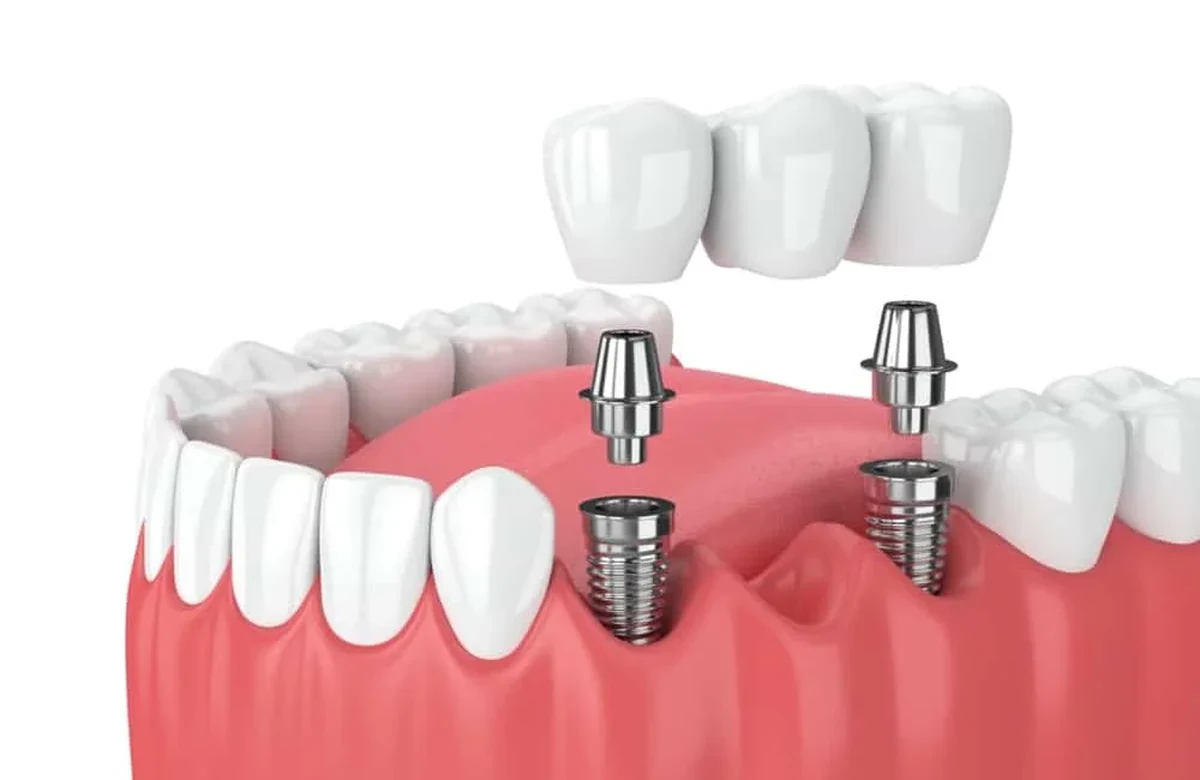
Decide whether the tooth can be restored before comparing replacements
Before choosing an implant, establish whether the natural tooth can reasonably be kept and what that would involve. Root-canal guidance emphasises assessment and planning; an implant adds a different course of surgery and replacement-tooth treatment. Neither route is automatically right for every damaged or infected tooth. [1][2]
Bring the different parts of the prognosis together
A useful assessment brings together the sound tooth remaining, the root and nerve-tissue condition, gum support and the repair needed afterwards. Treating one problem does not necessarily make the final tooth practical to maintain. If keeping it is considered unreliable, you should understand the finding behind that view and any uncertainty. [1]
Saving the tooth may require more than one procedure
Discuss the complete retention plan rather than only a root-canal fee or a new filling. Ask what definitive restoration is proposed, which stages depend on response to treatment and what would happen if retention fails. The cost and burden of repeated uncertain interventions should be weighed alongside the benefit of preserving a tooth with a reasonable prognosis. [1]
Extraction starts a new set of decisions
An implant may be considered after extraction, but it needs its own suitability assessment and may involve healing or grafting stages. A bridge, removable denture or an appropriate decision to leave a space may also be discussed. The replacement pathway should include the final tooth or teeth, maintenance and the consequences of a later problem, rather than end at the extraction or fixture placement. [2]
Compare outcomes that mean the same thing
Published results may describe tooth retention, implant retention, restoration survival or freedom from further intervention. Those are different outcomes in different populations. Do not compare unrelated percentages as if they prove that extracting a tooth produces a better result. Ask which evidence applies to the diagnosed condition and how the individual options will be reviewed. [3][4]
Request a reasoned plan before an irreversible decision
The consent discussion should compare benefits, risks, costs and reasonable alternatives, including what happens if the preferred option fails. If time permits and uncertainty is significant, you can discuss another opinion. This should not delay urgent assessment of spreading infection. The aim is a maintainable result with a clear rationale, not saving every tooth at any cost or replacing every compromised tooth by default. [5]
Ask for a diagnosis before accepting a whole-mouth label
Terms such as full-mouth rehabilitation describe the scope of a plan, not the diagnosis of every tooth. A mouth may contain teeth with different problems and different prospects. Ask the clinician to identify what is wrong with each tooth proposed for major restoration or extraction, and which findings remain uncertain. Consent should connect the intervention to its purpose and realistic alternatives. A dramatic overall appearance does not by itself establish that every tooth is unsalvageable. The assessment should make the decisions visible so you understand why the proposed treatment is proportionate to the actual disease, damage and priorities.
Keep different diagnoses from being treated as interchangeable
A tooth with periodontal support loss, a tooth with pulpal disease and a structurally cracked tooth require different reasoning. EFP periodontal guidance and the European Society of Endodontology guideline address defined conditions and treatment pathways. Their existence does not establish that every compromised tooth can be saved, but it reinforces the need for diagnosis-specific decisions. Ask which condition limits the prognosis and whether another concern changes it. A general statement that the mouth is damaged is not enough to explain the risks of retaining or removing a particular tooth within a full-mouth plan. [source][source]
Understand uncertainty before irreversible treatment
Some findings may only become clear after earlier treatment or removal of an existing restoration. Ask what is known, which additional information matters and how a change of plan would be discussed and costed. If a further opinion is reasonable, discuss it before an irreversible elective decision. Keeping uncertainty visible supports consent; it is not a reason to promise that all teeth can be saved.
Address disease with the relevant treatment pathway
Periodontal disease and pulpal or apical disease require diagnosis-specific management. EFP periodontal guidance and the European Society of Endodontology guideline address different conditions and treatment decisions. Ask what needs treatment now, who provides it and how the response will be assessed. Do not assume that a tooth needing root canal treatment must be removed, or that completing one treatment automatically resolves every structural concern. The sequence should allow the relevant findings to inform prognosis. Where more than one clinician contributes, clarify how their assessments are brought together rather than left as unrelated recommendations. Read the supporting clinical study · Read the supporting clinical study (2)
Compare extraction and implants as a complete alternative
Replacing a tooth is not a way to avoid all biological and technical risk. NHS implant information describes possible grafting, integration failure and later component wear or loosening, alongside alternatives such as bridgework and removable replacement. Ask how these commitments compare with the realistic treatment needed to retain the tooth. A pooled implant survival rate does not by itself answer whether extraction is appropriate for an individual tooth. The comparison should include the surgical burden, temporary period, definitive restoration, ongoing care and consequences if either chosen route later needs further intervention. NHS patient information
Consider a mixed or staged plan without assuming uniform treatment
A whole-mouth reconstruction does not have to give every tooth the same material or treatment. A plan may combine disease management, retained teeth, restorations and replacements according to the findings. Ask how the components work together and whether staging serves a clear clinical purpose. A staged approach should still provide a coherent temporary arrangement and review decisions; it should not be an unexplained sequence of additions. Likewise, an all-at-once proposal should explain its extent and alternatives. The patient’s priorities around time, intervention, function and maintenance belong in the comparison alongside the clinical requirements.
Know when symptoms need urgent care
Seek urgent dental advice for a suspected infection, especially with increasing pain or swelling. NHS abscess guidance directs patients to emergency care for serious features including difficulty breathing or swallowing, substantial mouth swelling or eye involvement. Persistent gum or implant-tissue changes also deserve assessment rather than waiting indefinitely for a routine visit. Peri-implant mucositis concerns soft tissues, while peri-implantitis includes supporting-bone loss; those diagnoses need professional findings. The purpose of clear contact instructions is to help you respond appropriately without either dismissing an important symptom or assuming every new concern requires replacement of the whole reconstruction. NHS patient informationPeriodontology guidance
Give uncertain teeth a clear decision pathway
Sometimes the clinician needs additional assessment or another professional opinion before deciding whether a tooth can reasonably contribute to the reconstruction. Ask what question remains, how it will be answered and what the possible next decisions are. Uncertainty should be explained rather than disguised as either guaranteed retention or inevitable extraction. If the tooth has symptoms, clarify the plan for managing them while the assessment continues. This is particularly important when the future bridge, implant positions or temporary replacement depend on whether that tooth remains. An unresolved prognosis should not silently become a fixed assumption in an expensive plan.
Retention is a clinical choice with an intended purpose
Keeping a tooth may preserve a useful natural structure, but it should still have a reasoned prognosis and a plan. Ask what treatment is needed, what role the tooth will have and which limitations remain. A decision to retain every tooth regardless of condition is not automatically conservative if it leaves disease or symptoms unmanaged. Conversely, extraction should not be justified simply because implants are available. Consent requires an explanation of realistic options, benefits and material risks. The appropriate balance comes from the tooth’s findings and the wider reconstruction rather than a slogan about always saving or always replacing.
Compare complete plans for the diagnosed needs
A full-mouth consultation can produce very different proposals, but comparison is difficult unless each addresses the same findings and priorities. Ask which teeth are maintainable, which need further assessment and why any extraction is recommended. Consent should explain relevant alternatives and their consequences. One plan may preserve more teeth, another may involve different restorations and another may introduce implants. None is justified simply by being the least or most extensive. You need to understand how each manages the actual disease and damage, what it aims to improve and which compromises or uncertainties it leaves.
Compare reasonable retention options with the extraction pathway
Request the proposed stages, likely failure points and what would happen if retention proved unsuccessful. If extraction is recommended, discuss the resulting space and appropriate replacement alternatives. Implant treatment has its own assessment, surgical, restorative and maintenance stages. It should not be presented as an automatically simpler or risk-free improvement on every damaged tooth. NHS patient information
Compare replacement without assuming it removes every risk
An implant may be appropriate for a missing or unsalvageable tooth, but it introduces surgery, restoration and continuing care. NHS information describes alternatives, possible grafting, integration failure and component wear or loosening. Ask how replacement compares with the realistic retention option for that tooth, including the burden of each pathway. The comparison should not imply that every natural tooth is preferable regardless of prognosis, or that an artificial replacement is automatically better than a maintainable tooth. The decision needs the actual diagnosis, patient priorities and an honest explanation of likely limitations. NHS patient information
Infection treatment and structural restoration are related decisions
If endodontic treatment is indicated, ask how it connects to the final restoration and whether the remaining tooth can support that plan. The ESE guideline addresses assessment-led management of pulpal and apical disease. Completing an isolated procedure does not by itself explain the whole prognosis, sequence or maintenance commitment of retaining the tooth. Read the supporting clinical study
Report changes in teeth and restorations clearly
New pain, a fractured area, food trapping, a changed bite or movement needs the appropriate assessment. Describe when the change began, what brings it on and which part seems affected, without assuming you can identify the underlying structure. An implant component, a natural tooth and a restoration may need different responses. Do not use household glue or repeatedly test a moving part by force. Contact the treating service for instructions, particularly if function or comfort is affected. A small visible change does not establish that the entire reconstruction has failed, but it should not be ignored solely because treatment was recently completed. NHS patient information
Complete the plan with maintenance for the mixed mouth
The final reconstruction may contain natural teeth, restorations and implants. Ask how each is reviewed, who coordinates care and what changes should trigger earlier contact. Implant guidance recommends structured supportive care, while periodontal maintenance follows the relevant diagnosis and findings. At Iconic Smiles, confirm the clinicians, locations and itemised fees for the stages and ongoing care. A retention-focused sequence should remain flexible enough to respond to new evidence without becoming directionless. The goal is a complete plan in which useful teeth are preserved where reasonable and replacements are introduced with a clear clinical rationale. Read the supporting clinical study · Read the supporting clinical study (2) · Meet the Iconic Smiles dental team · Find an Iconic Smiles practice · See our current treatment fees
Include disease treatment and monitoring in retention options
A tooth-preserving approach may involve treatment for periodontal, pulpal or apical disease, restoration where appropriate and continuing review. The EFP and European Society of Endodontology guidelines address those defined conditions. They do not imply every tooth is saveable, but they support a diagnosis-specific discussion before removal. Ask what a retention plan requires and which findings limit its prognosis. Monitoring may also be relevant for some concerns, provided its purpose and triggers for action are clear. Keeping a tooth should be an active, reasoned choice rather than a promise to avoid extraction regardless of future findings. Read the supporting clinical study · Read the supporting clinical study (2)
Compare extraction and implants with the realistic retention plan
Implants can support replacement teeth where appropriate, but NHS information describes possible grafting, integration failure and component wear or loosening. Bridgework and removable replacements may also be relevant. Ask how the complete extraction-and-replacement pathway compares with treating the existing tooth, including the temporary period and ongoing care. Do not reduce the decision to a survival percentage taken from a different treatment population. The clinically useful comparison concerns your tooth’s prognosis, the proposed replacement and the practical consequences of each, including what further treatment might involve if the preferred outcome is not achieved. NHS patient information
Leave each review with an updated plan
Ask what the appointment found, whether treatment or further investigation is needed and what determines the next interval. Report meaningful changes in health, medicines and the ability to manage the routine. At Iconic Smiles, confirm the clinician, location and maintenance fees, including how technical concerns are assessed. The long-term plan should respond to current findings rather than repeat the original reassurance indefinitely. Retaining useful teeth and maintaining replacements are continuing responsibilities, with realistic scope for repair or further treatment. No reconstruction should be presented as a guarantee of lifelong dental health without appropriate professional review. Meet the Iconic Smiles dental team · Find an Iconic Smiles practice · See our current treatment fees · Read the supporting clinical study (4)
Do not turn uncertainty into a false promise
Some prognoses remain uncertain after initial assessment. Ask what further information could help, what cannot be predicted and how that affects the proposed plan. A tooth that might be retained is different from one that has a confidently favourable outlook, and neither should be described as guaranteed for life. If further assessment is recommended, understand the question it is intended to answer and the possible next steps. An honest explanation can include uncertainty while still making a recommendation. The problem is not uncertainty itself, but an irreversible decision made without revealing which assumptions support it.
Plan the temporary arrangement before irreversible stages
If extractions, restorative preparation or implant stages are necessary, clarify what you will use while treatment continues. The temporary replacement should have a stated purpose, limitations and care instructions. NHS implant information describes possible staged treatment, while the ITI distinguishes placement from loading. Ask how the interim plan changes if a tooth can be retained, cannot be retained or needs further time for assessment. These practical details affect eating, appearance and daily life. They belong in the consent and estimate before the relevant procedure, rather than being improvised after the patient has lost a tooth or an existing restoration. NHS patient informationSupporting source (academy.iti.org)
Request a coordinated plan and complete estimate
The written plan should identify retained teeth, proposed extractions, further assessments, restorative stages and temporary arrangements. Ask which decisions need confirmation before irreversible treatment and who coordinates the clinical recommendations. At Iconic Smiles, establish the responsible clinicians, locations and itemised fees. A second opinion can be useful for a specific unresolved prognosis if relevant records are supplied. The aim is a defensible whole-mouth plan built from understandable individual decisions, with useful teeth preserved where reasonable and replacement used where justified, rather than a uniform solution imposed before the assessment is complete. Meet the Iconic Smiles dental team · Find an Iconic Smiles practice · See our current treatment fees
Research and guidance
- Treatment of pulpal and apical disease: The European Society of Endodontology (ESE) S3-level clinical practice guideline.
- Dental implants - Overview | Guy's and St Thomas' NHS Foundation Trust
- Longevity of Indirect and Direct Restorations in Anterior Teeth.
- Ten years and beyond: Long-term dental implant survival, success, and biological health-A systematic review and meta-analysis.
- Dental abscess — NHS
Your next step, when you’re ready
We would be pleased to welcome you for a £30 consultation at your preferred Iconic Smiles practice. Bring your questions, and we can talk through the options that may suit you.
Any additional investigations and their fees will be explained before you decide.