
Dental implants — replacing missing teeth
When Is an Implant Ready for a Crown?
The calendar alone cannot establish that a dental implant is ready for a permanent crown.
Explore your tooth replacement options
If you are considering replacing a tooth or several teeth, a £30 consultation gives you a chance to explain what matters most, ask questions and explore the options with our team.
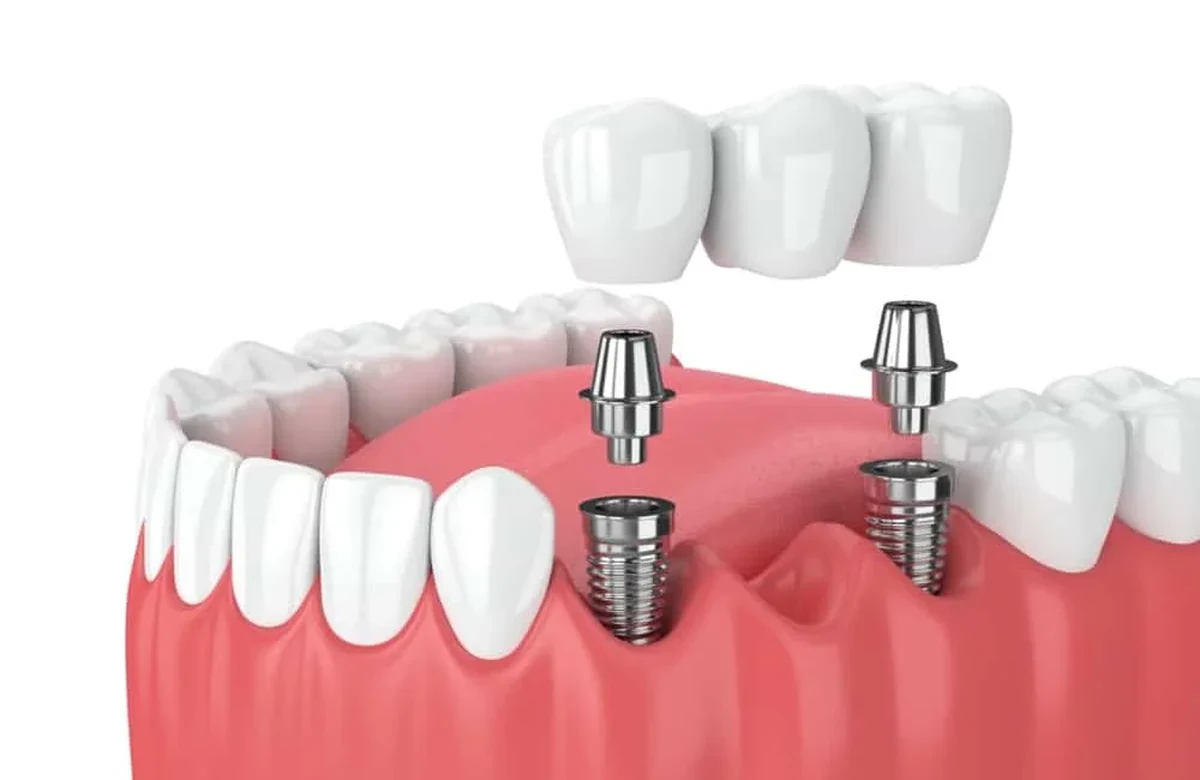
An implant is ready for its permanent crown when the clinical assessment supports using it under your planned bite forces, rather than when a fixed number of weeks has passed. Healing, stability, anatomy, bone quality and any grafting influence the timing. Discuss these milestones before arranging travel, an important event or later irreversible treatment.
Initial stability is not the same as integration
Primary stability is the mechanical grip obtained when the implant is placed. Osseointegration is the biological attachment that develops between living bone and its surface. A firm grip on the day of surgery does not establish that healing is complete. The chosen timing for biting forces depends on surgical findings and the replacement design. Immediate loading is a selected clinical approach, rather than simply attaching any temporary tooth on the day.
What is checked at a review
A clinician may assess soft-tissue healing, discomfort, plaque control, the position of components and whether the implant shows signs of instability. Radiographs are considered when clinically indicated, rather than as a universal substitute for examination. Some implant systems and situations permit objective stability measurements, but no single reading should be sold as a guarantee of success. The health of adjacent teeth and gum contours also informs the timing of crown impressions.
The temporary may have a restricted role
A provisional front crown can preserve appearance and guide the surrounding soft tissue, sometimes with modified bite contacts to reduce loading. Patients must follow instructions about chewing on that restoration; a temporary designed mainly for appearance is not necessarily intended to withstand normal biting. When a provisional bridge spans several implants, the forces act through the whole structure. A broken or loose temporary needs professional assessment because its mechanical behaviour can influence healing.
Why restorative fit matters when healing is satisfactory
Even after integration, the definitive crown must have appropriate contacts, contours and a cleansable gum interface. A crown that traps food or carries excessive occlusal forces may require adjustment irrespective of how securely its implant has integrated. A digital or conventional impression records the component and soft-tissue relationships. The clinician and laboratory should know the intended final tooth position before producing the definitive restoration.
What should happen if the timing changes
Ask which milestones must be met, whether graft healing requires a separate check and what temporary replacement will be used if crown fitting is postponed. A responsible plan distinguishes biological uncertainty from administrative delays and gives the patient a clear review route. The objective is a maintainable replacement, not the shortest advertised time between drilling and delivery.
An illustrative delay that protects the final result
For example, a lower molar implant may have been placed with a small graft. At the planned crown visit, settled-looking gums may still leave a clinical question about whether it is ready for loading. The dentist should explain the uncertainty, which checks could resolve it and how you can eat safely in the meantime. If it proves unsuitable for restoration, that needs a clear documented discussion. A changed date should have an explanation and review plan, rather than repeated unexplained postponement.
A temporary front tooth fitted soon after surgery may be intended mainly for appearance, with biting restricted to protect healing. Establish whether the restoration allows no biting, limited function or ordinary chewing, and how to arrange assessment if it feels loose. At final fitting, the contacts should be recorded and a review plan explained. The aim is a stable, cleanable crown carrying appropriate forces.
Your next step, when you’re ready
We would be pleased to welcome you for a £30 consultation at your preferred Iconic Smiles practice. Bring your questions, and we can talk through the options that may suit you.
Any additional investigations and their fees will be explained before you decide.