
Dental implants — replacing missing teeth
Dental Implant Recovery: What to Expect During the First 24 Hours, 7 Days and 6 Months
The first days after implant placement concern the surgical wound and your comfort.
Explore your tooth replacement options
If you are considering replacing a tooth or several teeth, a £30 consultation gives you a chance to explain what matters most, ask questions and explore the options with our team.
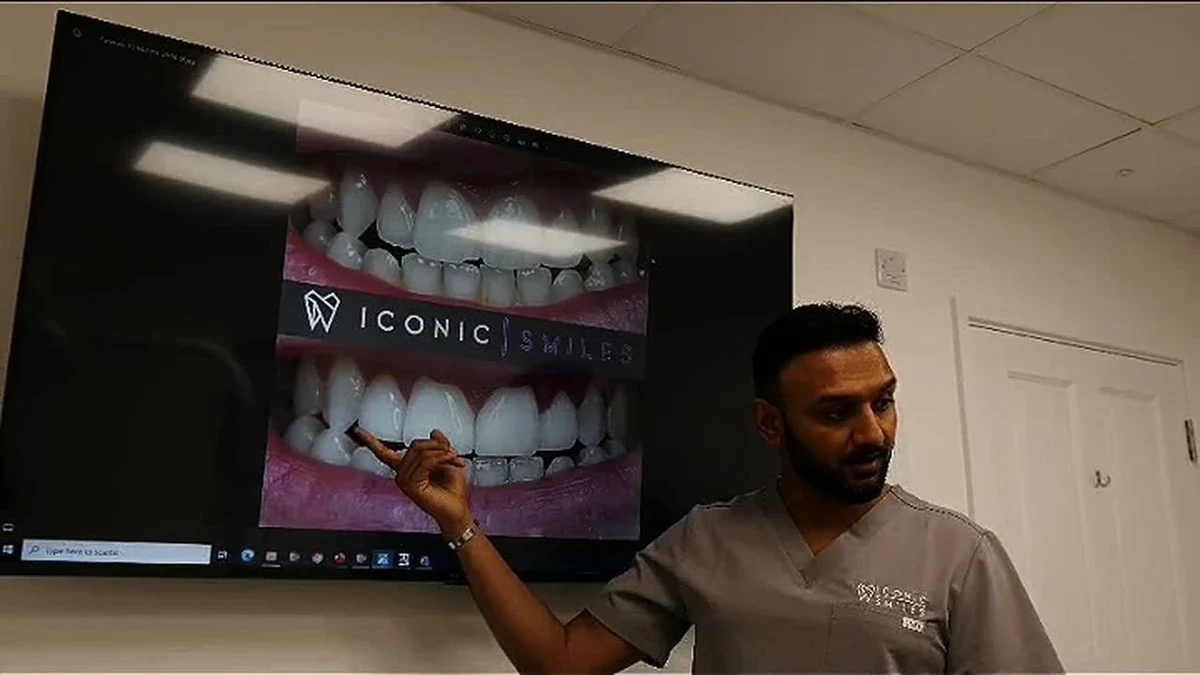
Early gum healing and integration with bone are different stages
If you are planning implants, expect the gums to recover first while healing around the implant continues over a longer period. Later reviews help decide when the final tooth can be made. Temporary teeth may look complete while treatment is still under way, so follow the eating and loading instructions for your procedure rather than judging readiness by comfort alone. [1][2]
The first day: use the instructions for your operation
Follow the written advice on bleeding, food, cleaning, rinses and medicines. Protect the surgical area and tell the team if the instructions are unclear. The routine can differ with the procedure and any temporary restoration. A hospital aftercare leaflet is useful general context, but it should not override a specific instruction from the clinician who knows what was done. [2]
The first week: monitor symptoms and maintain oral care
Discomfort, swelling and bruising can follow implant surgery. NHS information describes symptoms during the first days and a review around the first week, with timing depending on the service and procedure. Continue the instructed oral-care routine. Ask which areas to brush and whether a prescribed rinse is required; do not copy a regimen intended for another operation or use a rinse indefinitely without advice. [2][3]
The review at roughly one to two weeks
A review allows the team to check the wound and deal with stitches when needed. Guy's and St Thomas' describes an appointment seven to fourteen days after treatment; your own arrangements may differ. Attend the review even if the gum feels comfortable, and explain any bleeding, altered sensation or change in the temporary tooth. [2]
The following months: a staged plan rather than a fixed deadline
The timing of the definitive crown, bridge or denture depends on healing and the planned treatment sequence. Grafting or other additional stages can extend the pathway. Ask what clinical finding will allow the next stage, rather than expect every implant to have its final tooth by the same month. Temporary and final restorations should be identified clearly in the written plan. [1][4]
Symptoms that need prompt assessment
Contact the treating team about worsening pain or swelling, pus, fever, persistent bleeding, a loose restoration or altered sensation that does not resolve as expected. Oral-surgery guidance advises contacting the service promptly when numbness continues after the anaesthetic should have worn off. Do not wait for a distant routine review to report a new nerve-related concern. [5]
Bleeding and infection emergencies
If postoperative bleeding does not stop with the pressure instructions you were given, obtain urgent help; Guy's and St Thomas' advises emergency-department assessment when bleeding continues despite the stated pressure measure. Call 999 or go to A&E for difficulty breathing, speaking or swallowing, marked mouth swelling or concerning eye symptoms. Do not start leftover antibiotics instead of arranging assessment. [2][6]
Further questions to consider before treatment
- Before dental implant treatment, ask what eating and healing instructions you may need afterwards.
Further clinical details: How Long Does a Dental Implant Take to Heal? Placement,
There is no fixed healing time for every implant. The schedule depends on the extraction site, gum healing, bone integration, stability and any grafting. Some surgery and temporary teeth can be combined, while other cases need separate stages. The plan should distinguish a visible temporary tooth from a final restoration ready for normal chewing.
Surgery day is only the beginning
Following implant placement, the gum and surrounding soft tissues usually begin healing well before osseointegration is assessed. Osseointegration describes a stable relationship between living bone and the implant surface. It is not the same as a screw gripping bone on the day it is placed. The clinician records the quality of bone, insertion stability and implant position to decide whether a temporary restoration or early loading could be appropriate. A site with adequate initial stability may still need careful protection from excessive biting forces. Local bone conditions and the planned crown influence the healing schedule.
Immediate, early and conventional loading are different
Placement timing describes when the implant goes into the jaw after extraction; loading describes when it receives a restoration transmitting functional force. Those are separate choices. You may have immediate placement yet wait before the final crown. A provisional front tooth can sometimes be shaped for appearance while deliberately kept out of firm biting contact. The ITI consensus work distinguishes these protocols and supports careful case selection, particularly in the visible front upper jaw. A clinic advertising teeth in a day should explain whether the teeth are provisional, how they are protected and what happens before the definitive restoration.
What might lengthen the sequence?
Socket condition, bone grafting, the amount of existing bone and the proximity of the sinus or nerve can affect timing. A staged graft may need to mature before an implant can be placed. Gum inflammation or unresolved gum disease should be addressed before elective treatment. For a full arch, the proposed immediate bridge depends on initial stability across the supporting implants and the ability to control occlusion. No single calendar estimate is reliable for every patient. A written plan can show conditional stages, with a clear distinction between standard follow-up and additional interventions that might become necessary.
How does the dentist judge readiness for the crown?
Readiness for a crown is assessed through the tissues, implant stability and relevant imaging where justified, alongside the intended restoration. Repeated 3D scans are not routine for everyone. Once appropriate, scans or impressions guide the laboratory abutment and crown. Fitting checks the contacts, bite and cleaning space, with instructions for introducing chewing load after any grafting or immediate full-arch treatment.
A realistic patient timeline
The sequence may include assessment, records, extraction where needed, placement, healing checks, restorative records, a trial, fitting and maintenance. Discuss temporary teeth early for a visible gap. A front temporary does not necessarily carry normal load through the implant. Identify which appointments are definite, which depend on healing and how work or travel could affect them before choosing a timetable.
Evidence-based speed is selective
Research supports several placement and loading protocols, but their reported outcomes reflect selected anatomy, surgical conditions and patient factors. Your clinician should explain why a proposed timing strategy fits your case rather than guaranteeing it from an online photograph. Healing is a biological process, not an express-delivery service; a well-designed final tooth and sound surrounding tissues remain the primary objectives.
Evidence and further reading
The practices are in Hatfield and Cheshunt in Hertfordshire, and Friern Barnet in North London. If travelling from Bedfordshire, Buckinghamshire or Essex, use the actual clinic address on your confirmation.
How long should swelling last after a dental implant?
Look at the trend and the operation performed
Before surgery, the team should explain the swelling and bruising to expect and how recovery is likely to progress for your procedure. Grafting or extra surgery can change that advice. During recovery, contact them if things are not progressing as explained; a day count online cannot establish whether your own swelling is normal. [1]
Do not dismiss worsening symptoms
An abscess or another infection can cause swelling, pain, a bad taste, fever and difficulty opening the mouth. A suspected dental abscess needs urgent dental treatment. Seek urgent advice for worsening or concerning swelling rather than waiting for a routine appointment or assuming that all postoperative swelling is harmless. [2]
Know when emergency care is needed
Call 999 or go to A&E for breathing, speaking or swallowing difficulty, significant swelling in the mouth, or a swollen or painful eye or sudden visual problems. Marked difficulty opening the mouth is also an NHS emergency warning in the context of a dental abscess. Do not use the dental booking form for a medical emergency. [2]
Give the team information they can use
When contacting the provider, describe the procedure date, how the swelling has changed, any fever or drainage, and whether eating, swallowing or mouth opening is affected. Use only the medicines and aftercare instructions appropriate to you. Continuing or worsening symptoms need clinical assessment; a photograph alone cannot rule out a complication. [1][2]
Why might your jaw stay stiff after implant surgery?
Stiffness needs context
Soreness, swelling and restricted mouth opening can follow oral surgery. The relevant question is whether movement is improving as expected for your operation. Your surgical team should review persistent or worsening symptoms rather than assuming that every limited opening has the same cause. [1]
Infection is an important alternative explanation
A dental abscess can cause difficulty opening the mouth and chewing, together with pain, swelling, fever or a bad taste. A suspected abscess requires urgent dental treatment. It cannot be ruled out simply because surgery was recent or because the implant itself appears stable. [2]
Severe restriction or airway symptoms need urgent help
Call 999 or go to A&E if you have difficulty breathing, speaking or swallowing, substantial swelling in the mouth, or serious difficulty opening the mouth in the setting of suspected infection. Eye swelling, pain or sudden visual disturbance are further NHS emergency warnings. Avoid delaying care while trying to exercise through those symptoms. [2]
Arrange an assessment of the cause
Tell the treating team when the restriction began, whether it is worsening and whether you can eat and drink. Describe associated swelling, fever, drainage or altered sensation. Follow the specific postoperative instructions you were given; the appropriate response depends on examination rather than a generic stretching routine. [3][2]
Research and guidance
- Dental implants - After having a dental implant | Guy's and St Thomas' NHS Foundation Trust
- Dental abscess — NHS
- Insertion of dental implants | CUH
- Dental implants - Overview | Guy's and St Thomas' NHS Foundation Trust
- Primary professional guidance — www.cuh.nhs.uk
- Bone grafting for dental implants - Overview | Guy's and St Thomas' NHS Foundation Trust
- Post-operative mouth care following oral surgery - Advice Sheet | Hull University Teaching Hospitals NHS Trust
Your next step, when you’re ready
We would be pleased to welcome you for a £30 consultation at your preferred Iconic Smiles practice. Bring your questions, and we can talk through the options that may suit you.
Any additional investigations and their fees will be explained before you decide.