
Dental implants — replacing missing teeth
Dental implant crowns and a strong bite: planning for biting forces
Learn how implant crown planning considers clenching, tooth wear, material choice and bite contacts, with questions to ask before treatment.
Explore your tooth replacement options
If you are considering replacing a tooth or several teeth, a £30 consultation gives you a chance to explain what matters most, ask questions and explore the options with our team.
£30 for a planned-treatment consultation. Scans, additional investigations and emergency assessments may have separate fees; please confirm when booking.
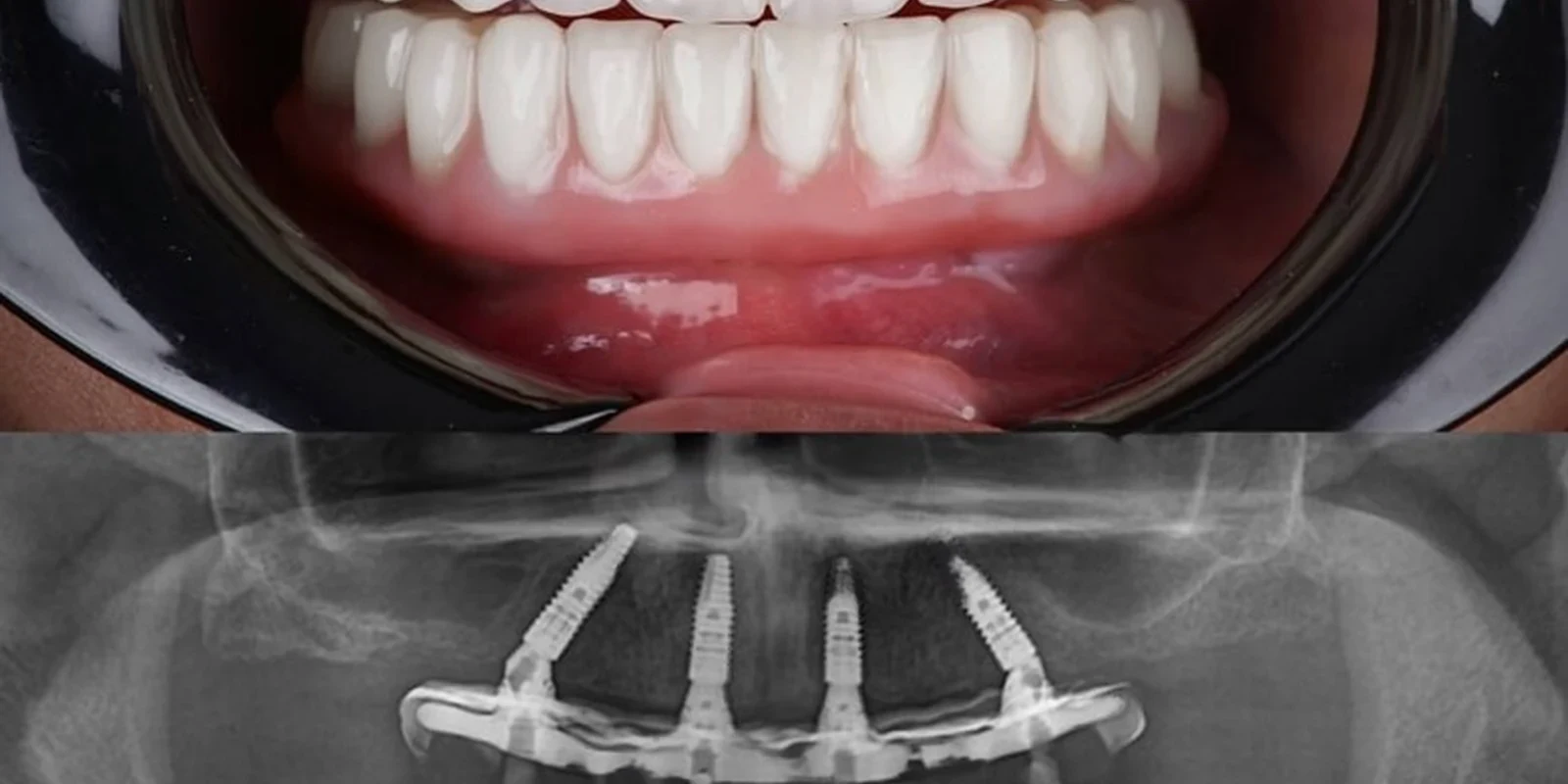
If you have broken fillings, worn down molars or been told you have a strong bite, you may wonder whether a dental implant would stand up to the way you chew. It is a sensible question. An implant is anchored in bone and supports a carefully designed replacement tooth, but its relationship with chewing force is different from that of a natural tooth. A crown that looks beautifully made can still run into trouble if the contact pattern, material or available space is unsuitable.
The useful answer is not that implants are 'as strong as real teeth' or that grinding rules out treatment. Instead, your clinician needs to understand how force is generated, where it travels and how the proposed crown and surrounding structures will respond. This guide explains the design decisions worth discussing before an implant is placed or its crown is manufactured.
Why a natural tooth and an implant respond differently
A natural tooth is suspended in its socket by the periodontal ligament, which provides a degree of movement and a complex sensory response when biting. An implant fixture is intended to bond directly with the surrounding bone. It therefore has a different capacity for movement and sensation. This does not mean it is fragile, but it means the restoration and bite need thoughtful design.
Excessive or poorly directed force can contribute to wear, fracture or loosening of prosthetic components. These are mechanical complications, and they should be distinguished from biological complications such as inflammation around an implant. A patient might have a stable implant within healthy bone but still suffer repeated loosening of the screw that connects the restoration, for example. That would require investigation into design and bite rather than simply replacing parts indefinitely.
The clinic should plan the crown before placing the implant, because implant orientation influences where the final chewing contacts can safely be created. The ideal surgical position is not merely the area with the most bone; it is a position that supports a suitable restoration within the available anatomy.
What counts as a 'strong bite'?
Patients use the phrase in different ways. You might have a history of clenching during concentration, grinding at night, cracking hard foods or repeatedly fracturing large fillings. Those patterns can overlap, but they are not identical. Some patients have strong jaw muscles without destructive tooth contact; others have relatively modest force but an unfavourable bite that concentrates pressure onto one tooth.
A dentist may look for flattened or chipped tooth surfaces, cracks, wear facets, muscle tenderness, damaged restorations and clues about how your jaws meet. A partner's report of nighttime grinding can help, although no single symptom proves its frequency or severity. The NHS explains that bruxism can be associated with stress, sleep conditions and tooth damage, and that dental assessment may be appropriate [1].
Tell the clinician whether you have previously broken a crown, worn through a nightguard or noticed that your teeth meet differently after dental work. These details may be more relevant than simply saying you bite hard. A record of previous failures helps identify whether a particular design should be avoided.
Crown height, width and the shape of the chewing surface
An implant crown should resemble a tooth but need not copy every steep cusp or groove of an adjacent natural molar. The height of the crown and the position of its contact points matter. If there is little room between the jaws, materials may have to be thin; if there is excessive vertical space, the restoration can become tall and mechanically demanding. A tilted implant or an unusually wide crown can also create unfavourable leverage.
The ideal solution is not a blanket rule to make every implant crown smaller or flatter. Chewing function and contacts must still make sense in the context of the entire bite. The dentist should assess the adjacent teeth, the opposing tooth, movements of the jaw and the location of the implant within the arch. If orthodontic treatment could improve the space, it may be considered before the implant is placed.
Ask how the clinician will check the final bite. Paper marks alone may not tell the whole story; the pattern of contact in closing and movement matters. The aim is to create an implant crown that functions comfortably without becoming the first point of impact each time you close your mouth.
Does the crown material make the difference?
Zirconia, other dental ceramics and metal-containing designs have different physical characteristics. Their behaviour depends on thickness, manufacture, connector design and how they are finished. A material associated with good fracture resistance can still damage an opposing tooth if the surface becomes rough or the bite is poorly managed. A beautifully translucent ceramic may not be the most suitable option where there is inadequate room or a history of repeated fracture.
Ask whether the crown can be repaired or replaced if necessary and what happens to the connector beneath it. A screw-retained design may sometimes make maintenance more straightforward, although not every site or implant position permits the same restorative options. The relevant question is which design is sensible for your mouth and why, not which brand has the most impressive marketing.
The dentist and dental technician should communicate about the material, shade, anatomy and contact pattern. When a crown is being made for a heavily worn mouth, the technician benefits from knowing more than the colour of the neighbouring tooth.
What if the tooth opposite the implant is already worn?
The opposing tooth deserves its own examination. An implant crown biting against a natural tooth with thin enamel or exposed dentine creates different considerations from a crown opposing another restoration. If the opposing tooth has a large filling, cracked cusp or unusual position, restoring the implant alone may not solve the overall mechanical problem.
Sometimes the most conservative plan includes treating a compromised opposing tooth, reshaping an existing restoration or adjusting the sequence of treatment. That does not mean unnecessary dentistry should be carried out merely to accommodate an implant. Each intervention needs a clear rationale and informed consent. You should be able to ask, 'What happens if we leave the other tooth alone?' and receive a reasoned explanation.
The same applies to patients with missing neighbouring teeth. A single implant might inherit more chewing load if the rest of the back teeth are absent. Planning the entire region may make the result more durable and comfortable than concentrating on the crown as a standalone object.
Can an implant move if it receives too much force?
A stable, integrated implant should not move in the way a natural tooth can move slightly within its ligament. Movement of the implant fixture can indicate a serious problem requiring clinical assessment. By contrast, a loose crown or prosthetic screw can create a sensation of movement even where the implant itself remains stable. These different possibilities need proper evaluation.
If an implant restoration becomes loose, avoid chewing on it and contact the treating clinician promptly. Do not try to tighten it or use household adhesive. Repeated loosening should prompt consideration of the fit, components, contact pattern and any biological issues. The NHS implant information from Guy's and St Thomas' acknowledges that prosthetic parts may loosen or wear out over time [2].
It is misleading to promise that a carefully chosen material eliminates all mechanical complications. Good design aims to manage risk; it cannot remove every risk associated with use, healing, oral disease or changing bite forces over the years.
What role does a night-time splint play?
Some patients with bruxism benefit from a dentist-made protective appliance. The purpose is generally to protect teeth and restorations from damaging contact, not to prove that the grinding has stopped. A splint may be particularly relevant if you have previously fractured crowns or have widespread tooth wear. Its suitability and design depend on the jaws, the teeth present and the restoration planned.
Ask whether a splint would need to be made after the final implant crown is fitted so it reflects the finished bite. A device manufactured before the final restoration may not fit correctly afterwards. You should also ask about care, replacement and whether the appliance should be worn every night. A splint is not a licence to ignore new pain, breakage or changes in the bite.
Not every person with a 'strong bite' needs a nightguard, and not every grinding-related symptom is caused by tooth contact alone. Sleep issues, stress and other medical factors sometimes warrant discussion with an appropriate healthcare professional. The crown plan should stay within the evidence and avoid simplistic promises of a cure.
Can implant position make a crown easier to maintain?
It can. The angle and depth of an implant influence where the connector emerges, how the crown can be retained and how its margins can be cleaned. If the fixture must be positioned in a compromised direction because of bone anatomy, the restorative clinician should explain the implications. Sometimes augmentation or an alternative approach is considered; sometimes a different replacement option is preferable.
In posterior areas, accessibility matters too. A crown that traps food persistently or is difficult to floss around may cause daily frustration even if its bite feels comfortable. Close contacts with neighbouring teeth need attention, but implant crowns do not behave exactly like natural teeth as the rest of the dentition changes. Long-term follow-up should consider contact changes, tissue health and ease of cleaning.
This is why an implant assessment needs a restorative endpoint. The patient is choosing a functional tooth, not an isolated surgical fixture. A clinician who discusses how the eventual crown will work is addressing the practical outcome that matters.
The risks worth understanding before you agree
There are biological risks associated with surgery and healing, including failure of integration, inflammation around implants and complications related to anatomical structures. There are also technical risks involving the crown, connectors and screws. A strong bite may change the mechanical demands, but it does not define the entire risk profile. Smoking, untreated gum disease and hygiene difficulty may independently increase biological risks [3].
Your treatment plan should explain which risks are especially relevant to you and what actions may reduce them. It should also set realistic expectations about repairs and the possible costs of maintenance. A crown may remain serviceable for many years, but long-term outcomes vary. There is no ethical basis for presenting the implant as unbreakable or promising that it will never require attention.
If you have been offered several options, ask what each would mean for the opposing tooth, cleaning and future serviceability. A favourable comparison should be based on your functional circumstances rather than a generic claim that one material is the 'best'.
Useful questions for a strong-bite consultation
Ask whether the apparent bite strength is associated with bruxism, an uneven contact or simply the shape of your existing teeth. Ask what the scan and clinical examination show about ideal implant position and crown height. Ask which crown material is proposed and what would happen if a component chipped or loosened. Ask whether any other teeth need to be assessed before the final design and whether a protective appliance is appropriate.
Request an explanation of how the final restoration will be checked when you close and move your jaw. If you have records of past crown fractures, bring them. A photograph of the broken restoration or the old dental invoice may help identify which material and tooth were involved, though your clinician will still need to investigate the underlying cause.
Most importantly, ask what you can do to maintain the result. The best design is a partnership between appropriate clinical work and a realistic home-care and review routine.
Frequently asked questions
Does grinding mean I cannot have implants? Not automatically. It means the clinician should investigate mechanical demands and design the treatment accordingly. Other clinical factors may be more decisive for suitability.
Are zirconia implant crowns unbreakable? No. Zirconia can be strong, but fractures, screw complications and wear of opposing teeth can still occur. Design and contact management matter.
Will the implant feel different from a natural molar? It can. Implants do not have the same periodontal ligament sensation. Many patients adapt well, but no dentist should promise identical feeling.
Should an implant crown be adjusted if it feels high? A new or changed bite sensation warrants professional assessment. Do not attempt to file the restoration or simply wait through persistent discomfort.
Explore the design before the surgery
At an Iconic Smiles implant consultation, you can ask how the proposed crown will work with a strong bite, the surrounding teeth and any history of bruxism. The introductory £30 consultation is the fee specified in this editorial brief and requires confirmation with the practice; imaging or detailed implant planning may incur separate charges. An informed decision begins with understanding the restoration you will live with—not just the surgery that supports it.
Clinical sources and further reading
- NHS — Teeth grinding (bruxism)
- Guy's and St Thomas' NHS Foundation Trust — Dental implants
- European Federation of Periodontology — Implant suitability and periodontal health
- European Federation of Periodontology — Peri-implant disease prevention
Individual decisions need a clinical examination; this guide cannot diagnose bruxism or predict implant longevity.
Your next step, when you’re ready
We would be pleased to welcome you for a £30 consultation at your preferred Iconic Smiles practice. Bring your questions, and we can talk through the options that may suit you.
£30 for a planned-treatment consultation. Scans, additional investigations and emergency assessments may have separate fees; please confirm when booking.